That ‘Should’ Word

I met a new writer this evening. He’s working on a memoir, and just to pique your interest, he was famous from the ’70’s on. When the memoir comes out I’ll tell you his name but for now you’ll have to forgive me for honoring his privacy. Besides, this isn’t about dropping names. It is, of course, about the story.

He’s almost done with the first draft, handwritten in tiny words across several notebooks. Recently a relative told him, ‘you should put more family in there’. And you can guess what happened. He rewrote the first chapter and added to it and everything ground to a halt. Which is when his wife asked me to come talk to him. I told her I’m no expert, but she’s pretty hard to say no to. He didn’t know that she had talked to me about the problem. He only knew another writer was going to visit.

This afternoon I climbed steps to their A-frame in the woods, composing all the things I’d say. You writers will recognize these clichés. Don’t accept criticisms until the first draft is done and edited by you. Write what you want, what resonates with you; don’t write for an audience.  And so on. When I sat with him, this brave man pulled out the revised first chapter and started reading to me. And all the things I planned on saying faded.

When he was done I told him that I could pick out his revisions and pointed to one particular passage about a brother. And then I told him why that passage stood out so starkly. The previous vignettes started with a humorous story that captured you and had you smiling, until they very seamlessly segued into things like an essay on Vietnam and war in general, on how that war impacted him, his way of looking at life, and the things he did and came to do. I went from laughing to getting teary. In those pieces, he pulled up his emotions, placed them in front of the reader, and made the reader feel them.

The added insert was a simple, ‘he said this, he did that’ type of family story. He was telling, not sharing.

To prove my point, I told him that I bet that insert was a lot easier to write than the rest. He agreed, surprised. I said that was because there was no emotion, no connection, no soul. We talked about how you can’t get a reader to drop tears on the page if there are no tears in the words.

We also talked about how, when someone says ‘you should do this’, what you really need to do is run the other way. I used to work with a therapist who would say, ‘shoulda, woulda, coulda; the paving stones to hell’.

So I didn’t give him all the writing advice I’d planned on, but when I left, we’d decided that for the way he writes, from now on, anytime this memoir is coming easy, with no effort, then that’s a flag for him to go back and see if he’s there in the words.

I’m no expert but I feel pretty good today. My friends have supported and helped me with writing and it was wonderful to pass a little of that on.

And I can’t wait for the book to come out.

Sitting Around That Fire

Even though it’s mid June, the days are cold and wet. I built a small fire just to take the chill off, and thought about the sense of contentment that comes with sitting around a campfire and watching the flames. I’m sure you can remember something similar. The dark night, the cold air at your back, the heat on your face. The sparks hitting the tent roof…I wonder if we feel that because of an inherited memory of prehistory when fire meant safety, security, survival.

And not only that. While we enjoy quiet times sitting like that, listening to the flames eat firewood, most of the time we tell stories. It’s almost a cliché because it’s so common. Why? What is it about that atmosphere that makes us talk in low voices about childhood memories? Or huddle together glancing over shoulders while we listen to a scary tale? Maybe it’s the intimacy, the cloak of darkness.

We all become storytellers sitting near the fire. There’s some odd bond between flames and words. It’s almost spiritual.

Next Friday I am going to join a circle of women around a fire next to the river, for a ceremony of transitions for a few girls I care deeply about and have watched grow and become wonderful young women. I know we are going to tell stories about their childhood, about change, about life. And the fire will sanctify those stories like it has done for thousands of years.

I still want to know why though.

Passion or Knowledge?

There’s a wonderful quote over on the sidebar about writing what your passion is. I think every writer out there has heard the phrase, ‘write what you know’. How often are we told to write what our passion is? And are they the same? I wanted to write a western several years ago. The idea still sounds good and that western is still floating around inside. But when I tried to write the story, it kept dying. At the time I thought it was because I wasn’t writing what I knew. I’d never been on a wagon train. Research didn’t help.

The stories that work for me are set in the mountains. I figure that’s because it’s where I live and what I know. But it’s much more than that. I am drawn to mountains and whitewater and trees. Well, trees are really a passion. I live in the forest and yet plant more trees.

Earlier there was a discussion on voice and rhythm, and this kind of follows along the same line. Do I write stories set in the mountains because I know them, or because they are my passion, or because passion and knowledge are the same thing? I have no idea.

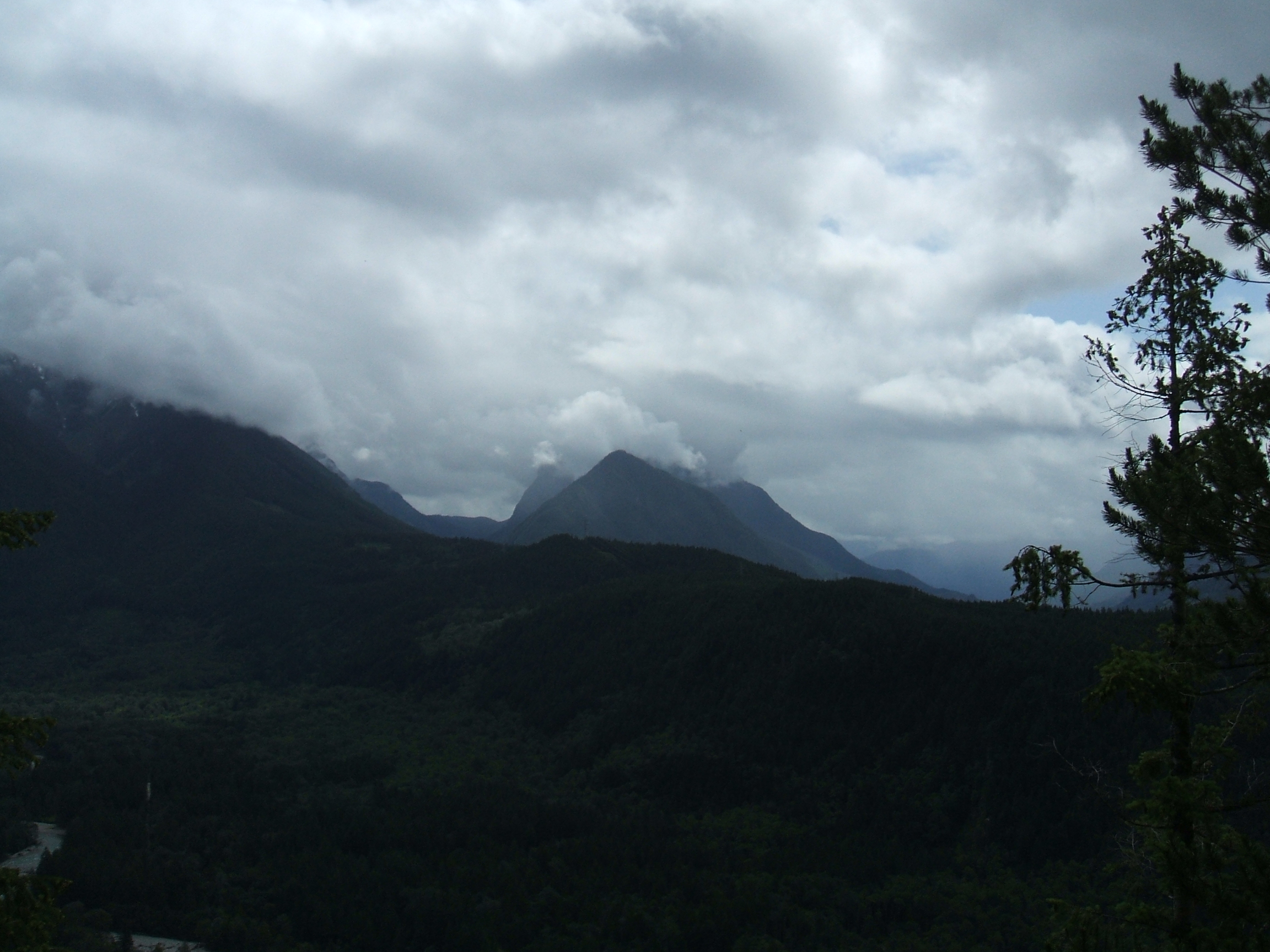
What I do know is that the mountains bring stories to me. They are mysterious, full of the unknown, of challenge, of scary things and uplifting things. When mountain tops are shrouded in sinking, rain-heavy clouds it’s easy to imagine Bigfoot up there. When you are alone in the woods and the light slants through the forest canopy just so, your heart soars. When you are alone in those same woods and something big and black moves through very close, grunting and foraging, your heart stops. The place is fertile ground for stories to sink roots and grow. When I have tried to write stories set elsewhere, they seem flat to me, missing that magic.

I’ve been to the high mesas and badlands of northeastern Montana, the rocky Oregon coast, northern Scotland, and Dublin, Ireland. All could be locations for stories some day, and I have drafts set in some of those places. But right now, what pulls words out of me is the temperate, lush rain forest of mountains. And the stories I write that are set there feel more alive, more compelling, to me.

Yes, the knowledge of place, characters, plot, etc. is important. But what is knowledge without heart? Like voice within rhythm, a story must have passion within knowledge. I know this must seem obvious to writers out there, but sometimes we need to restate the obvious in order to resurrect or honor that passion.