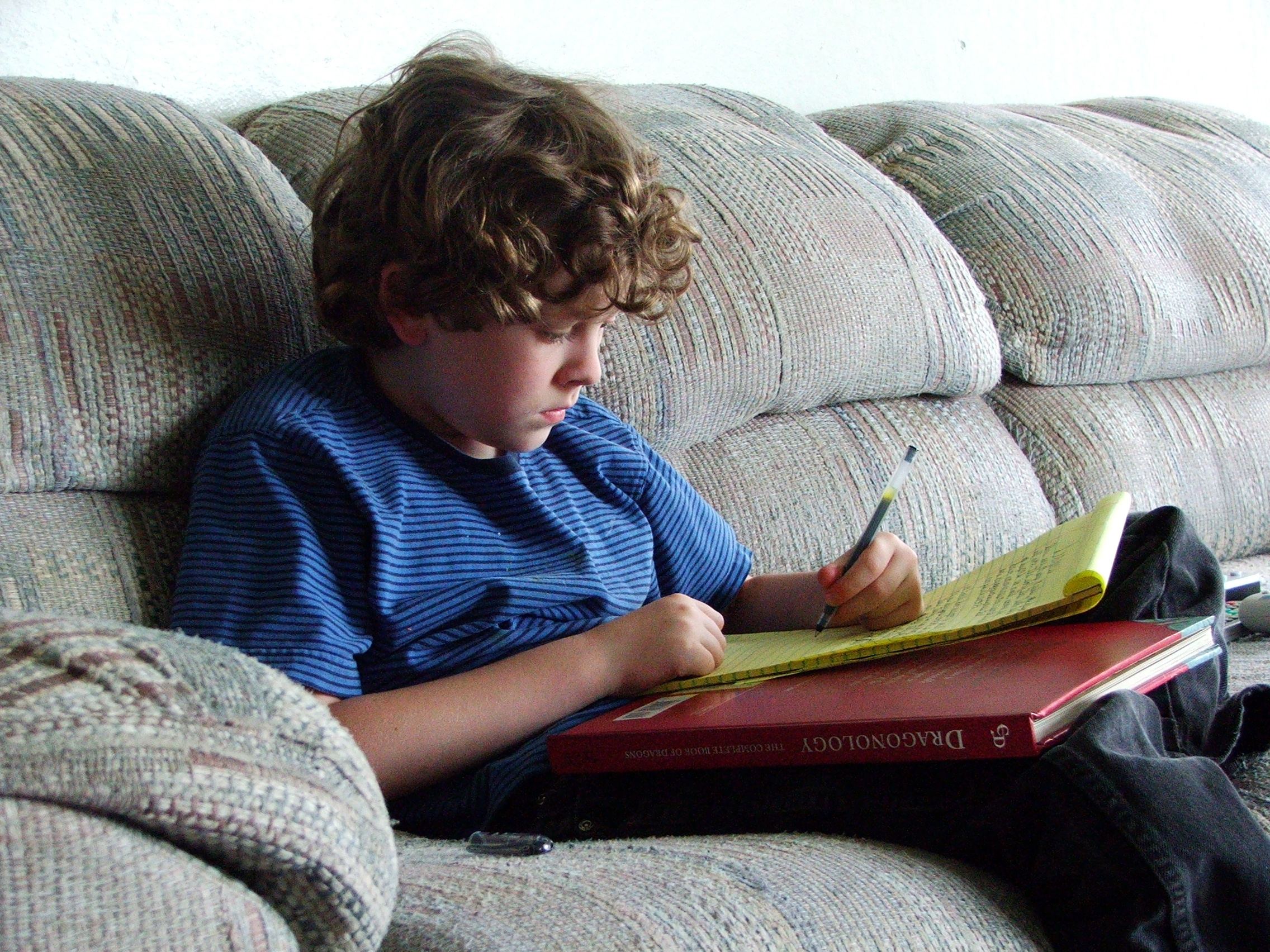
Writing Prompt #1

When I started this blog I decided to not put any of my writing here.  I didn’t want to make people feel obligated to read or comment, to be polite.  And I also didn’t want to deal with criticism when I was just feeling my way back into writing.  But Lisa, from the satsumaart blog (link in the blogroll) has been sharing these amazing writing prompts with me.  And not only that, but she’s been so brave, posting her prompt results.

Everyone knows a prompt isn’t something to spend time on.  The purpose is to open those gates and let the words flood out freely, in whatever form they want.  So there’s no editing, no plotting, no forethought at all.  Which is me taking a roundabout way to say that I am going to post my first writing prompt here, just to honor the task Lisa has given me.  Don’t expect perfect writing.  And please excuse me for hogging the spotlight and digressing from talking about writing.

Prompt #1 Salvation

Wasn’t a life change supposed to happen with salvation?  I expected it anyway in my early twenties, and so I figured I must have done something wrong.  I’d ask again, and nothing.  Maybe I wasn’t humble enough.  Or, wow, maybe I didn’t really mean it.  The people in the bible study group made it sound so easy.  So I started asking questions, and the answer I repeatedly got was as deflating as the lack of fireworks.  Faith.  You have to accept it and believe it on faith alone.

Excuse me.  If you want me to devote my life to something, I need something back.  Something more than faith.  Like answers.  Like explanations.

I walked into the woods instead.  The trees became my faith.  They were concrete, I could touch them, they were quiet, non-judgmental, didn’t act like I was going to hell, seemed content to be my back support and a sharer of dreams.  I could sense their roots digging deep, not only into earth, but into history.  I could sense their branches reaching high, not to something in the sky out of sight, like heaven, but opening to breathe in, to breathe out, to be part of and mingled with and shared.

I could sense timelessness, a slowing of rushing, an attitude of bringing that errand-driven heart-rate under control in order to be part of, to walk among, to simply be.

I felt weird, maybe crazy, definitely foolish talking to the trees.  I’d whisper, looking over my shoulder.  Until I found out I wasn’t the only one out there doing the same thing.  Not a tree-hugger, not an environmental hippy, just someone who felt okay being with trees.  Part of something bigger, part of something older, more majestic, more spiritual and holy.

I want my salvation to be growing old like a tree.  Gnarled, bent, wise, patient, living each second like it’s a year, feeling cool earth between my toes and a cool wind in my hair.  And when I die, cremation, fertilizer for seedlings.

Question the Questions

I think most writers, if they have been bedding down words on paper for any length of time, have come across these questions.

Where do you get your ideas?  How do I write a book?  What should I name my character?  How do I get published?  How do I know where to start?  How do I know when to stop?  Why do my stories die in the middle?  What does ‘show vs. tell’ mean?  My best friend tells me my writing is really good so why do I need an editor?  Where can I find publishers to send my story to?

Those types of questions have been asked so often that they have become clichés, and questions that make many grown inwardly when they hear them.  What I can’t figure out is, why, if these are so common, do people keep asking them?  All you have to do is go to the Books section of Yahoo Answers and you’ll find hundreds of variations on these same questions.  It seems like these have been answered so, so many times, that the answers should be floating out there waiting to descend on the next person who asks how to get rich writing.

I think most of these must be basic building blocks in taking up a life of writing.  These are the questions that weed out those who ache to tell a story and those who think writing is a get-rich-quick (and easy) job.  They get asked so often because there are so many newbies out there.   Does that mean we should roll our eyes or run away when someone asks one of these?  Of course not, because everyone deserves to be treated with dignity.  And beyond that, a beginning writer should be held in the palm of our hand and supported, because once upon a time, someone answered our questions and supported us.

We were supported until we moved past those oh-so-blatant beginning writer questions and started asking a new set.  How can I make my dialog more believable?  Why do my characters feel so cardboard?  Help me understand scene/sequel.  How do I get rid of those passive verbs?

This new set of questions become a platform for clichés, where more experienced writers step.  And so on and so on. Will we ever get to the point where we don’t ask questions that someone else sees as obvious, boring, and a sign of our lack of skill?  I doubt it.  I just hope that no matter how many questions I ask, there will always be someone there willing to take a moment and answer with respect.

After all, I think the best thing I have learned over the years of asking questions, is that the best answer always includes empathy.

And let’s face it.  After years of writing and of having days when I feel like I’m not a beginner, I still posted a blog not that long ago wanting to know how to find a title for my story.   Guess I’ll cringe here, laugh, and go back to the pen and paper.  But hey, what’s the most embarrassing question you’ve asked about writing, or been asked?

Claire

In an earlier blog called ‘Throwing Away Words’ I mentioned a woman named Claire.  I have been thinking about her since I posted recently about music to write by, and friends have been graciously sharing their favorite music with me.  Claire influence my taste in music and gave me dreams about writing, so I would like to tell you her story.

In the early 1950’s my mother met an eccentric older woman named Claire, who was on her way to rescue a horse.  Claire, at that time, had been a classic pianist, had a radio show, and had traveled while performing with Leopold Stokowsky.  She also had a failed romance she never spoke of.

Claire had tired of the public.  She rescued the neglected horse, bought 150 acres in the woods, built a small barn by herself, and lived in it with the horse while she built a house and started a collection of abandoned and neglected dogs.   She was a woman of contrasts, tall and willowy with amazing cheekbones and a cheeky grin, who dressed in jeans, flannel shirts with suspenders, and logging boots.

As a child I visited her house in the woods.  The place smelled of her thirteen dogs.  But there was always books and paper and classical music.  I grew up wanting to be just like her.  I was going to be a writer, a hermit in the woods, alone with words and music.

In my twenties, I took over her grocery shopping.  She had no car, no phone, no family.  She never left her home, even when her health failed and she should have.  I would go to her place, bring in a chair from the chicken yard, and listen.  She only had two chairs; one for the house, and one for when she wanted to watch her chickens, and that was the company chair.  Not a clean chair.  But the stories were worth the chicken poop.

Claire would have an album ready, and when I was seated, she would start a classical piece.  As it played, she told me not only the story the composer was telling, but also stories of her days performing.  I grew to love what she played, but I am not sure if it is because of the music, or the stories.  When I hear ‘Scheherazade’ I smell dog and chicken poop, I can feel grit and cobwebs, I can see the grin and the logging boots, and can once again feel that sense of awe that comes when you are transported into the world of story.

The dogs were also a source of stories for Claire.  She published children’s books and articles about her dogs, where they came from, how she rescued them, and sometimes hilarious tales of their personalities.  She never sank into clichés or saccharine words.  Her published works were as earthy and honest as her life.

I was all ready writing during this time that we shared.  I had been writing for many years, but in secret.  In Claire I saw a woman fearless, who lived life as she wished, who was brave enough to step outside the expected norm, and I sensed that maybe, just maybe, writing was something I could be proud of.  Even though I didn’t come out of the closet about writing until my husband’s pride in me booted me out the door, I still know that without Claire, I wouldn’t have seen so clearly the person I wanted to become.

I live in the woods, in the mountains, with three dogs, and I write.  The hermit part didn’t quite work out, but I did end up with a husband and son who cherish the quiet life and who get on ‘people overload’ as easily as I do.  When I look at my life, I see the shadow of Claire, I see that grin, and I lace up my hiking boots with pride.

And I feel her presence in the story.