When Characters Come to Life

I had a procedure done yesterday. I left the doctor’s office sore, a bit blue, and with bandages on my nose. From there I ran errands including a stop at a local butcher shop. There, a young man at the counter greeted me with ‘Cool! Did you get a tat?’

Immediately cheered up, I said no, that I’d had a biopsy. His response was ‘Dude! I’ll pray for you!’

When I got home and told my husband, his response was ‘Cell.’

My god. He’s right. Cell lives.

I can’t even say that I met this young man at the butcher’s before, and modeled the character based on him.

One of my characters, one that a lot of readers like, is living and breathing and working at a butcher shop. Pretty amazing.

Below is my favorite ‘Cell’ dialog. Florence is an elderly woman in the beginning stages of dementia. Rachel is her granddaughter, struggling with how to care for Florence. In this scene, Florence wandered away from home, which is a mountainous region of narrow winding roads and forest. Cody is the protagonist. This bit is from The Memory Keeper.

‘Cell leaned on the counter while Florence sat on it, swinging her slippered feet, drinking SoBe from the bottle and watching as Cell worked his faithful companion, the phone.

“But I don’t understand where the cord is, dear.”

“See, that’s the way cool thing,” Cell said, and jumped upright as he saw Rachel. “Hey! I was just calling you.”

“Granny, what are you doing?”

“She was hitchin’, dude,” Cell said.

“You promised you wouldn’t tell,” Florence said.

“Sorry, man. Forgot how much Rachel, like, scares me.” Cell moved back as Rachel reached the counter. “I just asked her if she needed a ride. Being neighborly, you know? I mean, she’s an old lady. Old ladies shouldn’t have to walk.”

“You were hitchhiking?” Rachel’s voice dropped, becoming quiet and almost calm.

“Well dear, technically, no. I wasn’t standing exposing an ankle or anything. I heard a car coming and I flagged it down. I was a tad scared to be honest. I don’t recall leaving the house. I’m afraid I wandered away in one of my less lucid moments. Did I frighten you badly?”

“Not at all,” Rachel said. “I’m used to having people I love just disappear.”

“Rachel,” Cody said, wanting to somehow thaw the ice in Rachel’s voice. But Rachel overrode her words, turning to Cell.

“And you didn’t think it was strange to find Granny in her nightgown? You didn’t consider taking her back home?”

“Is that what she’s wearing? I thought it was, like, some kind of old lady dress.” Cell pushed tendrils of black hair behind his heavily pierced ears.

“Oh my god!” Rachel pulled at her hair as if to keep her hands from reaching across the counter. “Where’s your brain?”

“Hey, chill! What’d you expect me to do? I mean, she’s an elder you know? You’re supposed to respect your elders!”’

And now I know what Cell’s next job is going to be. Though he’s vegetarian. This could be fun. He’ll lecture all the customers.

Do You Know This Girl?

When I was young Gloria Steinem took up the banner of feminism. My older sisters, especially my hippy-chick sister, led the way and I stumbled behind.

The older sisters.

The older sisters.

And now I know a girl. And she epitomizes for me how the times have changed since I was her age, shy, hiding in a corner, most often found buried in a book, or in daydreams.

When she was little she was our local wild child. Bare-butt naked, free soul, half fish in the river, half elf in the woods, bare feet in the mud, in the snow, in the grass.

She eventually had to put clothes on and go to school. I worried her spirit would be quenched by the bullies. And girls are so cruel when they bully. Grade school was hard for her. She grew taller than all the other girls. I saw her sitting alone, face buried in a book and was afraid.

Don’t turn into me. Stay free, stay wild.

Her mother made sure that happened.

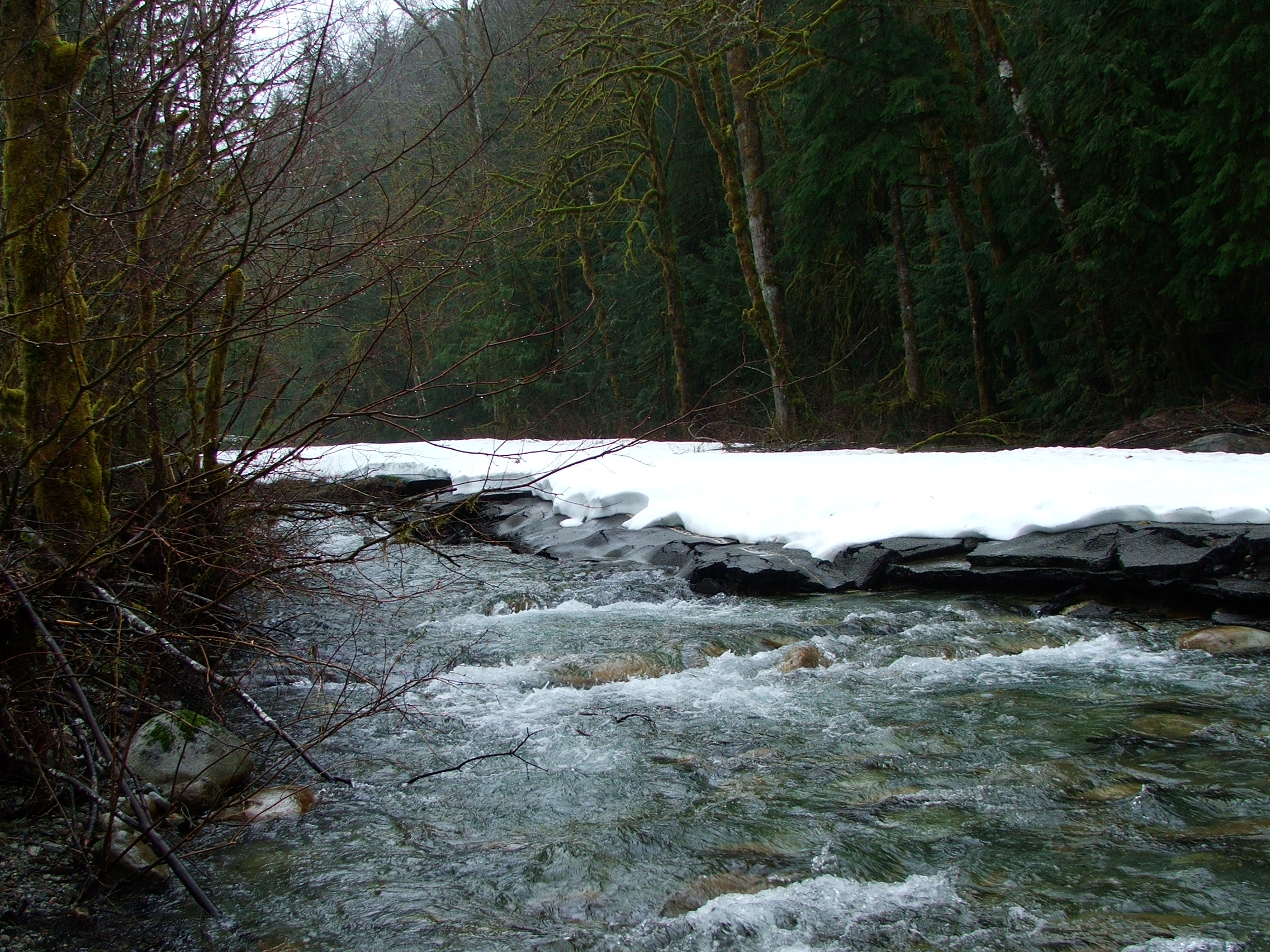
One winter when the river edges froze and snow fell, she walked past my window dressed in black tights and tee shirt, her bare feet crimson red with cold, her long hair drenched. Coming back from her daily dip in the river.

Snow-melt water.

Snow-melt water.

Still free, still wild. Child on the threshold of girl.

Now, in high school, she’s taller than most students. She wild-forages for licorice root. She hikes. She defines gender by what it means to her, not by what society labels her. She stands firm against social media trolls, those who would tell her to change. She writes poetry that opens your eyes, that makes you pause as you glimpse her soul. This past weekend she walked, barefoot, through a festival, with her poetry.

Still free, still wild. Girl on the threshold of woman.

But one who is not bound by labels.

I can’t wait to see the next blooming of this flower. I worry that sometimes she is too hard on herself (like we all can be). So I want her to read this, to recognize herself, to see that being…just being, without labels of girl, feminist, lesbian, trans, woman, is beautiful. Just as beautiful as taking all those labels, fixing them to your chest, standing proud and saying, ‘this is who I am’.

Our little wild forest child.

She's not in this photo, but she was there when it was taken.

She’s not in this photo, but she was there when it was taken.

Those of you reading this, who recognize her, please do not name her in comments. It should be her choice to be named in such a public way.

Plot Holes

We watched Interstellar last night. Long movie – almost three hours. And there was a huge plot hole in the middle.

In the movie, the heroes travel through a worm hole to save the earth. They are headed to two stations where previous heroes went to see if places were habitable. One station has quit transmitting and the other has been transmitting regularly that the place is livable. So our heroes go there, having adventures along the way and losing one crew member. All good so far.

When the heroes arrive, they are met by the lone survivor of the earlier trip. This station is a world so frozen that even the clouds are ice. But the survivor tells them how the place is livable in a lower level so they start unloading all their stuff. However, he turns out to be the Villain who attacks the leader then steals their ship in order to get home because he’s lied and the station isn’t habitable after all.

So the Villain is desperate to get home. Understandable. But here’s the giant plot hole. All he would have had to do is tell them the place wasn’t habitable when they arrived. They would have loaded him up and moved on to the next station, or tried to go home. There’s a twist with going home, but that’s not relevant here and I don’t want to list too many spoilers. There was absolutely no reason for all the storyline maneuvering, the attacks, stealing the ship and all that drama. I mean, the heroes wouldn’t even have had the excuse that they couldn’t save the Villain because they would be over a weight limit on their ship since they lost a crew member earlier. And the Villain is an experienced pilot which they could have used.

In other words, no believable reason for the Villain to be a villain.

I lost interest at about that point.

It’s the same with books. A reader might let one, or maybe two, coincidences slip by. Maybe they’ll allow one instance where the point of view character does something that has no ties to the plot threads. But more than that and the reader will move on and probably never pick up something by that author again.

It reminds me of a book I read a long time ago about a knight on horseback who turns to his trusty companion and says ‘No shit, Sherlock’. Seriously. And that was only one of many such dialog issues. Oddly the author is well known and has a lot of books out with this same knight. He’s one busy dude, slinging contemporary slang as easily as his sword.

Anyway, if the action sequence raises questions because the route taken makes no sense, the author better insert a compelling reason that ties character and plot together. Otherwise the audience is going to move on.