Pride and Parents

Several years ago when I was an emergency medical technician (EMT), we were toned out on a call about men in a fight at the local general store. When we arrived, the two men who had instigated the fight were gone. The two young men who were the victims were still there.
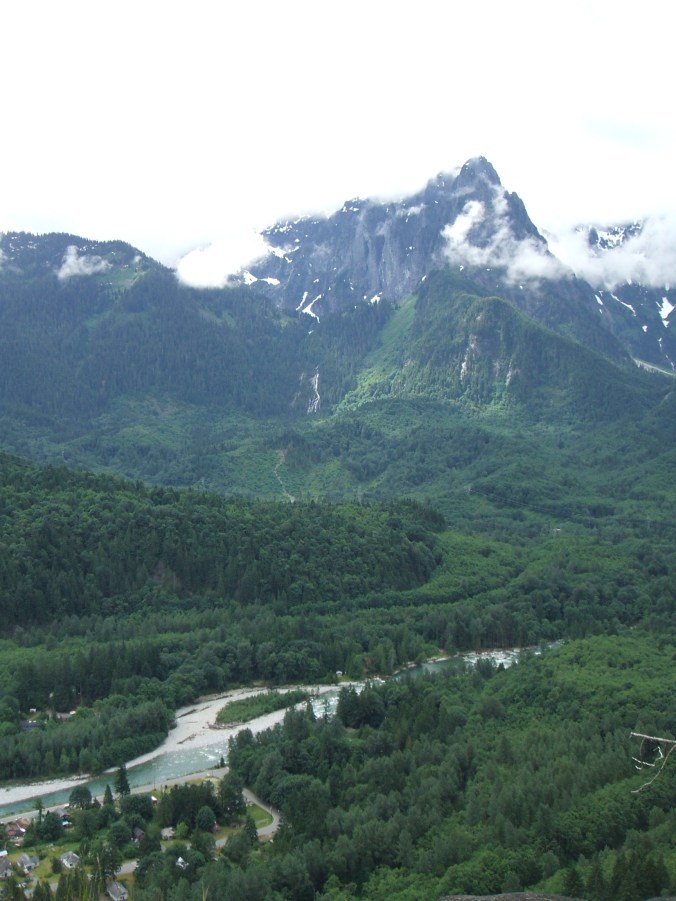
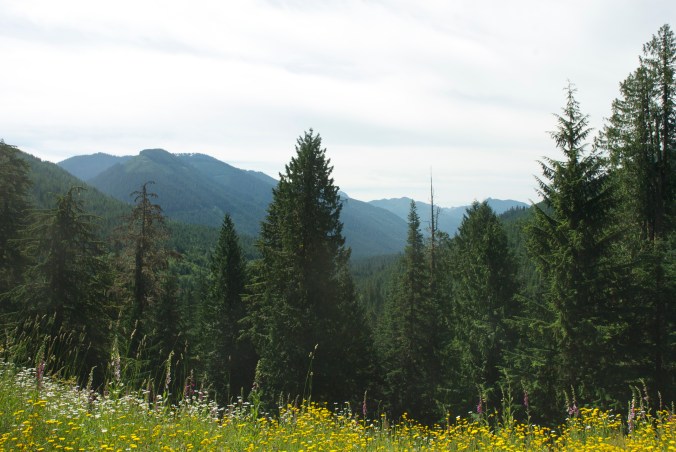
lookout point 006

There’s still a general store down there.

One was bruised but okay. My patient, however, had been kicked repeatedly, in ribs and in the head. He was talking to me with full cognitive abilities, but because of the mechanism of his injuries, we wanted to transport him to the hospital anyway.

I was in the back of the aid car working on him, asking him questions, getting a history, blood pressure, and so on. As a precaution, I’d put him on oxygen. I asked a question, and got no answer. When I turned to him, he was out. Completely unconscious. Within seconds. I yelled for the driver who called out the paramedics to meet us.

It was a lesson to me in three ways.

I was fairly newly certified at that time, and it was a lesson in how dangerous head injuries are, and how fast they can change for the worse. Even in someone who had presented no symptoms only moments before. It was scary, and a lesson I never forgot. He survived, and actually, a few years later, came back to town to thank me for being with him. He remembered my holding his hand, not being afraid to touch him. Of all the things that happened during his treatment, and that touch was what stood out for him.

engagement photo

We look so young. This was our engagement photo.

Why you might ask? That’s the second lesson I learned.

The two young men had come to our area of the woods because there was a large and well-known private campground, that actually was across the street from our cabin. And it was a gay campground. This was back in the 1980s.

The two young men had been sitting outside the general store, waiting for an order. The other two men pulled up in a truck and asked them if they knew where the campground was. When they gave directions, those two men got out of the truck and attacked them.

Those men knew about the campground and had come to the mountains specifically looking for those who camped there. Looking for gay men to attack and beat up. I was shocked by the cruelty and bigotry. (They were eventually arrested.)

That campground was busy on weekends. It was in the woods and our place was the only neighbor. The road was narrow with trees to the edges and not much shoulder, so on weekends the road was crowded with cars on both sides.

the property 022

Which meant that in the mornings, those cars would have slashed tires, broken windshields, and nasty graffiti painted on them.

My father, from a generation when being gay wasn’t as well known, was angered by this. He took to patrolling the road in the evenings, an old man in bib overalls and black-framed glasses, with his thinning flat-top haircut, and an old Savage short-barrel shotgun over his shoulder.
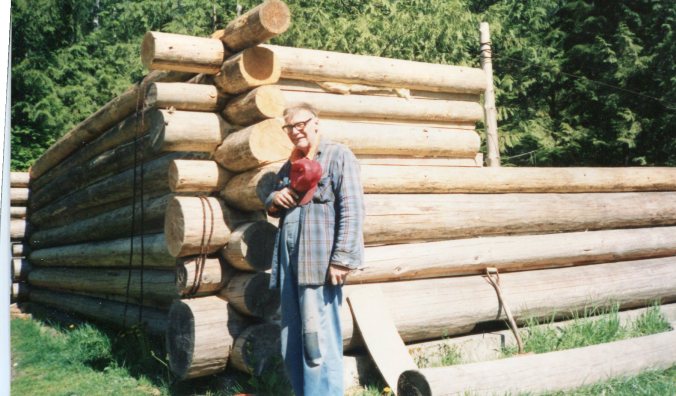
Dad

He’d decided all those going to the campground were ‘his boys’ and he took on the job of watching out for them.

It quickly became known in the campground what my dad was doing. It didn’t take long before campers, men and women, were crossing the street to visit. They would sit in that tiny cabin and have coffee and cookies with my mom. They would potter around with my dad. They helped stack firewood. My parents became their surrogate parents, an old couple accepting them, not judging them, and loving them. Several long-term friendships were created.

property 009

The cabin before a face-lift. That’s an old metal door nailed to the wall to cover where a window used to be. My dad was innovative…

I remember one man, Jeff, who became a good friend of mine, and who ended up moving permanently to the neighborhood. When I first started going out walking with the man who would become my husband, Jeff took him aside and had a talk with him. Told him if he ever hurt me, he would have to answer to Jeff.

Another friend from the campground, Kevin, had a huge crush on my husband. And my husband, being the strong and wonderful man he is, was flattered rather than horrified or embarrassed, or threatened.
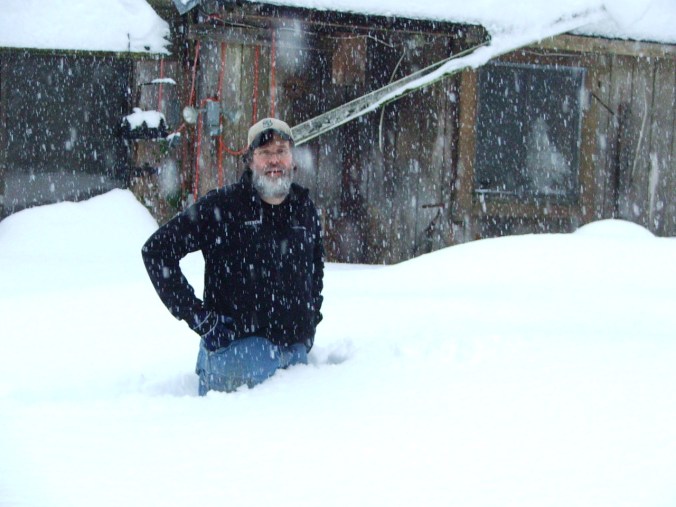
winter 08-09 005

He’s not short; that’s deep snow.

Which leads me to lesson three. For as much bigotry and hatred that still exists today, and seems to be growing, there are still those who care. As Pride Month draws to a close, I hope those who love continue to outnumber those who hate.

4th of July 10 001

Green Bodies

Many years ago a local woman came to a planning commission meeting with information on green burials. This was where you could bury someone and allow them to decompose naturally. At the time, this was a radical idea that never gained traction. But I loved the thought that I could fertilize trees.

DSCN0067

Some people were grossed out by the idea, even though it was nothing new. This is how we did things before burial became a business.

Some were worried about contaminants, others about their religious beliefs.

Those same arguments circled when cremation was a ‘new’ practice. Of course cremation wasn’t truly new because cultures had also been doing that for hundreds of years. Think of those flaming Viking ships sent out to sea. What made cremation ‘new’ was that it was a new way to conduct the business of burials. A slightly cheaper way, but still a money-maker.

fullsizeoutput_69

Washington State just legalized human composting as a burial option. I am so, so thrilled by that. Isn’t it about time?

I love the idea that soil can be returned to my family and they can plant a rose. Or that they can choose to donate the soil for forest restoration. But as much as I love the idea, it’s way too costly still.

It bothers me that it is still a death-business. It’s being billed as more affordable. Really? Look at the numbers. A traditional burial can cost up to $9,000. Cremation can cost almost as much depending on what you want, although it can be as low as $1,000 (think cardboard box and spreading ashes), which is still difficult for many to pay. Composting sounds like it will run around $5,000.

DSCN0381

Explain to me why death is a business. Please. I get that everything these days is regulated. But why must death be so expensive that people have to budget and save or take out loans? Someone dies, the body is taken away from you, and you have to pay to get it back. And pay a lot. You have no choice. It’s almost like kidnapping and holding someone for ransom. My thought is if they want my body so badly they can keep it. The idea of my family having to bankrupt themselves just to get me back in some form is awful.

DSCN0402

Because composting is considered new, the usual fears are circling again. Will it be safe for pathogens and disease? Will it be safe for heavy metals? What if a person has been radiated? And of course, there’s always religion and those who believe a physical body is needed for resurrection.

I get some of those reasons are why regulation is needed. Regulations will ensure a process that is consistent. But I still don’t agree with the cost.

DSCF0230

Why hasn’t someone taken up the banner of socializing death as well as healthcare?

Though I suppose if we have to pay to be born we should also pay at the other end.

Maybe by the time I die composting will have been around long enough that costs come down. And then my husband can plant a new rose.

And wherever I am, there will be a day when I hear his voice yelling at the dog, ‘quit digging!’

DSC_0085

A Stranger

I posted about this a couple years ago but a friend recently asked me to retell the story. So you old-timers might recognize this one.

Ten years ago I was going through radiation treatments for lymphoma. Every morning I drove an hour and a half to the cancer center, took off all my clothes, put on this robe, and sat in a room with others in their robes.

There was no socializing. There was little, if any, talking. Everything going on in that room was internalized. We were all head down, thoughts inward. Preparing for what we knew was coming, and how awful we were going to feel in a couple hours, and how sick we were going to be the rest of the day.

We were simply breathing. Grateful to be breathing, but able to do nothing more than take the next step right in front of us.

There was an older woman in that group. Short, steel-gray hair. She was always there before me, and when I walked in, she would lift her chin in greeting. We could manage an acknowledgement, but that was it.

Three or four years later I was in a grocery store, in the produce section, and happened to look up. And there she was. We met each other’s eyes and immediately burst into tears.

She was alive.

We hugged. We asked each other how the prognosis was going, how the healing was going. That’s when I found out she’d been in there for breast cancer.

And then we moved on to finish our shopping.

We never asked for each other’s name, or phone number, or email.

It was so random, to run into her there, of all places. That we happened to be, not just in the same town and the same store, but the same section at that exact same moment in time.

Years passed.

Two years ago I was…you guessed it…back at that same store. And there she was.

Once again, as soon as we met eyes, we were crying. We hugged. We asked those questions. Are you still free? She was. I wasn’t. I’d just finished another round of radiation and was still pretty sick. But I was able to tell her it was a precaution only and all was good. We cried some more.

We never asked for each other’s name, or phone number, or email.

She’s a complete stranger. I know nothing about who she is as a person, or what her family is like, or any of the myriad of stories we associate with those we know.

Yet I count her as a close friend.

And some day I’ll run into her again.