Otherkin is an interesting subculture. It represents people, or a person, who identify as nonhuman. In particular, people who believe they are wholly or partially an animal or mythical being.
I’m not talking about people who dress up in costumes or people who feel they relate more to their dogs than to their family. Just as you know you are a human being, these people know they are not. They believe they are animals, mythical creatures like dragons or elves, or even aliens.
Whether you think of this as a psychological disorder or truly possible is open to interpretation and your own belief systems.
However, there is a lesser known interpretation. This aligns closer to earth-based religions, to paganism, etc., where they believe all things have life (or soul) and that the otherworld is all around you whether you can see it or not. These are people who believe in the kindred spirits of animals and nature.
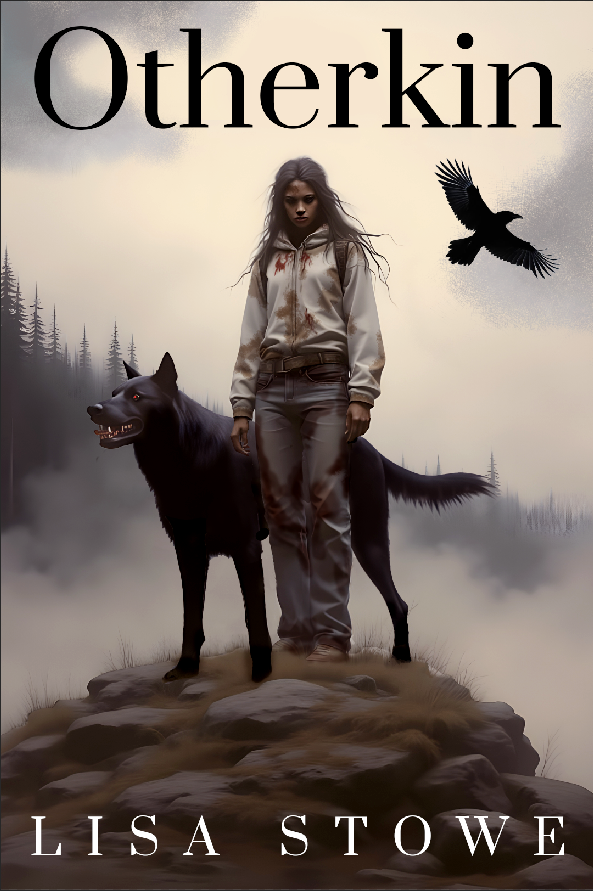
That’s the interpretation I’m using for a story. Otherkin will be released soon. It’s taken me a long, long time to write, and it’s a sequel to This Deep Panic. How does the world look after mythical creatures have returned? How do we move on from a catastrophic earthquake and begin rebuilding lives? How do we do that when most creatures want to kill us, but some are…otherkin?
I am just starting the revising work and then it will go to the editor, then come back to me for more revisions. But I will have the first three chapters available soon for everyone to read. And in the meantime, here is the cover. Let me know what you think. I’m very happy with how the artist has rendered this.
My husband wanted biscuits and gravy for breakfast, but made with hot sausage. I accidentally picked up Italian sausage. But he realized hot sausage is just sausage with red pepper flakes added, so he added a bunch to normal sausage and got his spicier breakfast.
As he was telling me this I realized how trained we are to be consumers. The automatic reaction when he told me what he wanted was that I had to pick up hot sausage when I was out that day. My first thought wasn’t that I should make it myself. Or, honestly, have Art make it since he does most of the cooking.
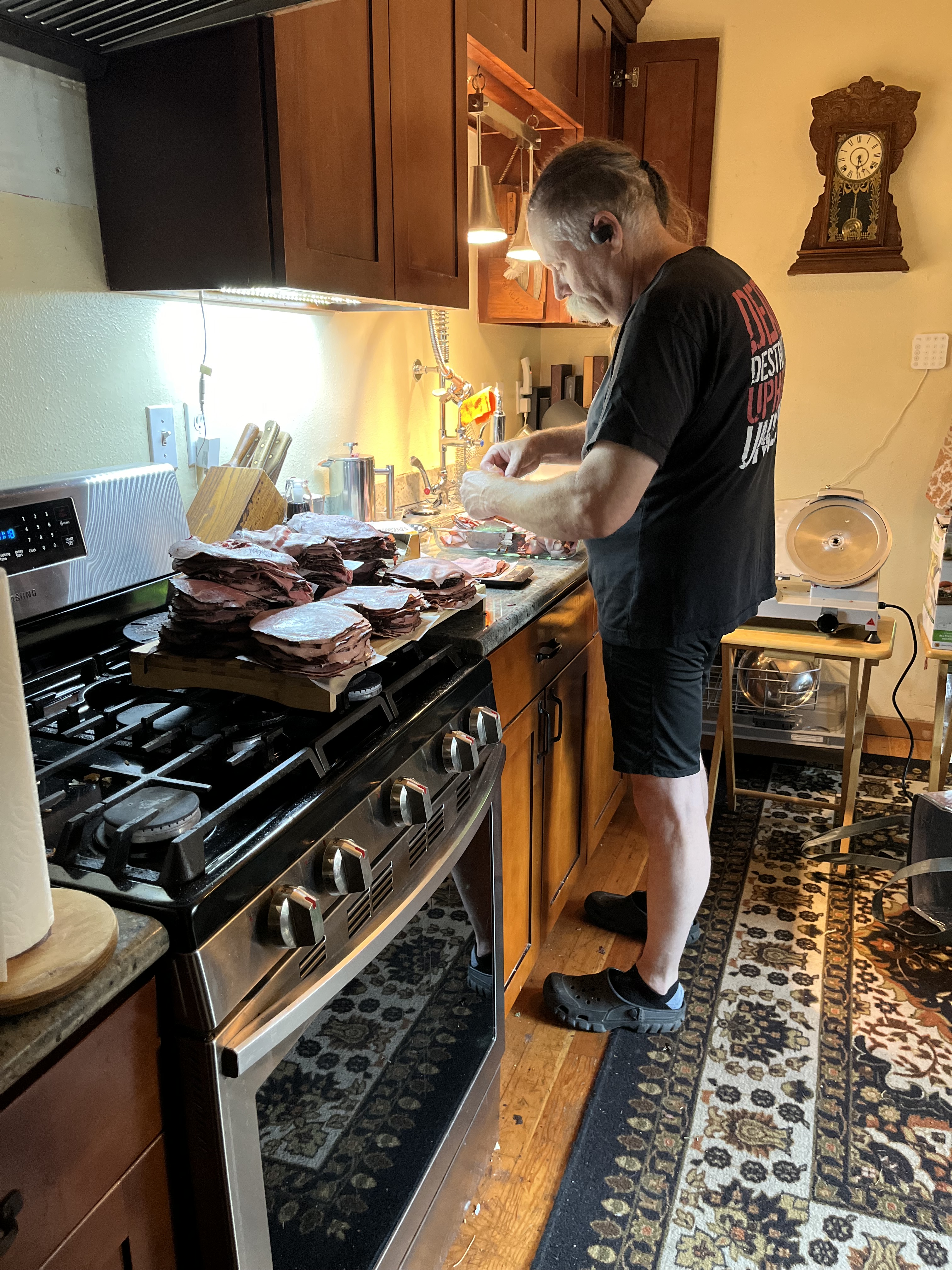
Making meals
Which is odd if you know us, if you have been around when we’re canning, spent any time in our pantry, helped stack firewood, and so on. It’s not like we live in an apartment in a city with easy access to what we need. It’s not like we’re not used to no power for days, or the highway shut down.
Yet with all that, I immediately, without thought, became a consumer. How weird.
Making firewood
I have a cookbook from the 1800s. I’ve kept it because it has everything in it and if the world ever goes to shit, that cookbook is going to be invaluable. It’s full of directions on raising food, harvesting, butchering, preserving, and using all with no waste. Do I ever open it? Rarely. Do I ever use any of the recipes? Even more rare.
Yes, I bake my own bread. I have sourdough starter. But wow, it’s so easy to just nip into the store when I’m down below and grab a loaf.
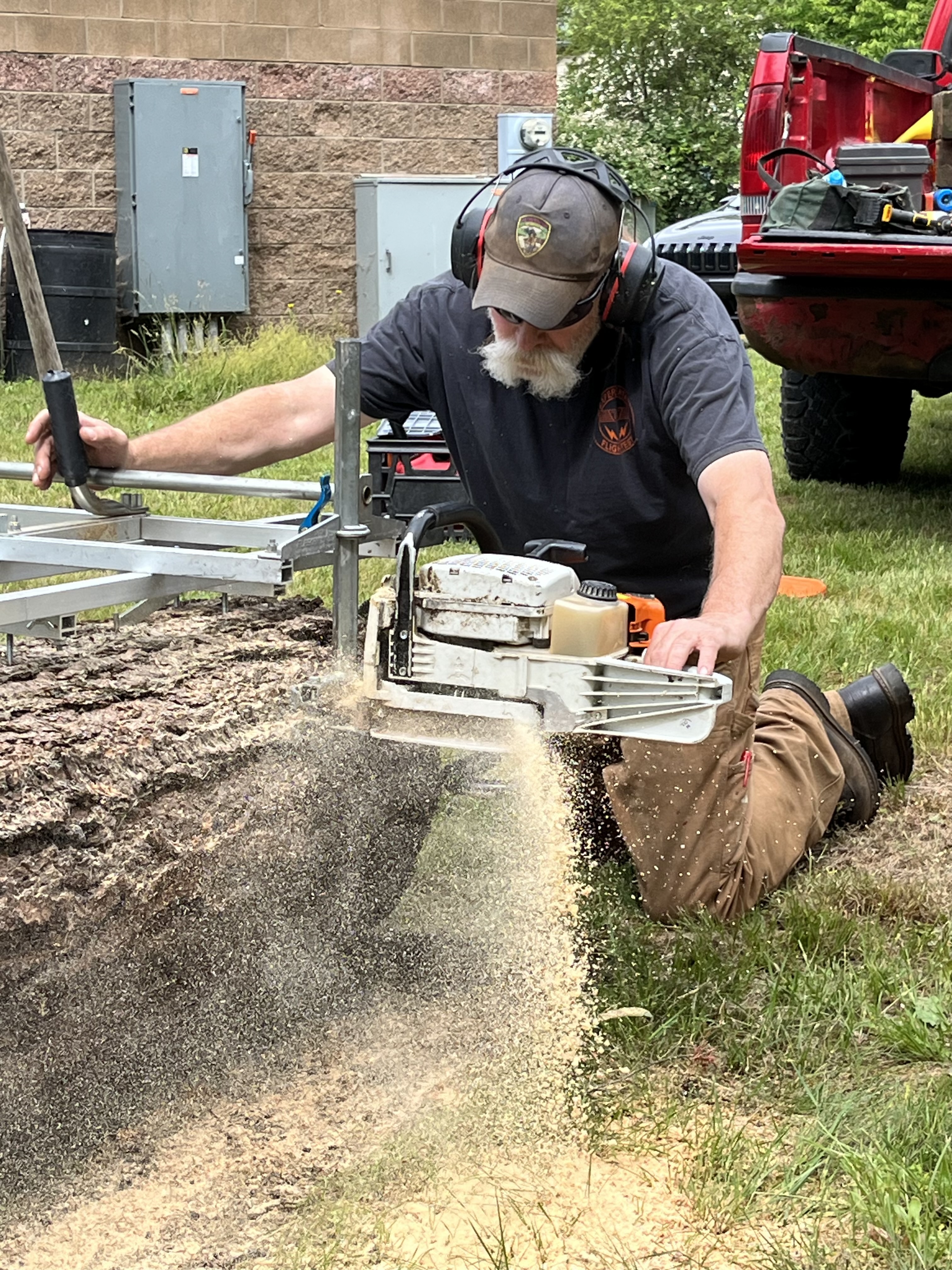
Making lumber
Yes, I make homemade soup, and made a great beef barley stew with red wine last night. But, wow, it’s so easy to just open a can.
Have you ever noticed how many homemade recipes involve opening a can of this and a can of that?
I recently came across a recipe for making your own pancake mix. I was actually surprised and thought it would be a great idea. Why am I surprised? How did I think people made pancakes before commercial pancake mix appeared? I mean, besides the sourdough pancakes I make with that starter.
Making a woodshed roof not collapse
We are so well-trained by this society we live in here, that we must buy without any thought to what an alternative might be. And the buy culture has been made so, so easy that we never give it a second thought. It’s so natural, so normal, that many don’t know any different and aren’t even aware of the trap.
Plus, don’t get me started on throwing things away. I remember as a kid, dad replacing picture tubes in the television when it quit working. Now, you can’t easily find repairmen. You just throw it away and buy another. Because it’s easier, and even more horrible, cheaper than repairing.
Making TVs work
I like to think I’m not caught in that consumer trap but it’s the little things like a package of sausage that causes a quiet voice in my head to say, yes you are and you just don’t know it.
One of my sisters recently asked me if I had forgiven our mom. I thought she was referring to something that happened many years before, but today I realized she may have been talking about an event a few years ago. That event left me betrayed, hurt, and angry for a long time. But have I forgiven mom? What exactly does that mean?
Some say you should forgive and forget. When I hear that I always wonder how they expect a person to purposely forget something. It’s not like your brain is a dry-erase board. I assume what they really mean is ‘forgive and let go’. Which, of course, can be pretty darn hard to do.
When I hear people say they’ve forgiven someone, many times I hear an element of pride, or ego, in their voices. As if saying that means they are superior to the one they forgive. That makes the cynical part of me wonder if they forgave because they were ready to let go, or if they forgave to show themselves a better person. Which is different from forgiving to make themselves a better person.
I think ego is perceived in forgiveness when a person feels the need to tell the other one that the’ve been forgiven. If you are truly letting go, does the other person need to know? Are you forgiving for your peace of mind, or to be able to face the other one and say, ‘I’m better than you’?
Is there a little bit of smug humility in there?
I was mad here. My brother was trying to help.
Someone once told me that they had finally reached a point where they could forgive me. To this day, I have no idea what I did that I had to be forgiven for, and it hurts to think I did something that impacted them. But I’m glad they were able to let go.
Of course there are always situations where a person needs to face the other one, needs to look them in the eye and speak the final line of their story. To be able to be strong, say they are letting go, and then walk away. That’s strength, not ego.
I do’t think the act of forgiving ever means that a person is saying what happened was okay. Forgiving never means, to me anyway, that what happened should have happened. This is where I start getting hung up on forgiveness. Because isn’t that what forgiveness is saying? I’m letting go of that. I didn’t like it, but it’s okay, we’ll just move on. Why should someone be allowed to go on like nothing happened?
That makes me think that forgiving someone means they don’t get ‘punished’ for what they did. There are no visible consequences.
Yet, who are we to be the judge and jury? How do we know they return to their life unaffected? Even though we may forgive someone, that doesn’t mean we were right, or blameless, either. No argument happens in a vacuum.
I don’t claim any clarity of understanding or wisdom. I’m going to be honest here and it won’t reflect well on me. When I’m asked if I’m going to forgive someone, I get a bit testy. Of course I’m not. I’m going to walk away. I’m going to work on letting go of my anger or hurt. But I’m going to sit back and wait for Karma. This doesn’t mean I brood on things. After all, when my sister asked me if I’d forgiven mom, I’d clearly forgotten the Big Event.
I can walk away. I can choose whether to have that person in my life or not. I can protect my peace of mind. I can have very clear boundaries to make sure something like that never happens again. I can build a very high, strong wall that the other person can’t get through. If that means I’ve forgiven someone, then I guess I have.






 Lisa Stowe - The Story River Blog