Where There’s Smoke…

The 1910 forest fire in Idaho was so devastating it’s still known as the Big Blowup. Ten thousand forest rangers, miners, and farmers became firefighters. Many died and were buried where they fell. Some towns were evacuated by trains racing ahead of flames.

This history figures in the plot of book three, which is in process, and because of it I’ve been thinking a lot about fire. What it would have been like to face it, how it comforts and terrifies, warms and burns, provides safety, and destroys. And memories of my own firefighter days. But on a lighter note I thought I’d share a story that is nothing like the 1910 fire.

Once, we camped our way across Montana and found a beautiful, secluded campground on the Black Foot River. We had the place completely to ourselves and set up camp under huge old pine trees right alongside the river. My husband stood out there in the sunset fly fishing while I followed our young son, tossing rocks. Peaceful and perfect.

Until the wind started up, and kept coming, roaring over the mountain, bringing with it the smell of smoke and hot ash that burned holes in our tent. We had a camper on our truck so we retreated as thunder and lightning joined the wind. Pitching a tent with metal poles right under very tall trees suddenly seemed vulnerable.

In order to keep our son from being too scared, we resorted to happy voices. “Wow! Isn’t that cool how the wind tosses the tent?” and “Look at those tent poles break! Isn’t that funny! Let’s play Monopoly!” and “Bet you didn’t think tree branches could make such a loud crash when they hit the camper!”

The storm was violent enough that it blew the thought of ash, and what might be causing it, from our brains. Just like our tent blew away, along with the heavy-duty stakes.

After a long night in which our son slept soundly and we didn’t, we got up with the beautiful dawn illuminating the Black Foot. we packed up and pulled out. Rounding a corner not even a quarter-mile from the campground, we came across hundreds of identical tents in many, many rows. Firefighters.

There was a huge forest fire nearby. Everyone except those fighting the flames had been evacuated. Someone, on the way out, forgot to put a ‘closed’ sign at the campground. The high winds the night before had whipped the fire into a frenzy, but somehow the mountain had kept it from raging our way.

A good friend, Paul, was at the time a forest ranger who fought fires. As we drove by all those identical tents, a happy voice from the back seat piped up. “Let’s find Paul!”

Someday I want to return to that campground because it really was beautiful. Doubt we’ll have it to ourselves though.

Wonder if there’s still pieces of tent hanging from the trees.

One of my favorite camping pictures of Arthur.

One of my favorite camping pictures of Arthur.
Melancholy

Last winter's heron

Last winter’s heron

This time of year, drawing close to winter solstice, I crave solitude and quiet. Especially on Christmas Eve, I have to find a few moments alone. There’s something about when the woods around me are dormant, when earth seems to be sinking into a deep sleep, turning slower, that makes me need the same. Of course this is such a busy time, it’s hard to find that quiet space. But I need it.

Memorial Day is just another day for me. This time of year, however, is my memorial time. It’s when I remember those who have passed, when I touch decorations that my baby fingers touched, when I smell spices and resin that take me back years. The holidays used to be a time for my large family to gather, but no more. And so this time of year I remember all the old stories.

Melancholy is most commonly defined as sadness or gloom. However, another definition is ‘pensiveness’. That, to me, is more accurate, and how I feel this time of year. Pensive. Tears feel close to the surface. But it’s not because of sadness. It’s closer to mourning what has passed. Whether that’s people, seasons, the year, changes that have happened, the person you used to be. And it’s a form of farewell and endings.

After winter solstice, when the earth begins to turn slowly back toward spring, and we can start seeing the signs of waking up, all of this melancholy will go away. But for now it’s important to slow down with the season, to pause, to dream, to remember.

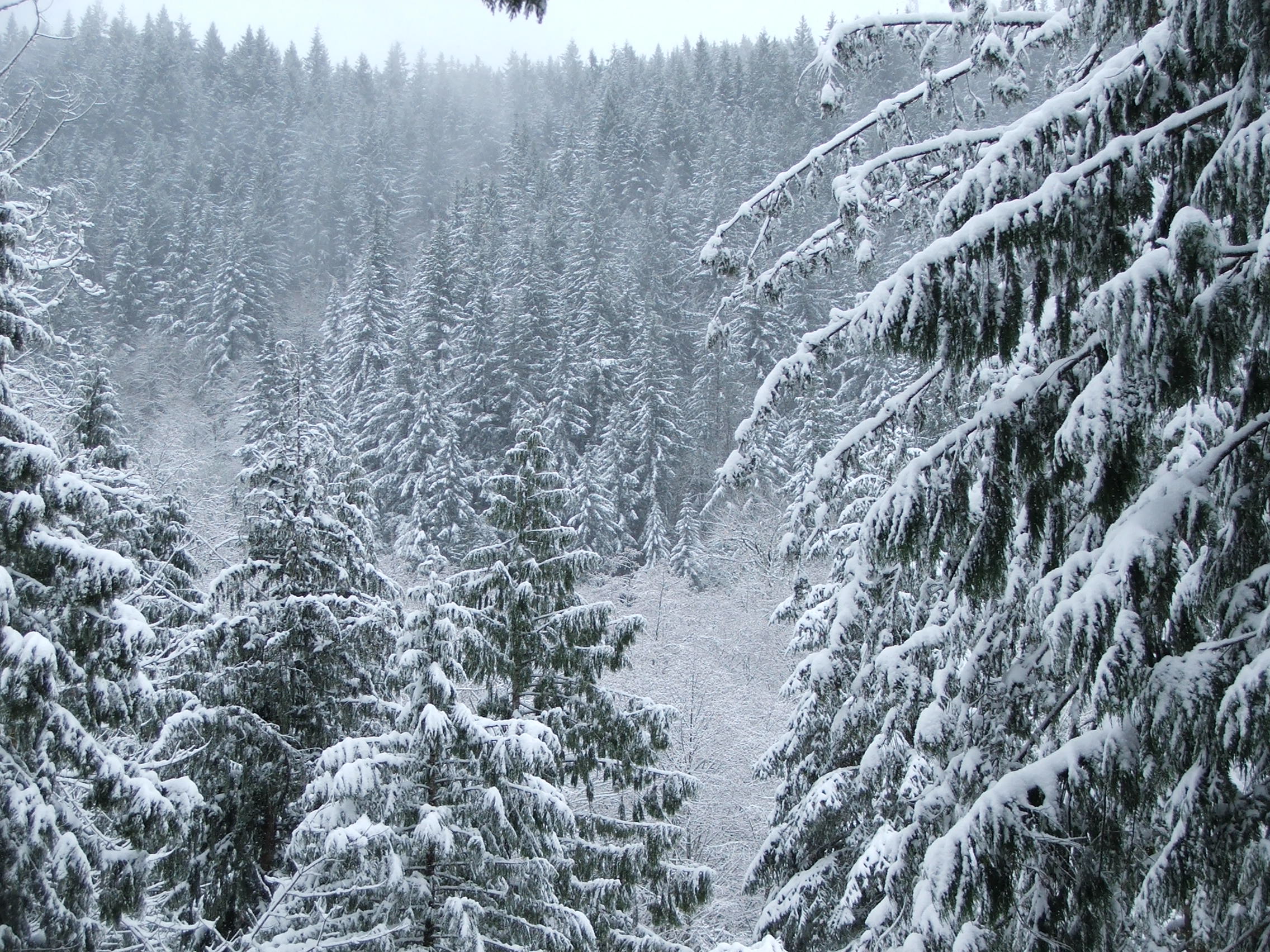
This pensiveness draws me out into the trees. It’s when I go out in the dark and freeze my butt sitting on a specific granite boulder near a yew tree. There I can sense that deep sleep under my feet, can feel the slow revolution of seasons, and wait for my time of remembering.

One memory in particular is of auntie, an elderly woman who raised my mother. On Christmas Eve, she created magic fire, sprinkling powder over flames and turning them all colors of the rainbow. All kids should have magic fire on Christmas Eve.

So for the next few weeks I shall be remembering and honoring the past.

Sleeping trees

Sleeping trees

A Body of Stories

I’m taking an archaeology class through Coursera and we’ve been asked to think about the ethical questions around excavating human remains. Do archaeologists have the right to uncover, study, archive, those remains? Are they preserving history for the future or breaking cultural taboos? And at what age does it become okay? For example, could I study someone who died ten thousand years ago? Five hundred? Twenty?

Someone once said a person is not truly ‘gone’ as long as there is someone to remember them. So is that the line we draw in the archaeological sense? If memory exists, remains shouldn’t be disinterred and studied? That question now moves the debate into the realm of stories, which of course, fascinates me.

I was lucky enough to know my great-uncle, who was in his late nineties when I was small. Quite the character, by the way. He told me stories about his grandfather and great-grandfather. Obviously I never knew those people. I have no emotional attachment to them. And yet I do have their stories, which keeps those long gone people alive in my mind. Gone, but not forgotten.

Does that mean I have a concern in whether their graves should be disturbed? Honestly, I’d hate to see disturbance because Cherry Creek, where they are buried, is very old. On the top of a butte, overlooking hills and fields of wheat all the way to the horizon. Other than that, I have no strong prohibition to disturbing remains in order to learn.

Back to stories. Does the excavation of an ancient burial site kill the stories? No; it may even add to them. And to me, the tale of a person’s life is far more valuable than an unrecognizable mummy, or a scatter of bones. But then, I’m a storyteller.

Disturbing the dead when it’s a cultural taboo, or when it causes distress is another matter. Those things have to be honored.

But I’d rather have stories left, to be shared, to be laughed over, then bones or ashes. Those may tell a future excavator where I lived, what I ate, how good my dentist was. But no amount of tests will tell those future excavators I yelled at a cougar. That will remain in the hands of a storyteller, most likely my son.

So I had this great-uncle named Stonewall Jackson (first and middle name). Jack was stone deaf. When my grandmother introduced Frank, the infant who would become my father, he said, “Friday? What the hell kind of name is Friday?”

And Friday he became. And all my other uncles and aunts ended up with lifelong nicknames, all because uncle Jack was deaf. That story isn’t in his grave. It’s in memories.

The photo below doesn’t show depth perception well. Cherry Creek is the top of a very steep, high hill.

Cherry Creek in winter

Cherry Creek in winter