Flying to Freedom

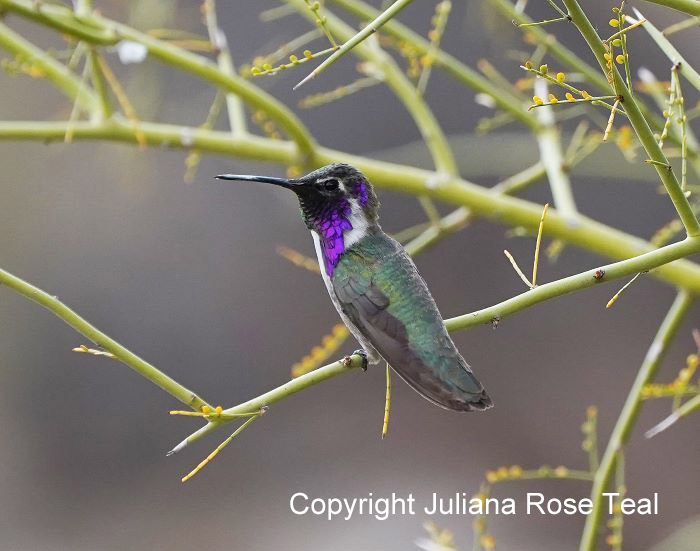
Juliana Rose Teal has just published her memoir, Flying to Freedom: Healing From Ritual Abuse Through My Life’s Work and Flight. As with all memoirs, the road to this point has been long and difficult. Yet, she has a powerful story to tell and I’m thankful that she found the strength she needed to stick with writing this. The memoir itself may be difficult for some to read, but as Juliana says below, this interview will be gentle with the reader.

Your memoir tackles a difficult subject, and healing is a clear theme. Did you consciously set out with that theme immediately apparent to you, and were there other themes or messages you wanted to explore?

Yes. I wanted Flying to Freedom to be about healing. That is my sole theme.

I wrote my memoir to shed light on satanic ritual abuse, but I wanted to be as gentle with the reader as possible. For this reason, scenes of my astrology, medium, and healing work, scenes of flight training and flying, and descriptions of nature far outweigh the scenes of abuse.

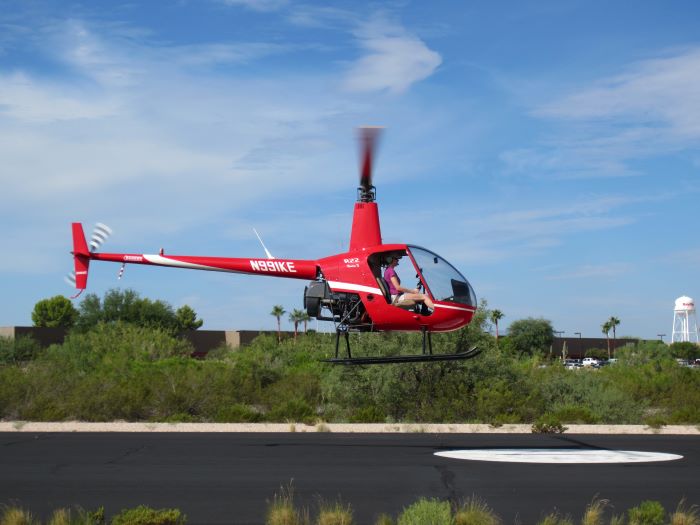
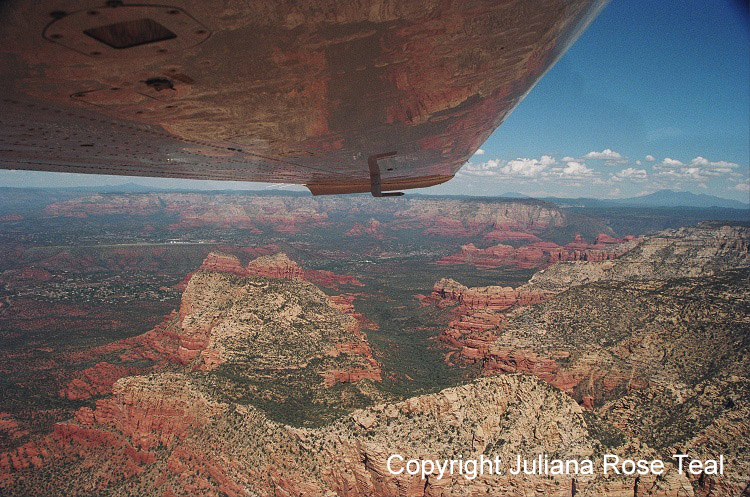
Each chapter that describes flying is tied to my healing process. I showed how I persevered through learning fears and gained confidence as I mastered different aspects of flight. Each flying accomplishment began breaking the hold the cult and my abusive parents had over me.

The chapters about my work are also tied to my healing. I gained self-assurance as I worked with clients, and learned to trust myself and also the guides (angels) that work so closely with me. My work and my intuitive abilities opened and healed my spirituality which was something that had been taken away from me as a child.

My goal is to show that no matter what trauma we have endured, healing is possible, and even though our scars remain, we can find enjoyment and fulfillment in life.
You had many, many roadblocks to telling your story, from the personal to the professional (as in editors telling you it would never happen). What helped you remain true to this story?

I sure did! The whole process of writing and publishing has been quite the learning experience.

I was about halfway through the book when I realized I needed some help. I know how to write
(this is something that has always come naturally to me), but I felt something was missing in
terms of tying my theme to the different storylines in my book. I began to look for an editor to
help me, which was difficult because I had no connections to the writing world. I found the
names of two editors in the back of two New York Times best-selling novels. I contacted them.
Neither would edit books on abuse, but both saw samples of my writing, and I received the gift
of them telling me that I was a talented writer. I had never shown my writing to anyone (besides my monthly astrology newsletter). Their belief in my writing abilities helped me continue to move forward.

Then I approached another editor. She thought my life story sounded interesting and agreed to
edit my book. We exchanged many lengthy emails, where she asked too many detailed
questions about the books I have read and my approach to my book. She eventually asked me
to send my manuscript. A few weeks later I received an incredibly abusive email from her,
letting me know that I should toss this manuscript and write something else. She said some
terribly harsh things that were untrue and uncalled for. I fired her.

I despaired that I would not find an editor, and thought for a short time about stopping. But
what helped me to remain true to my story and continue was an inner knowing that I was
called to shine light on ritual abuse, and that my story is unique and must be told. I felt my book
would be healing to other survivors of any trauma, and that kept me going.

Over time, I not only found one editor, I found three to work with! All had different talents and
focuses. The information they shared helped me to complete my book. Their belief in my story
and their desire to see it published healed the pain of dealing with the abusive editor and
helped solidify my determination to publish my book.
How do you think the manuscript evolved during the editing process?

My book changed quite a bit over time. I cleaned up sentences and fixed typos. I was reminded
to expand certain parts of the book—I had been concerned that I was giving too many details of
my life in certain sections, but found when I expanded these sections, it actually added more
richness and interest to my book.

I also changed some of the content of my manuscript. I learned that each book has one theme.
Just one! Chapters that stray from the theme of the book take away from the storyline and can
cause a loss of focus that can weaken a book. I deleted several chapters that did not contain
healing themes. It was difficult to do, because I liked these chapters, but ultimately, it tightened
and improved my book quite a bit.
Because this is a memoir, obviously you have lived the story your whole life. But at the same time, you’ve carried the weight of needing to share the story, to write it down, for a long time. What does it feel like, having the memoir finally done?

It feels amazing. I worked hard on it for over five years, and to have the finished product in my
hands feels surreal. It is very exciting, yet it is also a bit scary. I did not have a difficult time
writing the book, even the abuse scenes, because I have wanted to write my entire life. I am
fascinated with the writing process and this distracted me from the difficulties I could have
experienced when writing about abuse.

But putting my book out there into the world is another matter. There is a feeling of
vulnerability that comes with it. I have always been a private person, and now the world knows
intimate and painful details of my life.

There is, unfortunately, a lot of denial that satanic ritual abuse exists. I am sure I will run up
against the people who will say that my story is not true because such horrendous abuse is not
possible.

But I am happy my book has been published, and hope that it helps other survivors and their
loved ones.

You became a healer because of the life you had but I’m wondering what you dreamed you would be when you were young.

I was made to believe, from a very young age, that becoming a doctor would be a good career
for me. I am not sure why my parents insisted on this. It would not have been. I have always
loved animals and nature but never thought it was possible to make this love into a career, so I
imagine as a child, any musings about this were stuffed deep inside of me. From a young age I
wanted to be a writer, but I found no encouragement for this path, and did not have the
confidence to pursue it. I did have a hidden interest in the metaphysical/spiritual, and if I had
been allowed to dream about having a career that I desired, I most likely would have dreamed
about this as well.

After all it’s taken you to get to a finished book, to be able to hold your voice in your hands, do you think there is another story waiting to be told inside you?

I would love to write another book, but am not sure what to write about. I am thinking about it.

With the knowledge of the writing process that you now have, what would you do differently when writing another book?

I have learned a lot about linking stories together in a book to help with the flow. My first draft
did not link stories within a chapter or even chapters together well. Now that I am aware of how important this is, I would make sure my next book had good flow from the start. Other
than that, I would proceed in the same fashion—motivation was never a problem, so I would
write every day, and when I was ready, submit my manuscript to editors.

Thank you for taking the time to answer these questions, but thank you even more for sharing such an intimate, difficult, and powerful story.

Go back

Your message has been sent

Warning
Warning
Warning
Warning

Jaime Haney, Artist

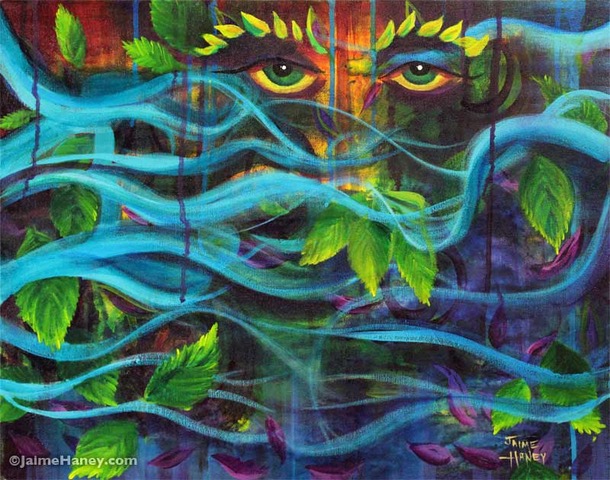
A while back I found Jaime Haney’s blog, which led me to her website, Jaime Haney Fine Art (www.jaimehaney.com) The first piece I saw was the one below. I was caught by the vibrant color and sense of motion, and reminded of another artist, Emily Carr, who also had that sense of motion. Painting fascinates me because I have no sense of color, but also because of how the artist can take something stationary, as in a canvas, and make it alive.

Mystical Mother Nature

I then watched Jaime take on the challenge of creating one painting a day for thirty days. I followed her progress, and then asked if I could interview her. Jaime graciously agreed, and what follows is that interview. I hope you enjoy seeing her perspective on the creation of art.

And I hope you take a few minutes to visit her website and look at her work.

Can you give me a little of your background and how you came to paint?

I’ve always loved to draw and I painted as a child like all of us but not once I got out of high school. Drawing was always easy no matter where you are, just grab a pencil and paper and start. So I always drew. I drew on everything.

In college, I was learning to be a graphic designer and that didn’t require any painting or painting classes, so I never was taught the “right” way to paint. It wasn’t until a few years after I had my son and had quit my job as an art director at an ad agency that I decided to give painting a try.

It started out first as painting in sketch books. My first official painting, which was on a piece of wood, was of an owl and painted with the intention of being a birthday gift for a friend.

I enjoyed it so much and discovered I had somewhat of a natural ability to do it that I decided to try and teach myself to paint the “right” way through books from my local library.

When you look at the world around you, what triggers the desire to recreate what you see?

The desire to recreate beauty is fueled by an unknown reason, it just seems to be in me. The same as recreating nature in my gardens… an uncontrollable urge to dig in the dirt and make something grow and thrive.

Regarding my subjects in painting or illustrating my world and thoughts, they are triggered by the sheer beauty or mystery of nature. That something may be a simple curve of a leaf, colors of a velvety petal or the many arms and fingers of the trees. Sometimes it’s the mystery of a dream or even just thoughts.

Tropical paintings

One painting a day…

You use acrylics in your work. What made you choose that medium and why do you prefer that over other mediums?

I like acrylics because they dry so fast and are easy to manipulate. I can use acrylics as watercolors if I so choose just by watering them down or using an additive (mediums). I also have the choice of making them more oil like with the addition of mediums and glazes. The ranges and uses of acrylics are many. The fact that they clean up easily is a bonus.

We talked before about a technique called ‘under painting’. It sounds like this is similar to plotting out a novel, where you create the scaffolding. Can you talk a bit more about under painting? Is it similar to sketching out something ahead of time, or is it more like laying down the basic color patterns you want?

Yes, underpainting is more like laying down the base of the painting for which I’ll build up with layers. The first base or underpainting may just be blocking in simple shapes of what I’m painting with a color that makes sense to what will be going over it later.

Sketching is generally done before the underpainting is blocked in. Sketching is used to layout my composition of the painting. Sketching isn’t necessarily done with pencils or charcoal. A painting can be sketched using paint as well.

An elderly friend of mine who painted for many years, no longer does so. When I asked her why she stopped, she told me she no longer felt the need to capture and own the life around her. She felt painting was a form of possessiveness for her, rather than recreating something beautiful for others to enjoy. What do you think about this in relationship to your paintings?

Well I think everyone has their own reason for painting and mine seems to change with time and the project I’m working on. Sometimes, it is simply to create beauty and/or mystery for myself to enjoy as well as others. Sometimes, it is a personal challenge to see if I can do it.

Others it’s almost an out-of-body experience. I know I’m painting, I feel the brush in my hand and the creaminess of the paint leave my brush and transfer to the canvas but I feel like I’m being directed by something else. Like the painting is painting itself. Time escapes, and I find it finished and wonder how I did such a thing.

I consider this a gift. I feel like not using my gift and sharing it with the world would be a mistake.

I love the paintings, and writing, of Emily Carr, a Canadian artist from the early 1900s. She said writing for her was peeling a sentence back to its bare essence and she felt that overlapped into painting. Do you think something similar must happen in order to recreate on canvas what your eye sees?

No, I believe anyone can create what they see with their eyes as it is a technical skill. However to touch someone, to convey your true meaning and to have it sink into the painting with feeling and soul requires truth with oneself and to let the process work (that and a bit of luck). To let go, let the painting evolve into what it wants to.

That doesn’t mean the viewer will know that truth. I’m of the belief that everyone will receive the work how they need to receive it. It’s not my job to make you feel a specific feeling with my work, it’s my job to just create it. to let it flow from me… It’s your job to take it in and discover what the painting is saying to you. I believe it’s different for everyone.

artist Jaime Haney painting in art studio

What do you hope people see when they look at your painting? Or in other words, what do you want your paintings to say?

Like I mentioned before, I really have no control of what people feel or see when viewing my paintings. That said, I do hope my paintings move them to a memory or thought that is significant to them. That the work evokes a smile or inspires wonder. I love to hear what people think of my paintings as far as meaning before I tell them what I was thinking as I painted it.

What do you think makes the difference between looking at a painting and looking at a photograph?

I think both can transport the viewer to another place. Both can invoke memories, good and bad. There is something about a photograph that for me is more telling in what it wants to convey. Maybe a flatness due to the camera being a machine and not the hand of a human. Perfection, again because of machine vs. human excluding distortion. I don’t really compare them, they’re so different and I feel both are equally an art outlet.

When you paint, are you aware of the emotional reaction you are trying to pull from the person who will eventually see the painting? Or is it more that you paint your own interpretation into the piece, and viewers then react to your relationship with the piece?

Hmmm… this is a good question. I don’t know the answer. I don’t think I’m aware of creating any emotional reaction into the piece. If that were possible, I probably would be doing it as much as possible! I feel like I keep answering the same way, but I truly feel the viewer consumes the work as it needs to be consumed at the time. They read into the work their own truths and those truths may be different at different times.

Is there one question you wish people would ask you about painting? And how would you answer it?

Well this is a hard one to answer because I can’t really think of anything that I wish they would ask. Technical questions are easy to answer, the harder ones are why did you paint this?

I don’t have a “main stream” style. I’ve often felt like I’m an outsider and I’ve never really fit in to anything (even artist). I don’t paint subjects or objects with the intention of “I think will sell”. So a lot of times my strange ones don’t sell. Occasionally, I don’t want to explain the real reason why I paint something as it feels very personal to me.

After saying that though, I do like it when people will ask “what’s the story with that one?” because when they say story, I feel the permission to embellish and add my thoughts of what I think the painting was telling me at the time. Because when you tell the average viewer the painting told me to… they kind of look at you differently or smile and walk away. But when I tell them the story of the painting they are more interested it seems. Really though, are they very different? I’m not entirely sure.

I’d like to thank Jaime for taking the time to answer questions, and to do so in such a patient and thoughtful manner. I love seeing the creative process in all its many forms.


An Interview With Gloria Two-Feathers

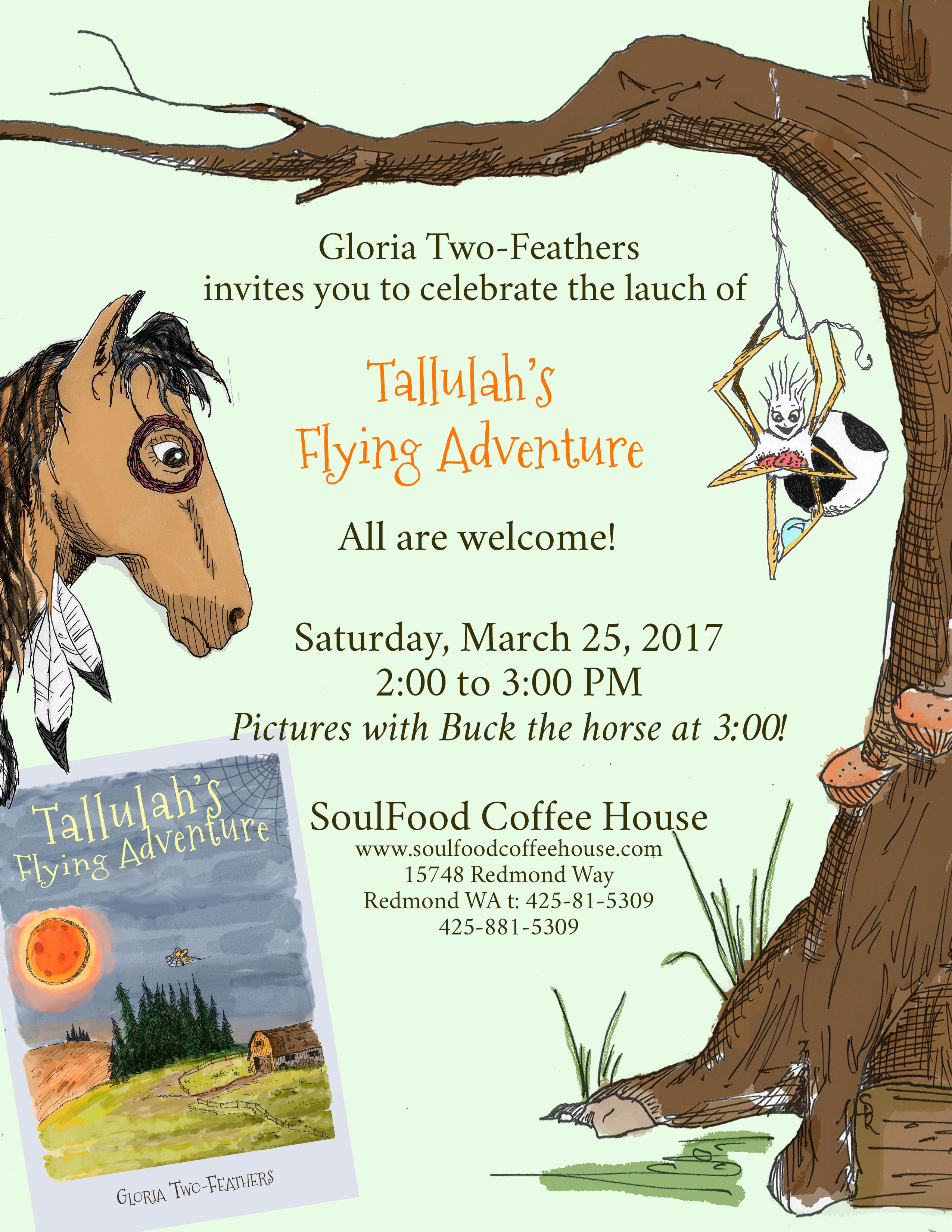
I was honored to be asked to edit a children’s book that is now published. Following is an interview with the author that I hope you will like. And for those in the area of Renton, Washington, Buck, the horse, and Gloria will be doing a book signing this coming weekend. The flyer follows here. I know this is long for a blog post but I hope you will take the time to join our conversation.

Now that you’ve been through the creating, revising, editing, and publishing process, what step did you find the hardest, and why?

For me it was definitely the publishing process. I chose to self publish. When I started that process I stepped into a whole new world. The self-publishing market is continually growing and changing. When you self publish it means you do everything yourself. I found this scary and intimidating. I do not have the skill level to do everything required to publish a professional quality book. It was not my intention, but I found myself creating a team to help me. My team consisted of a professional editor, illustrator, publisher and marketer.

My first step was getting my book professionally edited. That was when I found you, Lisa. As my editor you not only edited for grammar and typos; you recognized my voice and helped me develop my story. I loved working with you. Through your encouragement and skill you brought out the best of me and my story.

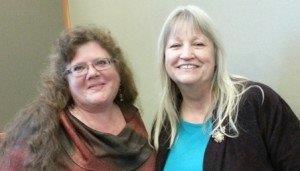
Lisa&Gloria

Gloria and I at an author panel

Then I hired an illustrator. He read the book and asked a lot of questions about how I pictured Tallulah, Buck, and Bird Friend. He offered suggestions and then produced the wonderful illustrations that are in the book.

IMG_0522

I loved these illustrations – they’re in a similar style to my favorite books as a child – the Borrower’s series by Mary Norton

I met Joy Burke several years ago in a writing group. We became great friends and she helped me navigate the challenging world of self publishing. Then Joy launched her own publishing business, Crooked Tale Press, which provides services to help authors who wants to self publish. These services include book layout, cover design, ISBN number and uploading on CreateSpace and Kindle Books. I could have never done this without her expertise. The latest person to join my team is John who is helping me with internet marketing.

20160726_094050-3

Great photo of Joy and Gloria

On a similar note, what was the easiest, and why?

The easiest for me was creating. In the Native American belief everything is connected. There are many worlds that exist – some of them visible and some invisible. But they are all real and we can enter them at any time. All my life I have often visited and lived in these worlds. Anyone who has meditated or communicated with a tree, or communicated with their dog or cat has entered one of these invisible worlds. Animal Communication is a big thing right now. The latest new thing on TV and the Internet is Inter-species communication. Most indigenous cultures around the world know these things are nothing new. They understand this is the way it has always been. Everything is connected and accessible.

My experience is when I enter one of these worlds through writing or storytelling my characters take on a life of their own and they pretty much tell me their story. I believe many others who write or tell stories have had this same experience.

Tallulah’s Flying Adventure teaches us to believe in our dreams and our inner courage. What was the inspiration for this story?

About twenty-seven years ago, I was sitting in a meadow after a Sweat Lodge. I saw hundreds of baby spiders in their web-sails flying across the meadow. I never forgot that moment when I had a glimpse into that mostly unseen world. I knew it would make a great story or a book.

Throughout the years I became a proponent of women’s personal empowerment. I have believed for many years that women have a very large role in what is happening in the future of the world on a global scale. And I feel it’s important to understand what personal power really means and what we can experience when we come together in community. I was drawn to develop and teach the programs, Gathering Your Medicine and Sisters of the Shield, as well as Energy Healing classes.

When I started writing the book, Tallulah presented herself and Tallulah’s Flying Adventure was created.

I’ve seen you captivate audiences with the oral storytelling traditions. Why do you think our love of stories is so deeply ingrained who we are?

I think storytelling is in our DNA. Stories have existed as long as humans have been on Earth. We use storytelling to explain the unexplained. As well as to entertain each other. Everyone has a story to tell.

Do you think society is losing that connection to stories with the advent of modern technology, or do you think technology makes stories more accessible to all?

I don’t think we will ever lose our connection to stories. I see modern technology as another way to access stories. Whether it’s listening to a story downloaded to your high-tech device, or a storyteller on the radio, or in movies, animation, or plays, or seeing a live storytelling presentation. It seems to me that there is something for everyone.

When we first met you didn’t think Tallulah would ever be published. Can you share how it felt to hold the story in physical form?

Ah, that seems like such a long time ago. I have to admit I wasn’t sure Tallulah would ever be published. So many times I had to turn to the book to keep believing and moving forward. When I finally held it in my hands it was one of those surreal moments and it was amazing! When I first saw it I thought , ‘My first born in the book world!’ I have to admit I teared up and held it to my heart. It will always be my first and I feel we grew up together. I love it.

While adults can enjoy your stories, too, what draws you to write for children?

Children are being raised in a world vastly different from the one I was raised in. It seems to me that young children face some of the same difficult challenges that adults face. To quote my Spiritual Elder, Paul Ghost Horse (Buck Ghost Horse’s son), ‘Our children come to the Earth with the answers we need inside them. We have to raise them in a way that they can give us those answers.’

If children can relate to a story where two completely different Beings, like a spider and a bird, who are naturally prey and predator, can be friends and allies, or a big horse who would usually never notice a small spider, can love and care for each other, maybe children will see the possibilities of their world a little differently. When Tallulah believes in her dreams, trusts Spirit, and develops her inner courage, it helps her see that no matter how young and small she is, she can make a difference in the world. And I think that is an important message worth sharing with children.

IMG_0783

The stand-in for Buck, before getting dressed up for the upcoming book signing

What story would you like to share about the creation of Tallulah’s tale?

As I stated earlier the story pretty much wrote itself. It was me that needed to walk a mile in Tallulah’s moccasins. I felt very small and powerless in the big world of writing books and publishing. But I kept having big dreams. So I had to learn how to fly to live my dreams. I had to develop my inner courage and have faith that the Great Spirit had heard my prayers and would send me the help I needed. The Great Spirit did hear me. Spirit sent me the sense of Buck, the great storyteller and the Keeper of Sacred Life. Spirit sent me the wise Grandmother Spider, weaver of webs that connects everything together, in the form of you, Lisa. You soothed me, gave me direction, helped me find my courage and developed my skills. Spirit sent me Bird Friend in the form of my dear friend, Joy Burke, who flew into the adventure beside me, teaching me to fly and showing me the way. Joy helped me navigate in the dark and fought off the bats, that were my own dark fears. When the book was completed, she flew aerial somersaults and celebrated my success. And that is the back-story of Tallulah’s Flying Adventure.  For which I will always be grateful.

Thank you Gloria. And for those who might be around Renton, here’s more information. And Tallulah’s Flying Adventure is available on Amazon.

Gloria's Poster_contact