Interview with Author Lisa Souza

My last post was an interview with Mark Souza. This one is with his wife, Lisa, author of Beauty and the Bridesmaid. I’ve been lucky enough to read both Mark and Lisa’s books in early stages of development. This book made me laugh outright, which is no surprise because Lisa does, too. The thing is, the book hooked me because I’d laugh and then realize, ‘wait, this isn’t funny anymore, this is tragic’. What a roller coaster of emotion.

You have multiple writers in your home. What are the pros and cons of that?

PRO: Other writers understand the frustrations that come with the process: empty pages, dry spells, and of course the familiar ‘this is not nearly good enough’ feeling.

CON: Getting someone’s attention in a household full of head-phone-wearing laptop-gazers is useless. Don’t bother trying.

PRO: When stuck for a specific word, one can employ local talent to compete in a ‘find-the-word-I-need’ effort. Saves oodles of time digging through a thesaurus.

CON: It’s daunting living in the shadow of talented people. Therapy may be required.

PRO: Who better able to celebrate the joy associated with, say, a book sale or a good review, than another writer or two or three?

Vegas_Mark

Multiple writers? Nope. Lisa taking a photo of Mark. With fans?

Is there a book out there that you wish you’d written? If so, what was it about that writing that pulled at you?

What an AWESOME question! We could start with the non-fiction stuff (Stephen King On Writing, Thomas Sterner The Practicing Mind) and work our way through the classics (The Handmaid’s Tale). But I can’t neglect fiction (A Wrinkle in Time) or every single thing penned by Martha Beck. And Dean Koontz writes such heroic characters – they make me feel lazy and un-evolved by comparison. Great writers create clever, layered word experiences. In The Husband Koontz tossed in a plot twist that caught me off guard despite a life-time of avid reading. What a gift.

Are there certain types of scenes that are harder for you to write than others and if so, why do you think that is?

I suffer from plot envy. Working out a clever plot requires so much mental gymnastics. It would be handy if I could conjure twisty, believable stories by ingesting copious amounts of cheese, but not so. I have far fewer problems writing angsty characters dripping with emotional baggage. They do say “write what you know.”
Lisa Souza 2

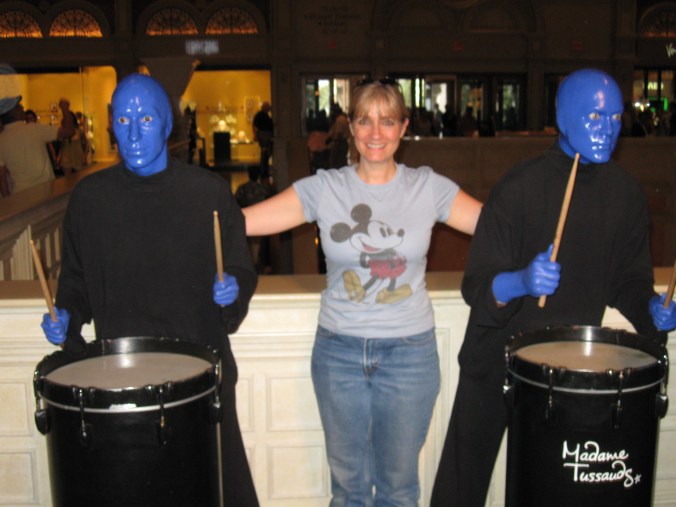
Wonder if these guys will show up in a book.

You also write screenplays. How does that writing process compare to writing fiction?

I thought writing screenplays would be far easier than novel writing – so many fewer pages needed! So much more white space! Instead it turns out screenplays are tricky word unicorns, unique creatures with distinct requirements. The format requires a tight, clean writing style, free of fluff and full of visual intensity. No long-winded descriptions in a screenplay. It’s a controlled environment, unlike a novel where you are free to flesh out details. Screenplays exercise a different set of writing muscles.

For example, you write with a particular actor in mind. Since you hope to capture their attention, you target your language and perhaps even the genre to attract that person. Awareness of budget plays a part, too. Is there a way you get rid of seven residual characters and still advance the story? Great! You just saved the studio thousands of dollars. Whatever the medium, though, it comes back to the empty page and the need to tell a compelling story.

It took a lot of encouragement and prodding to get you to finish your book. What were the biggest stumbling blocks, and how did you overcome them?

My older brother is a very successful writer. He’s also hugely dedicated to the craft. He has always worked harder and with more focus than anyone I know to make the written word his life’s focus. He told me when we were about five and three years old respectively that he would be a writer when he grew up. Well done, brother.

My husband is a successful writer. And a successful engineer. In short order he put together a very successful anthology of short stories and an award-winning novel. You, go!

And on a rational level, I’m overwhelmed with joy for them both, and hugely grateful to those who put pen to paper (or fingers to keyboard), creating fresh and new and vibrant for me to enjoy. Thanks, y’all!  But being sandwiched between talented people leaves me swimming in awe. And also self-doubt. And fear, let’s not forget terrible fear of not being good enough because what if I do not deserve to share the stage with those dedicated, talented writers??

But at some point a couple of things caught my attention. One: every human being has a unique and intriguing perspective, so sharing mine contributes to the rich literary bucket. Two: I’m going to die. I know. It surprised the heck out of me, too. When I truly accepted the finite nature of consciousness, I felt compelled to get something completed before some force – like a fast moving car – writes “The End” for me.

Lisa_Souza.jpg

Love this photo. Wish you could hear her wonderful laugh.

And my favorite question – what do you wish someone would ask you about writing, and how would you answer it?

Would you like fries with that? (This is called ‘stalling’).

Gosh writing is hard. Writing QUESTIONS is hard.

“Does writing come easily to you, Lisa Souza?”

No, Lisa Stowe. No it does not. Writing is wonderful and complex and hard, like… like… like a very, very hard thing.

Beauty and the Bridesmade e-book

All the books by both Mark and Lisa are good, but this one is my favorite. It’s not what you expect.

An Interview With Mark Souza

A writer wanders into a writer’s group…and sticks around for years, becoming a friend in the process.

image

You have family who are also writers. Can you tell me the pros and cons of having multiple writers in the same home?

With three writers, heads down over laptops, it can be a long stretch between words. Then there are the times you want them as beta readers, or they want you. It’s time they don’t get to write, and half the time you wonder if what you’ve written is even worth reading.

What has been the hardest for you along your writing path? The easiest?

Easiest is when the story flows through you too fast to keep up, and you see it all playing out in your head and it’s brilliant – then you look up and 10,000 new words are on the page. The worst, there are so many; when you’re blocked and words won’t come. When you reach a point in your story where there is no bridge to the rest of it. And when you’re stuck in the DMV of edit/rewrite over and over again until you never want to see your story again.

In this day and age of millions of books available, what steps do you take to help become visible?

I write the best story I can, and good cover art and blurbs. Good writing and good stories will be found. The world is hungry for them. But readers may not even look inside if the cover isn’t appealing, and the blurb compelling. I’ve tried advertising and blog tours, they don’t work. You’re much better off putting the work into your story – the next one, that is.

What draws you to the genres you write in?

Money and passion. I started out a mystery writer – mysteries are a passion of mine as a reader. I became a horror and sci-fi writer because there were far more open short story calls for those genres and I wanted to be published, and I wanted to be paid. My first novel, Robyn’s Egg was going to be a short story. Sci-Fi pays the best. The call was for stories of up to 15,000 words, and paid five cents a word. At five cents a word, you get pretty Dickensian (who was also paid by the word). I got to my 15,000 words, let my wife read it, and she said there’s a lot more story there. So I kept writing, and it turned into a work of passion and a 162,000 word novel. I had some things to say. My second novel, Zombie-saurus Rex was a work of passion from the start. It’s about a gawky zombie kid just trying to get by and maybe be accepted, though he is clearly different. It’s sort of autobiographical.

image_2

Where do you think your love of words and stories came from?

I’ve always been a storyteller, though initially my talent was oral storytelling. I’ve always known that the order you weave your tale, and the which words you choose makes a big difference. It’s all in the delivery. I would hear people tell their own stories, and internally wag my head while smiling on the outside, thinking, “that could have been a great story if you only knew how to tell it.” It seemed like a natural step to move from oral storytelling to writing – though it was much harder than I thought it would be. Practice, practice, practice. Get your one million words down on paper and you’ll probably be a decent writer. And don’t let anyone who doesn’t love you see those first ten stories.

What is the earliest thing you remember writing?

When I was 25, I wrote a Hemingway-esque story of a couple in the 1920’s whose marriage falls apart after the birth of a mentally handicapped child. There was no joy in the story, but it was visceral and real. I wrote it out longhand on a canary yellow pad and don’t know what ever happened to it.

When did you have that ‘aha’ moment that made you realize you were a writer?

When my first story was published and I got paid. It wasn’t a lot of money – dinner and a movie maybe, but it meant something.

image_3

Aha!

Storytelling in one form or another has been around forever, from cave drawings to oral traditions, to e-readers. Why do you think stories create such a deeply important part of being human?

It’s a chance to travel somewhere exotic, meet a hero, or someone charming, and face down a villain. It’s a chance to escape your life and live a bigger one. It confirms your beliefs and challenges them. It makes you stay up all night because you just have to know. It’s because the world inside your head is so much bigger and more colorful than the real world.

Now that you have a few books out, do you see an underlying theme that comes through in them? Or a theme that draws you to write? I have a tendency to get on my soapbox in the novels I write. The one thing I’ll say is writing is so much easier (and better) if you are passionate about your story.

There is so much advice out there for writers. In your writing path, what have you found most beneficial and what advice have you found least helpful? On the helpful side, “write in active voice with creative, audacious verbs,” and “show, don’t tell.” The least helpful, “write what you know.” Write what you want. Write what you have a passion for. If you don’t know it, research and learn something along the way. And don’t be afraid to create your own world.

In all the interviews you’ve done as a writer, what is the one thing you would like to have been asked and haven’t yet, and how would you answer that question?

“May I fill your trunk with gold bars?” And my response, “yes, you may.” These questions were awesome – thanks Lisa.

image_4

Photography as Art, Part 2

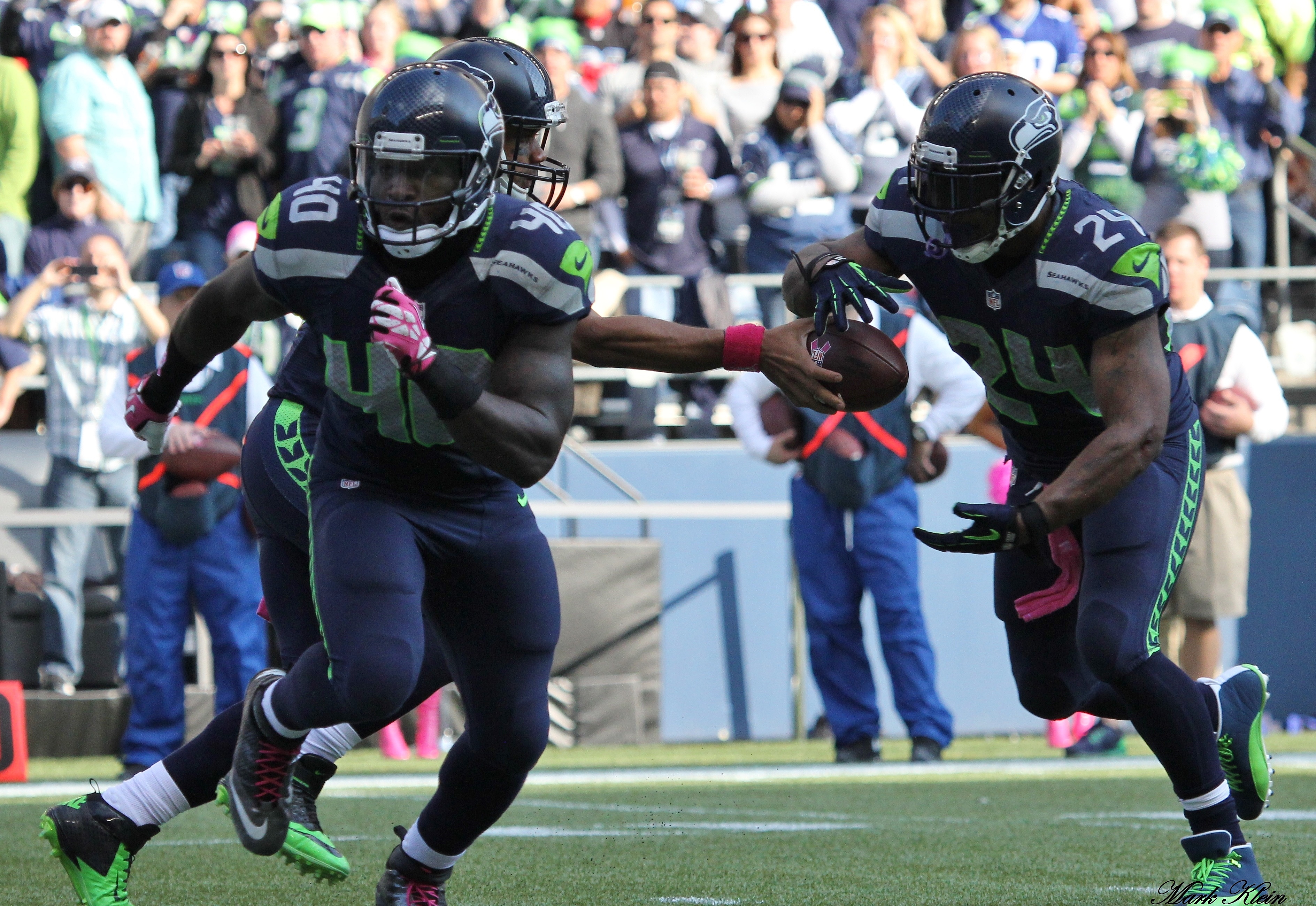
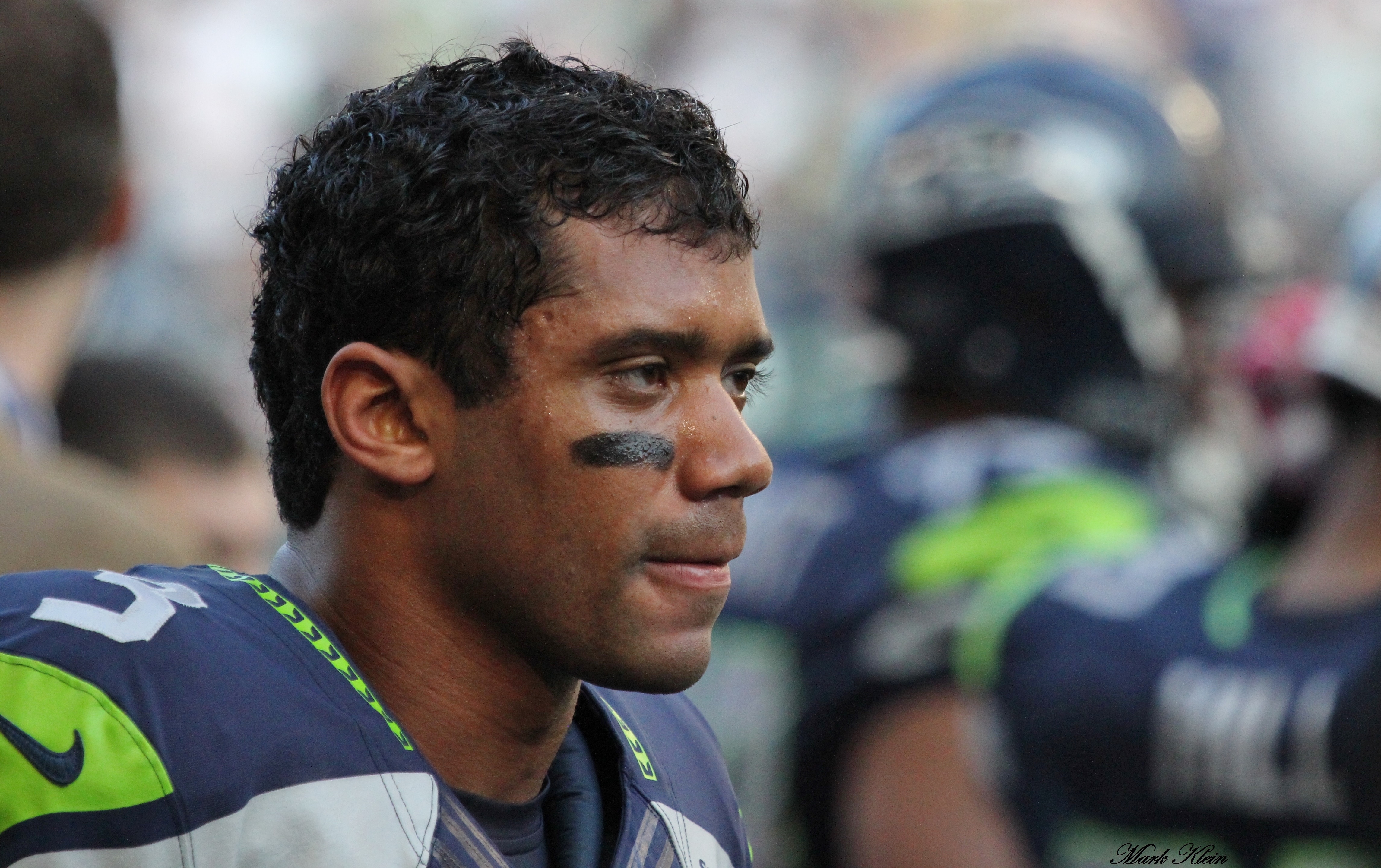
Photograph property of Mark Klein and used with permission

Photograph property of Mark Klein and used with permission

Seahawks anyone? Mountains? Photography, perhaps?

The similarities and differences in types of art interest me – how our creativity chooses to come out. Earlier I interviewed my photographer friend Jane, and promised a second part with a different type of photographer. I’d like you to meet Mark Klein, who, when not doing photography, can be found hovering about his coffee stand, the Espresso Chalet, under Mt. Index on highway 2 near Index, Washington. You can reach him there  or by phone at 360-793-7932. By the way, that coffee stand is where the movie ‘Harry and the Henderson’s’ was filmed so you will also see Bigfoot there. And my personal favorite is a drink called the Black Wolf – dark chocolate and cinnamon. My husband’s favorite, which I find horrifying, is called a Lift Ticket. Eight ounces, four shots of espresso, and topped off with heavy cream.

So grab your coffee, put up your feet, and hang out with Mark and I for a moment. And by the way, Mark is the photographer who made me forget the camera was there for my author photo.

When you pick up the camera, and your subject is before you, what are the first things that come to mind?

The first thing I do is to make sure my camera is on and batteries are charged and card has sufficient space to capture the moments. Then check settings accordingly for the subjects movements or ambiance. Also I’m looking to create focus on the exact point of interest where viewers will be drawn in. Some images look best with a long depth of field. Others points of interest are isolated by a short depth of field. You can totally change the mood of say, a parade, where there are many people doing the same movement or same expression where a long depth of field tells the story. Or the same window may contain a special emotion where I can concentrate focus on by zooming in  or increasing the lens opening. A certain lens (I have 12 lenses) can change everything. Telephotos can capture a special candid emotion. While a circle fisheye can broad focus on a microcosmic scene…my nickname for this lens is a “party” lens. I also use a variety of lenses and filters to bring out certain features of landscapes. So if I am just walking through the woods, I want to be ready for almost anything from a fleeting deer to a trickling stream with special natural light. So I usually set up a hiking scenario with a fast shutter speed and push the ISO to capture the creatures. Then if I find a landscape scene I would perhaps set up a tripod or change to a slower more light absorbing setting. Professional sports requires my fastest settings and lenses.

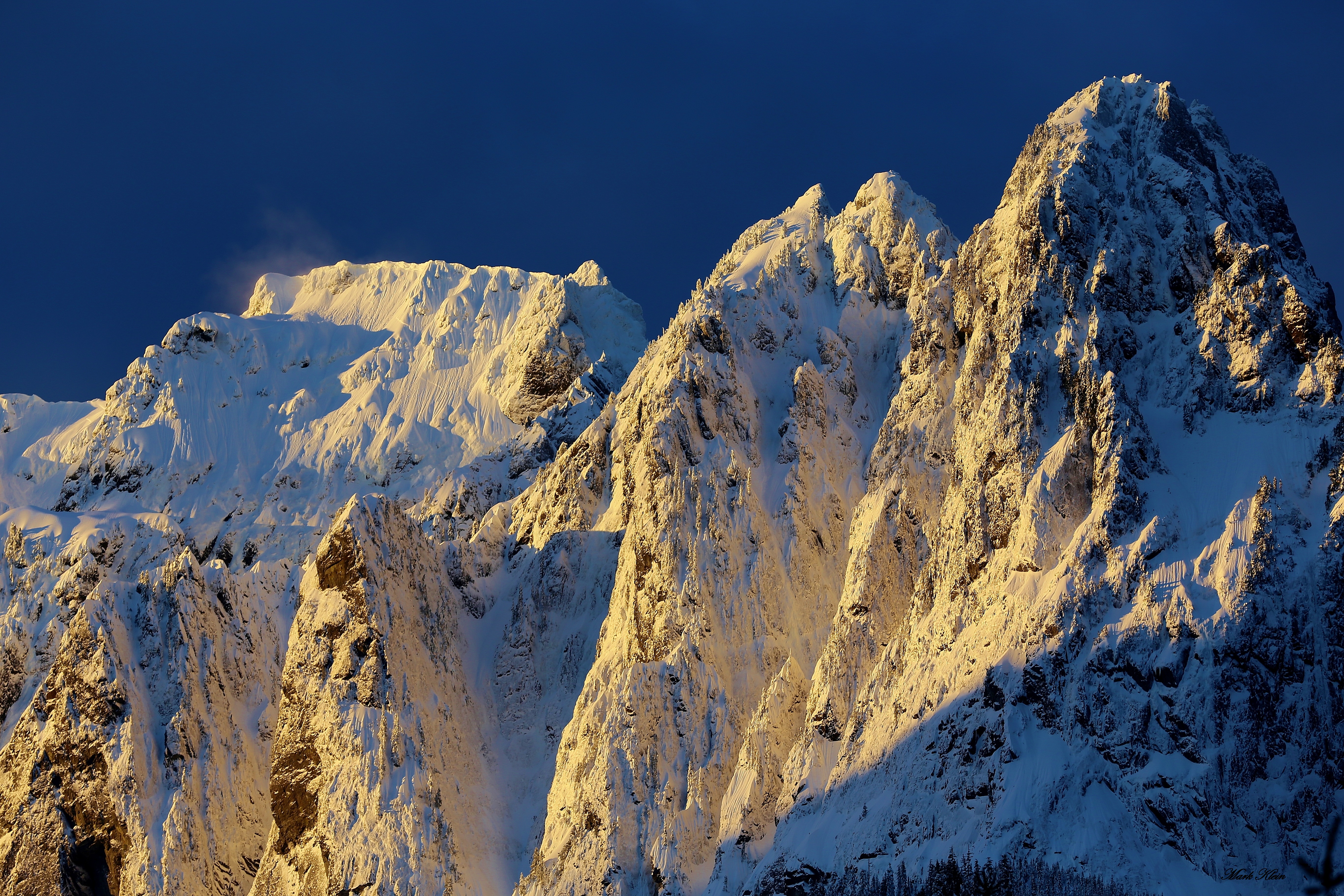
Mt. Index - photograph property of Mark Klein and used with permission.

Mt. Index – photograph property of Mark Klein and used with permission.

It seems like light and shadow could be manipulated to tell the story and I know those can be used to illuminate or create depth. But how do you know to use those tools? Or, more simply, how do you know how to use light and darkness?

I always tell new photographers to “follow the light”….that’s where magic scenes appear amongst the darkness. It can be miles away and create a tremendous capture. So also knowing how an image will respond to post production enhancements comes into play. Digital images can now be changed to appear totally different from the original. So how do I know where and when to use light…..it’s an internal perception or feeling I get much like an artist creating a painting.

Your photos, especially those that are taken outside, always look unrehearsed, as if your subjects are part of their surroundings. How do you pose them to get this natural connection with their surroundings? Or do you pose subjects?

Photography venues vary greatly as I mentioned above, but they all should contain a main theme in common with the message and that message should be the center of attention to the eye. Focus, light and color play a big part here again. I can stop sweat flying off a football player reflecting in the light during a hit or look for a quiet slow-moving post play moment that the player is reflecting on with a blurred sea of color background. Still and staged photos where the photographer controls the scenes can certainly go wrong if the subject does not feel comfortable….photography captures the exact mood of the subject….so this is epic that they feel at ease and understands and see the final image in their mind that you are trying to achieve.

As you go about daily routines, what kinds of things catch your eye and make you think, ‘that would be a great photo’? A similar question would be the more traditional ‘what inspires you?’.

What makes a top-notch photo is finding a scene that creates that uncontrollable and sometimes audible “wow” coming from your mouth or inside voice. If the scene doesn’t draw that out of you as a photographer it’s not as easy to create magic. Scenes with dramatic or unusual features and balanced fore and background help to frame the photo. Sometimes I become so excited about a scene that I have actually stumbled over logs and water, etc. to get the capture. Magic scenes don’t last forever….light changes quickly and all is lost, so you have to be ready. Even as a young boy fantastic photographs have inspired me….capturing an image that truly moves people to that “wow” place keeps me looking and hungry for the next adventure.

Property of Mark Klein and used with permission.

Property of Mark Klein and used with permission.

Storytellers ask themselves ‘what if’ and that question can be the well that stories spring from. It seems to me that this would work for photography, too. Do you have questions that you ask yourself as you move through the process?

What if……comes to mind a lot on the trail or in the moment. It’s the X factor of a scene. What if…. can be created nowadays by digital layering or it can be natural. I prefer natural “what if” because if you’re always running into Bigfoot on the trail….you can lose interest with your followers thinking your photographs are all faked.

It seems that photographers, just like painters, musicians, and writers, hope to elicit emotional reactions in their audience. Do you think about what sort of response you want as you take photographs, what you hope the photo translates to the viewer?

Once again the desired response is to create a breathtaking “wow”…..or send a clear message of the purveyance to the reader/follower.

Have you ever been surprised by someone’s emotional reaction to a photograph?

Yes I have been surprised by reactions…especially in sports or competitions where emotions run high….being photographed is not always appreciated. On the other hand shooting a crash by a mountain biker can “be like” …..”hey man, did you get my gnarly crash?” or “I hope you don’t publish that photo” …..In the latter case….I would never publish a photo the subject was not happy with….I just wouldn’t and I seem to be able to sort those out anyway.

Have you ever thought about why photography speaks to you over other art forms?

I do like many other art forms….but photography is my true passion and passion is what it takes to keep producing quality images and captures. Passion drives me to stay ahead of the curve and the ever-changing digital advancements. It’s something that just works out with my lifestyle and where we live here in the mountains.

What are one or two questions that you wish someone would ask you about photography?

I guess my favorite question is from parents at races “did you get my son or daughter on that jump”? Or ‘did you get that amazing sunset?’ On the techy side….is when I get questions from up and coming inspired photographers asking how to shoot a scene. I do like to share advice on camera gear and settings. I think I’d like to own a camera shop and sporting goods store in our next chapter……

Thanks for the opportunity to talk photography on your blog.

And one last photo from Mark for you Seahawks fans.

Property of Mark Klein and used with permission

Property of Mark Klein and used with permission