Hopping Around Blogs

Susan Schreyer, author of the Thea Campbell mystery series, invited me to answer a few questions as part of a blog hop. Her blog can be found at http://www.writinghorses.blogspot.com (for some reason the link wouldn’t load; sorry) and I hope you take a moment to visit.

And just have to say I love answering questions. Kind of like filling out forms, which I also love. Weird, I know.

1.What am I working on?

Ghost Roads, which is a prequel to The Memory Keeper. All the fault of a friend named David, who came by my place of work while I was in the midst of meeting with bigwigs from FEMA. I’m sitting there with suits and ties, he pops in the door and says ‘I can’t believe you killed Kelly!’ and leaves. You should have seen those FEMA guys. A little mountain town and a clerk who’s killed someone. But anyway, so many people had a connection to that character that I decided to write a prequel with him. I also have a few projects percolating. The fourth book in this series of course, then reworking an older story, and then one that’s completely different than anything else I’ve done, relating to myths.
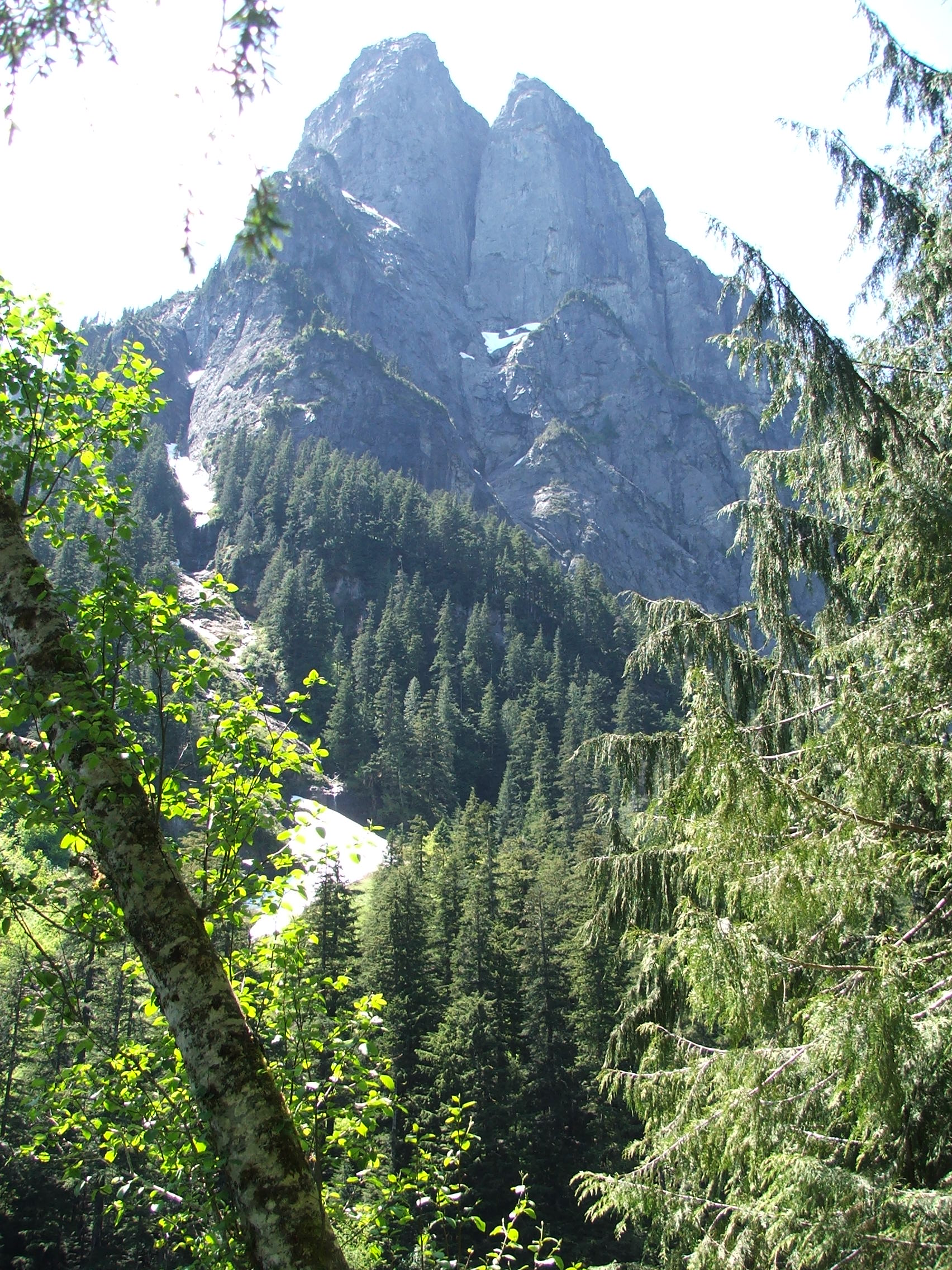
Mt. Baring; location of the myth story.

Mt. Baring; location of the myth story.

2.How does this differ from others in the genre?

I’ll take this question as relating to the mystery series as a whole, rather than just to the prequel. And it’s a hard one to answer. What does make one mystery stand out from another? There’s a dead body and the reader has to figure out what happened to it. I guess, for mine, there are two things. One is the setting. Mountains and forests pull at me. They are mysterious on their own (I swear Bigfoot is out there somewhere), but more than that there’s a connection for me that I try to share in the stories. Second is family. The layers in relationships, the history that influences the present, the ties that hold you back or allow you to fly fascinate me. The connections that run so deep with another person, simply because of shared DNA and shared experiences also fascinate me. Why are we so bound to these others in our lives? How do those bindings impact our daily actions and decisions? I find the stories I write always seem to end up looking at those questions.

Family

Family

3. Why do I write?

To read a book I haven’t seen on a shelf yet. To bring a daydream to life. To answer questions in my own way. To bring peace to inner turmoil. To be able to manipulate life the way I want it to go. And because I haven’t been able to figure out a way to stop. The stories keep finding me.

4. How does my writing process work?

What writing process? I guess it’s a process of discovery. Meaning, suddenly discovering that I have a free half hour. Or suddenly discovering I have a whole day. I write in the mornings on weekends (except for the last few months of moving), in the evenings on weekdays (except when work wears me out too much, or there are cardboard boxes needing unpacking), or whenever I can squeeze in a few moments. I tried a regular schedule but failed. Life is too chaotic, hence a chaotic schedule, tossing words out here and there as I rush through. Sometimes I need quiet to write, but usually there’s music playing. There’s specific types of music I like to write to, such as Gaelic songs, movie themes, etc. I try to avoid music with lyrics I can understand as I get distracted by the story in the song and listen instead of writing. Usually I write on a lap top as I can type faster than I can hand-write. And I don’t like writing where someone can see me. I hate that feeling of a story being exposed before it’s done. So basically whatever works as I can fit it in.

A couple weeks ago I sat down to write in my newly created space amid moving boxes and the cat (Zim, ruler of the world) spilled tea all over the laptop. For some reason my son found it hilarious that I put the laptop on a cookie sheet in the oven. But hey, it worked, and I used the laptop last night.

Zim when he was first found as a drop off in the woods.

Zim when he was first found as a drop off in the woods.

Funny Words

Susan Schreyer, author of the Thea Campbell mystery series, has a way of writing that will make you laugh out loud. While editing her current manuscript, soon to be released, I found myself wondering if she plotted the humor, and if so, how one would plan to be funny. So I asked her.

1. Is humor in a story something that happens naturally or is it plotted?

Both! Life is funny. And some situations, and people’s reactions to them, are humorous any way you cut it. And, of course, some people are just naturally funny … although exactly why that happens isn’t really in the scope of what I want to talk about. Humor is a broad subject and I want to address a small corner of it – the corner that says that humor can, actually and in fact, be plotted. Don’t believe me? It happens all the time. If it was impossible to do, you wouldn’t see all those comedians, sitcoms, authors and so on that have reputations for being reliably funny. Have no illusions; they work at it.

2. How do you plot humor?

The first step to being able to use anything with any degree of consistency is to understand it. Therefore, you have to get beyond the smoke and mirrors to structure. You need to know two things; what the structure of your plot is and what makes something funny. Not every place in your plot will be appropriate for humor. As the author, you have to ask yourself where you want to make your reader smile, giggle or laugh out loud. Most of the time the humor is worked in after the first draft is hammered out and the editing process is under way. At that point I hope you know what kinds of emotions you’re trying to pull from your reader. You absolutely don’t want to make your readers laugh when you’re trying to break their hearts.

3. How do you know what you are writing will be seen as funny? Humor is so subjective and personal.

You don’t know that everyone who reads your work will think it’s funny. And the truth is, not everyone will because you’re right; humor is personal and, to a degree subjective. What is hilarious to one person – say, sexually explicit humor (any number of stand up comics will use this) – will be offensive to someone else – me, for example.

However, if you could plot “humorous things” as points on a graph, what you’d notice is that those points form a familiar pattern – a bell curve. To appeal to the most people, you use what’s within the bell curve. So, what’s funny?

The unexpected. For example, a comment that should have remained as a thought, but is spoken aloud. Or, how about that guy who dresses up as the Statue of Liberty and waves a sign by the side of the road urging you to get your taxes done at the local tax accountant? Yeah, me too. Laughed the first time, not so much the second and never saw him after that…. However, the guy dressed as the mattress …. See what I mean?

Embarrassment: When what would mortify you happens to someone else. Like when your sick preschooler pukes on the kitchen floor. Poor kid. He’s crying and upset. You grab a roll of paper towels to clean it up and, reassuring him the end of the world isn’t nigh, you bend over to clean up the mess and he barfs on your head. That’s funny. To someone else.

Shared experiences: particularly if they were uncomfortable for you. When someone else admits to the same discomfort, it can make you smile – you’re not alone!

The “Rule Of Three”: We’re talking patterns and pattern-breaking here. For us humans, three is the least number of occurrences it takes to establish a pattern. When something happens once, it’s an incident; twice it’s a coincidence, the third time … there’s your pattern. Want it to be funny? Take the pattern in a direction one wouldn’t expect. Want something to be funnier? Establish a previous pattern and break it. Here’s an example; my horse-trainer character is getting ready to do some training on a new horse. We find out it’s not a horse, but a mule. That’s unexpected and makes us chuckle if it breaks a pattern where there’s been at least two previous horses readied for training. If we carry that pattern further we can create more humor. Say he proceeds to get out his equipment; saddle, bridle and, sighing, a 2 x 4. Oh, come on, some of you laughed – those of you with the shared experience of being frustrated by an uncooperative mule.

4. How do you keep the humor and avoid slapstick?

Slapstick is physical, so that’s pretty easy; avoid physical humor (see the mule example above and don’t use it). However, visual humor can be pretty hilarious. It doesn’t have to get extremely physical (have the horse trainer look longingly at the 2×4 instead of picking it up)

5. Do you choose specific characters for the humor, or try to incorporate it in each character?

Everyone is funny in the right circumstances, but almost no one is constantly humorous. That would get wearing and un-funny. You need to decide how the humor is going to show your character’s personality. Humor needs to have a purpose. Why are you using it? It may be funny to see Lee Child’s Jack Reacher character in a pink tutu, but trust me – it’s not going to happen.

6. How does humor enhance or support your plot and characters?

For my writing, I prefer to use humor to enhance. There’s a very dark side to each of my stories and I use humor to give the reader a break and to flesh out the characters, make them seem more like people they want to cheer for when the chips are down. I think we feel closer to characters who can make us smile.

7. How much is too much?

Ah, that’s where feedback is important. And your gut. Ask yourself, “If this scene made my reader laugh, would it enhance the emotions I’m trying to pull from my reader? Would it flesh out my character? Would it move my story forward?”

The bottom line is; everyone can do humor because everyone does – to varying degrees. Observe it in action, just as you’d observe anything you want to write about. Play with it, write it and rewrite it. And use the kind of humor that resonates with you.

The Traveling Interview

Author Susan Schreyer ( http://writinghorses.blogspot.com/) asked if I would like to be part of a ’round robin’ author interview. The questions stay the same so you can follow the trail and see what each author thinks.

What are you working on right now?

Book #2 in the Mountain Mystery series, Sparrow’s Silence, is due soon. Book #3 is beginning to simmer in the depths of that space where ideas come from. Oddly enough, the first new character to spring to life is a troublesome dog. And then there’s this story in a different genre plaguing me.

How does it differ from other works in its genre?

Well, let’s see. Sparrow’s Silence is set in Wallace, Idaho, which is such a unique setting. One thing I strive for is a setting that becomes as important as the characters. I want the ‘place’ to be so real, that it pulls at you and haunts you. That’s what I like in books I read, too. I want to be swept away, not just by the plot and characters, but by wherever the author wants to send me.

What experiences have influenced you?

Moving to the woods was a huge influence. The mountains seem so mysterious. I just know there are endless stories up there in the areas few people go. Every time I try to write a story in a different landscape, say for instance the badlands where I have family, the story falls flat. If the setting doesn’t give rise to an almost homesickness for me, it sure won’t for the reader.

Why do you write what you do?

Well, the easy answer is because I love to read mysteries. The harder answer is that I love when a story pulls me in with questions. Not just plot twists, but character questions, too. I always want to know why things happen, why this person is who, and where they are.

How does your writing process work?

I have to say I envy Susan Schreyer, because she plots and outlines. That seems so organized and professional. I tried it once. And failed. I’m an ‘organic’ writer who always knows the very last line of the story. I may not know all the characters, I rarely know the plot. But I know how it is going to end. So writing becomes figuring out how to get to that ending.

What is the hardest part about writing?

Oh man, being able to find time. I want, and know I need, a set schedule. But just like my inability to outline, I also fail at schedules. I’m pretty good at setting aside weekend time, but I need more than that.

What would you like to try as a writer that you haven’t yet?

The non-mystery story I’m attempting is one with multiple points of view. I’ve never written that way, and am intimidated by the scope of multiple voices. I’m not sure I can pull it off, but at the same time even if it never gets published, it’s going to make me stretch and learn as a writer.

Who are the authors you most admire?

Elly Griffiths. She is a master at the haunting landscapes. Try her first book, The Crossing Places.

Elizabeth Peters. I’ve been reading her books for many years. I love all her series, but especially the Amelia Peabody books. These are written in first person, but she does a fantastic job showing the point of view character through the eyes of other characters, even in first person.

Meg Gardiner. All of her books, but especially the Evan Delaney series. Meg knows how to write action and tension and how to grab the reader immediately.

S.J. Bolton. I love how she keeps me wondering what is myth, what is fact, what is ghost story, what is real.

Then there are the authors I love to read: Carol O’Connell’s Mallory series, C.J. Box, Val McDermid, Sharyn McCrumb, P. J. Parrish’s Louis Kincaid series, and Patrick McManus. He writes mysteries, now, too, but when I want to laugh, I pull out his earlier essays on growing up with quirky characters. Try They Shoot Canoes, Don’t They?

Who are new authors to watch out for?

Kaylan Doyle, Susan Shreyer, Lisa Harris. Wonderful writers. And then there are the poets, Sabrina and Pat. I’m not using their last names as they are not ready (in their minds) to be public. But when they send out their poems, you’re going to be blown away.

What scares you?

My son is now driving. Enough said.

And here, for those who want to continue with these travels, is a link to the next person to get interviewed, author Lisa Harris. Lots of humor, quirky characters, and romance…if you like that mix in mysteries you’ll like her writing.  http://www.peaceloveandallthegoodstuff.blogspot.com

Where did this little guy go?

Where did this little guy go?