Peeking At Reviews

Book reviews are weird things and I think most authors have a love/hate relationship with them. They also know the old adage to not read reviews, understanding that not everyone will like their books.

And yet, authors need book reviews. Don’t worry, this isn’t a post pushing you to write a review. Indie-authors in particular need them. The more reviews, the higher the book floats to the top of the visibility pile. It’s vital to have reviews. It’s vital to have people ‘share’ posts rather than just ‘like’ them. All these little things equate to word of mouth advertising, which, as everyone knows, is the best kind.

Warning: I have no idea what kind of photos tie to book reviews, so I’m just inserting whatever catches my eye. Except for the last one that SO relates to peeking.
DSC_0062

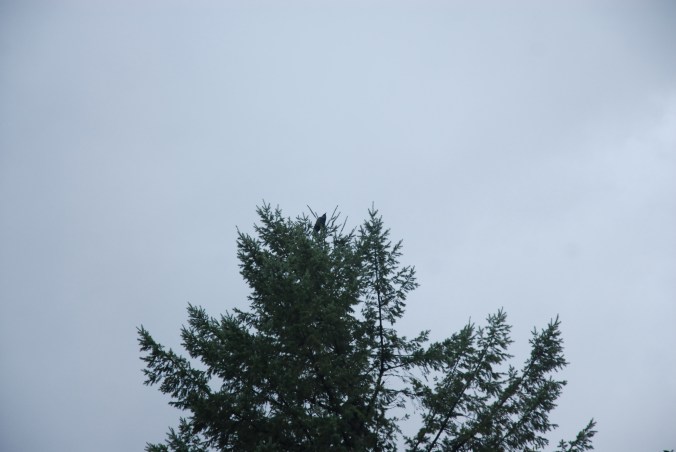
Prax – the local banded raven waiting for cats to be fed so he can steal kibble

But here’s the thing. Even though we know not to read reviews, sometimes the temptation is just too much and we peek. Or at least I do. Kind of like peeking in the Christmas stocking before everyone else gets up. Or peeking at the last page of a book to see if the author agrees with you who the bad guy is. Or peeking at the text being typed by the person crammed intimately into the airplane seat next to you.

I just realized peeking is like solving a mystery. And I do love a good mystery.
DSC_0063

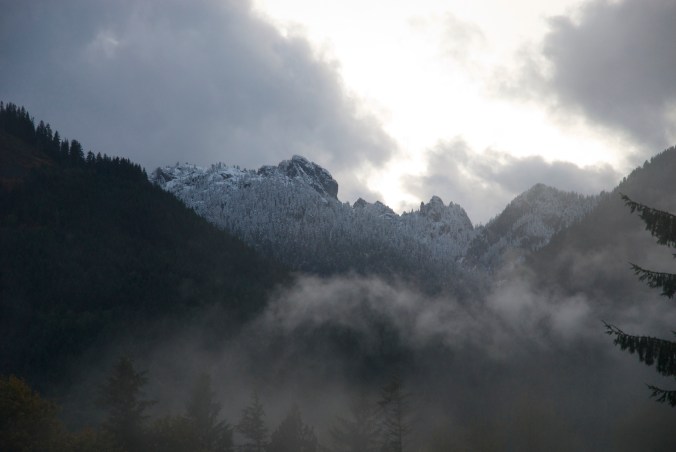
Taken from the back door last week. Snow level is dropping.

Anyway, this is my problem on those rare occasions when I peek at a review. It’s one thing when someone writes out a review, but those people who just click on the number of stars and don’t say why can be frustrating.

It has nothing to do with the number of stars. I don’t care if the book got five or one. As long as there’s an explanation, that is. You hate the book? Tell me why, because maybe it’s simply that my book and you weren’t a good match. Or, more importantly, maybe it’s actually something I can learn from.

Those who say nothing and only assign the stars, aren’t giving me the end of their story. They’re not allowing me to peek into their life, to see why, to understand. Sounds selfish, I know.
DSC_0061

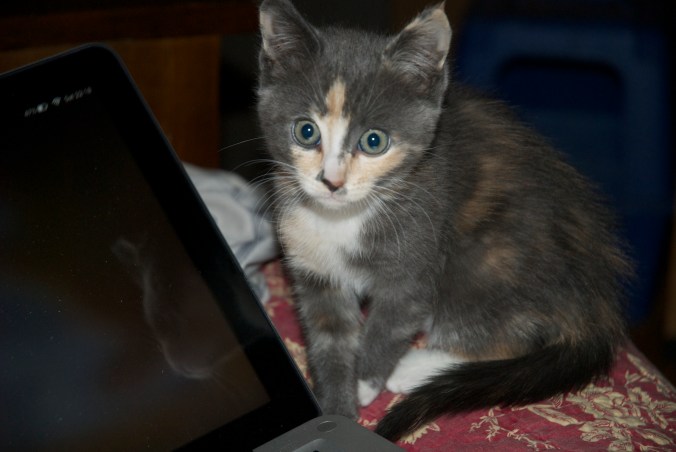
Rocci – the kitten someone dumped a couple weeks ago that the husband rescued

That can drive a mystery writer bonkers. Probably all writers. You immediately ask the same questions you asked yourself when you started writing the story. What if…Why…How can I…In other words, there’s a need for dialog.

Let’s talk. Explain it to me. Help me see your view. Allow me to explain. Allow me to show how the words ended up the way they did.

That may sound a bit pathetic but I’m sure you get what I mean. It’s not out of desperation. It’s out of a desire to understand, to interact, to grow. It’s also an excuse to talk writing with people, which is absolutely wonderful.

So if you take time to click on stars, consider taking a few seconds to tell the writer why.

Because even if writers know they shouldn’t read reviews, everyone peeks.

Bath 2

The epitome of peeking. Look how happy I am. I started young.

A Tense Topic

I’m editing a young adult novel and the author tells the story from two points of view in one character – one from the character’s diary (present tense), and one from the character’s interactions within the world (past tense). This adds depth to the character development because the reader gets to see the ‘self-view’ and the ‘world view’.

DSC_0026

My world view

One of the discussions we had concerns the difference between past and present tense. This author felt she struggled to understand tense because she had some passages where the tense overlapped. I believe she’s actually struggling with transition between tenses. As in, writing in one voice and then transitioning to the second voice, while managing at the same time to stay true to the point-of-view character’s voice. Sound overwhelming? It can be, but this author is doing a much better job than she thinks she is.

The process has me thinking about tense, obviously. Past tense as in ‘I sat’ and present as in ‘I sit’. I’m not going to get into all the sub-categories of tense here.

Few people can write in present tense and do it so well that the reader isn’t aware of it. Author Ellie Griffiths is one.

So why is present tense so difficult to write, and a lot of times, difficult to read?

Past tense is invisible to a reader. This might be because it’s so common in everything we read, but I think it’s more than that. It’s how we tell stories. By the time we’re telling someone about something that happened, the event is past. We’re not narrating our story as it happens. Well, with social media, some people do. ‘I’m walking through the freezer section!’ ‘I’m eating pasta!’ But I’m sure you get what I’m saying here.

IMG_0835

I’m crocheting!

Past tense also, oddly, feels more ‘present’ and more intimate to a reader. This, again, is probably because it’s so familiar. Readers don’t have to adjust; they simply become immediately immersed in the story.

Present tense does take some adjustment on the part of the reader, who has to be convinced that the action is happening right now, right in front of them. That can be a stretch. And present tense is difficult to write, I think, simply because it isn’t as familiar. Additionally, having that action happen right in front of you is like watching a movie, not reading a book. There’s distance between a movie and a viewer, while a reader loses himself in the story world and becomes part of what is happening.

As with all rules of writing craft though, it comes down to neither way being right or wrong. A writer finds the voice of the story and that’s the right voice to tell it in. After all, aren’t rules made for breaking? Just be sure you know the reasons why you choose your tense, that you’ve thought about intimacy between the reader and the story, and that you feel it’s the right style for the type of story you’re telling.

And now I’m off to sit in my chair and drink tea. Which, by the way, isn’t present tense in spite of ‘sit’ and ‘drink’. Confused? It’s because I’m saying something that hasn’t yet happened. The phrase ‘now I’m off’ implies something yet to come. For present tense, the kettle has just boiled and…

I sit in my chair and drink tea.

DSCF2443