I was at a training in the city all last week. While walking to meet family for dinners and to get to classes, I encountered a lot of people.
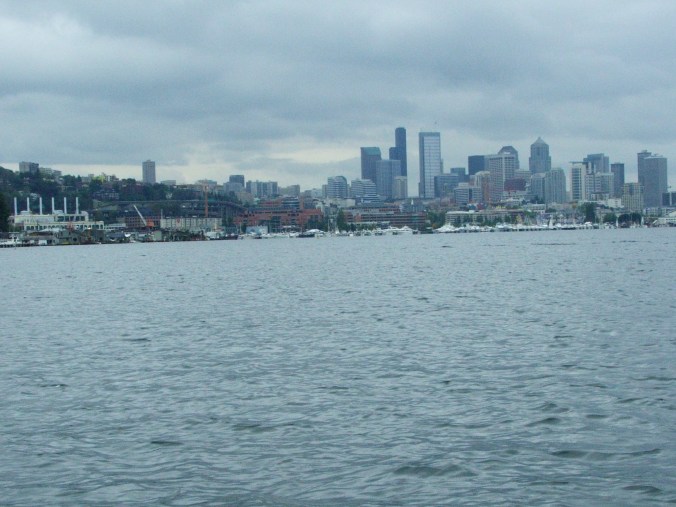
Without fail, the homeless people talked to me. Not asking for money or anything like that. We’d be standing on a corner waiting for the light to change, and we’d talk. ‘How’s it going?’ they’d ask. Or, ‘how’re you doing today?’ Or a simple ‘hello’. Or comments on the weather. We’d chat until the light changed and then go our separate ways.
The people dressed nicely passed by in a hurry. On their way to the local bars or shops, intent, I assume, on their next errand or next stop. Even people wearing the lanyard that identified them as attending the same training I was in didn’t speak. No eye contact, not even a simple ‘hello’.
Why? The hurry? The responsibilities on their minds? None even commented on the weather while waiting at the cross walk.

Here at home we mainly talk about rain
Thinking about that led to all sorts of musings on society, but also made me think about dialog in writing.
Think about the last book you read. Was there any dialog that went along the lines of ‘hi, how are you?’ ‘fine, how are you?’. Or ‘nice weather we’re having’.
If there was, an editor somewhere failed. Because that kind of dialog, whether in a book or standing chatting with a homeless person, is nothing more than polite filler. It’s an acknowledgement of the person near you, a sort of polite verbal nod that doesn’t mean anything more.
As a side note, someone once told me while in line at a grocery store, that if it wasn’t for weather we’d have nothing to talk about.
In books, that filler dialog shouldn’t be present because it doesn’t move the story forward, or develop character arcs, or add anything to pacing, tension, or structure. You don’t notice its absence when reading, either, because subconsciously you know it’s filler. You’d probably find it annoying if it showed up in a book. You’d probably start thinking, ‘come on, get on with it’ because you’re invested in the story.
In real life though, we should notice when it’s absent. Why couldn’t those nicely dressed people at least have said ‘evening’ as they passed? And I’m not making an over-all generalization here, meaning one or two homeless people did not speak and one or two nicely dressed people did. Absolutely across the board, only homeless people chatted with me.
Of course those who know me personally could make a solid argument (and probably be right) that it was me attracting the types of conversation. I’m not exactly one of those high-maintenance, fancy dress types.
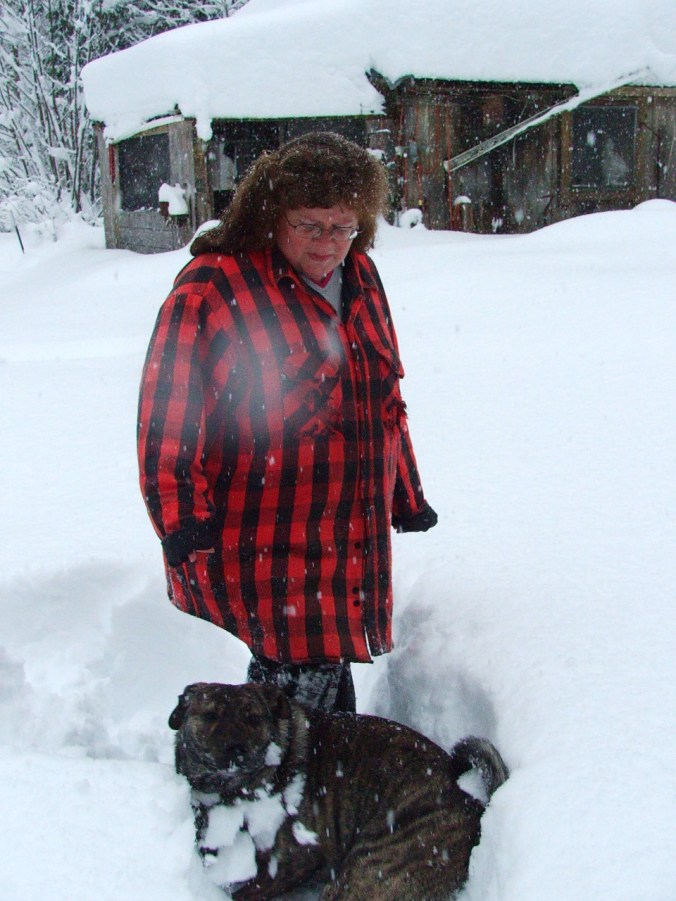
I dressed a bit nicer for the training
But still, the clear-cut lines about who chatted with me and who didn’t, surprised me. It was nice to return home to mountains and snow, and locals who will stand in the street in all types of weather, and talk about everything and anything.
Including the weather.


 Lisa Stowe - The Story River Blog