Who’s Your Antagonist?

A friend of mine asked if books always have to include a ‘bad guy’ or if the antagonist can just be ‘life happening’. That made me wonder if the underlying question isn’t actually more along the lines of defining just what an antagonist is.

miscellaneous 085

Life happening…just quietly. More conflict than you might imagine though!

I know there are genres out there where antagonists are still villains, still the black hats out to destroy the world. But for the most part antagonists these days have to be as multi-layered as everyone else. Believable, in other words, as most of us already know.

But at it’s most basic definition, an antagonist is the one who causes conflict for the protagonist. And that could be anyone. In some ways it almost needs to be all the characters. I think each one should provide some sort of conflict (internal or external). Their purpose for existing in the story must tie into the plot. Even the friend, or supporter, or lover of the protagonist must in some way add conflict. Think about it. How boring would a secondary character be if all she did was be the ever-cheerful, ever-supportive best friend?
animals 071

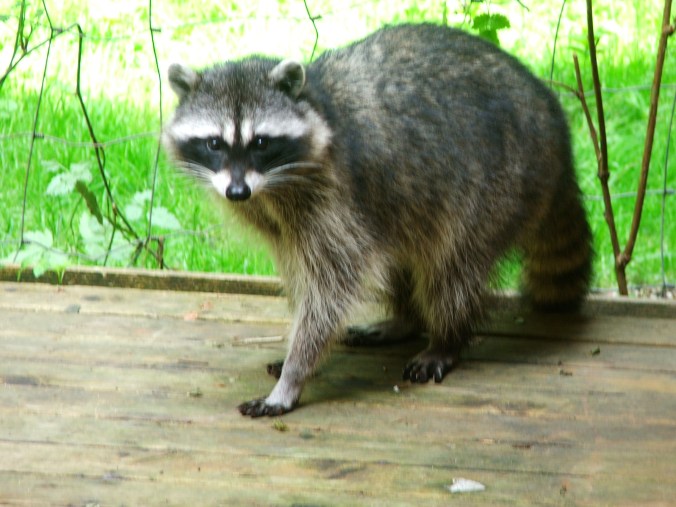
A huge source of conflict for our dog, Vala

And of course the antagonist can be non-human. You have the solitary survivor of a plane crash trying to make it through the bush in Alaska and she’s the only human in the book. But her antagonists are hungry wild animals, nature, her own fears, her own lack of knowledge, etc.
DSCF2977

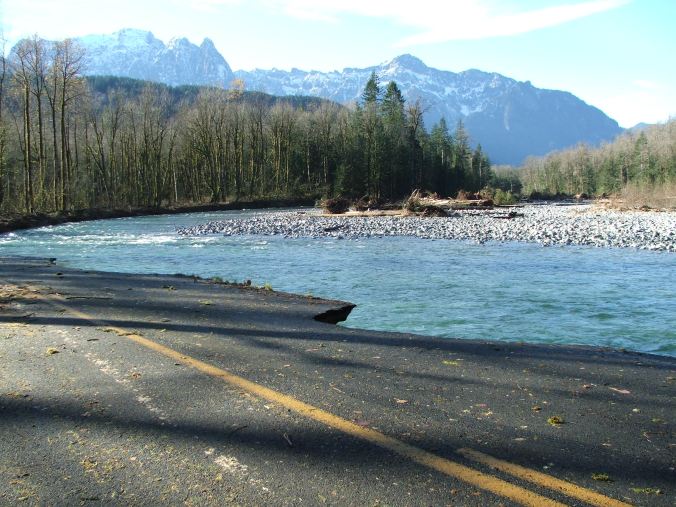
Conflict with Nature. The road lost.

Each antagonist creates something the hero must overcome, adapt to, survive, etc. In that sense, going back to my friend’s question, I suppose depending on the story, the antagonist could be  ‘life happening’. Depending on how that was written. If it’s someone simply dealing with the stresses of long grocery lines, though, those conflicts are going to get mighty boring.

Because us readers want someone to root for, and that means needing someone to root against. Or something to root against. No matter what type of fiction we read, I think we all want to see someone win and someone lose. How they win, or how they lose will depend on the genre, story, market, etc.

And hey, let me just tip my black hat here before I stroll away. Because at the even more basic layer, the author is the biggest antagonist of them all. Think about it. Aren’t we always looking at ways to screw things up for our hero?

What do you think? Does a story always have to have an antagonist? And how do you define one?

The Kid Who Sat Next To Me

This is the writing prompt of the day. I’ve decided writing prompts are simply excuses to tell a story.

There was this girl. Christina. Quiet. Shy. Socially awkward. Not beautiful. Ignored by most.

In other words a lot like me back then. Well actually, she was me, doubled,  tripled, quadrupled.

By the time her stop came around the school bus was mostly full. But because I was similar to her, no one sat with me. And my stop was one of the first ones so I could get a prime seat. I spent the time watching the scenery and day dreaming. Far, far away in my story world.

Somehow Christina started sitting with me. At first we didn’t speak. But then one day, with me being so alive in my stories and so not present in real life, noticed a dog.

I said something about an adventure the dog was heading off on. I don’t remember the details. Christina actually spoke.

She said something about the dog adventure, too.

And here, hidden in this equally quiet and awkward person, was a reader, a writer, a vivid imagination.

From then on the bus ride was too short. One of us would spy something and point it out, and off we would go creating a whole story between us about whatever fired our imagination. A tree leaning just so. A stranger riding a horse. A car parked in a field.

I have no idea if kids around us heard. When I sat alone on the bus, a boy regularly spit in my hair. Another told people I was from the Land of the Weird. Thinking back on those bus rides, I probably did appear to be very weird.

But when Christina and I were lost in the make believe world, I wouldn’t have been able to tell you if those kids were even on the bus. We certainly didn’t get picked on.

Oddly, Christina and I didn’t interact in school. She had a small group of friends and so did I. But on the bus? A different story. Every day.

What happened to Christina? I have no idea. I think she moved away in later years. I can’t even remember her last name now, to try looking her up. I do know that when school reunions have come along her name has never appeared. Of course I don’t go to those either.

But I know that somewhere, she is out there dreaming stories.

Touching Death in Art

There were two years after I completed radiation for lymphoma that I didn’t write. I battled high anger and deep sadness. My wonderful doctors said my brain chemistry was messed up because of where I received radiation.

They told me it would pass and I would write again.

They were right. But…

Yesterday, while at the doctor for mundane reasons, I asked him why, after almost six years cancer free, that sadness was still there. It isn’t that I’m depressed. As I explained, it’s like an entity of sadness down in there somewhere. All I have to do is pause and look for it. When I consciously make that effort, I feel it and want to cry. If I let it come up, I do cry. I call those my blue moments. They are connected to nothing that is going on in life at that moment.

My doctor actually got a bit teary. Coincidentally, I’d asked him this question on the anniversary of a cancer related date for his wife.

He then said people who have been through cancer tell him the same thing. That they can feel something left behind. He hears it especially from writers, artists, creative types. And many of them tell him that in a way it’s an odd gift because they can dip down into that and use it in their art.

When he said that, I had the revelation that I’d done exactly that in the third book, Ghost Roads. As I wrote, and tried to imagine how the character of Harlow felt as she faced betrayals, I would pull up that sadness, ponder on how it felt, and use that to help describe similar emotions for the character. While I knew I was doing that during the writing process, I hadn’t put it into conscious thought until my doctor said that.

He then went on to tell me that his personal belief was that cancer survivors have briefly touched death, and that’s what the hidden sadness is.

Our conversation then went like this:

Me: I don’t think of myself as a cancer survivor. I didn’t have it that bad. I only had to have radiation.
Him: You were bolted to a table every day.
Me: Yeah, but I didn’t go through anything like my sister did, or friends are. I didn’t have to have chemotherapy. I only lost part of my hair.
Him: Your throat was so swollen you couldn’t eat. Water tasted like blood.
Me: Yeah, but…my sister invites me to go on cancer survivor walks but I don’t.
Him: You earned the right to wear one of those tee-shirts.
Me: No, not really. She did. She had it a lot worse. I just was sick for a while. I was never told I was going to die. I didn’t have to face the prospect of death.
Him: You still touched death.

And there we were back to the original topic.

Do I believe I touched death? Honestly, no.

I do believe something was left behind though, because I can feel that something in there. And yes, it does feel like a deep sadness, which is completely separate from depression. That’s a difficult distinction to explain.

And then there’s this realization I came to a little bit ago that made me write this post instead of working on the current story.

Every time I sit down to write, I immediately feel a weight, a sadness. Many times I can’t move past that weight and so instead of writing, I visit Facebook, or play solitaire, or chat online with friends. Occasionally, if I think about it ahead of time, I start music as soon as I sit down. The music distracts me from that weight, and I can then write.

In every day life that sadness rarely becomes visible. But I’ve just realized that every time I sit down to write, it surfaces.

After the visit with the doctor yesterday, and spending some time thinking about that conversation, I realize I’ve made a mistake.

When I sit down to write and feel that weight bubble up, rather than avoiding it with the internet, or drowning it in music, I need to learn how to control it. Let it become part of the writing process so that I can draw from deeper emotions.

I’m not quite sure how to do that and I imagine learning will involve forcing myself to write when I would rather give in to the weight and leave writing behind. After all, if I did that without realizing it while writing Ghost Roads, there must be a way to make it more of a conscious decision.

In the meantime, there’s a lot to think about. And that appointment yesterday? It ended with my doctor giving me a huge hug and thanking me for reminding him of the things he needed to mourn, and celebrate, with his wife that evening.

lincoln city jan 06 017