Beginnings

I’m pondering beginnings.

1. A young friend is a writer. I’m hoping to interview her, here, mainly for selfish reasons. I want to remember what it was like when I started out. Which means I’m trying to find the right questions to ask. I remember the feeling of secrecy as I sat alone in my room with lined paper and pencil, afraid someone would walk in and ask what I was doing. I’m not sure I was consciously aware of the world opening up, but I remember realizing that dreams were, in a way, coming to life on the page.  When I read things I wrote a long time ago, I cringe. But at the same time I laugh and don’t make changes because there is so much enthusiasm in those stories, even if the craft of writing still had to be learned. Heck, I’m still learning. But you know what I mean. Those early pieces are just dang fun to read.

Have I lost that enthusiasm? No, but the stories don’t overflow, meaning I don’t write non-stop all day. Now I’m more inclined to write while the muse is flowing and then go back and revise. Back then, I just knew that everything was perfect. So maybe the naiveté has been tempered by craft.

2. A story is finished and waits on cover art. I have another story I’m fiddling with and a bit overwhelmed by. I also want to start on a third in the series. I know I want it to be a prequel as several people liked a character that is killed off in the first book. I can feel the tiny, faint, niggling feeling that tells me an idea is there, but still buried. I have some thoughts, I’ve jotted a few notes, but I can also tell it’s too soon. If I try to jump in and force the beginning, to start before the idea is firmed more, then the whole story will die.

That itch is there but it’s too soon to scratch.

3. And then there’s the beginning a poet starts. She has finished her radiation, her chemotherapy, and the changes to her body. Now she starts the healing. Those who haven’t been through it assume it’s the start of a joyful time, of relief, and there is that, in a small part. But it’s also the start of anger and deep sadness, and feeling like you’re going insane. Few people realize that some who have had to deal with cancer, end up with PTSD afterwards. Few people want to talk about that. And so she begins the uphill battle to regain who she was, and learn who she is. As part of that she wrote an amazing poem that I hope she will allow me, some day, to share here.

The thing about all these beginnings, that I hope she realizes, is that they pass.
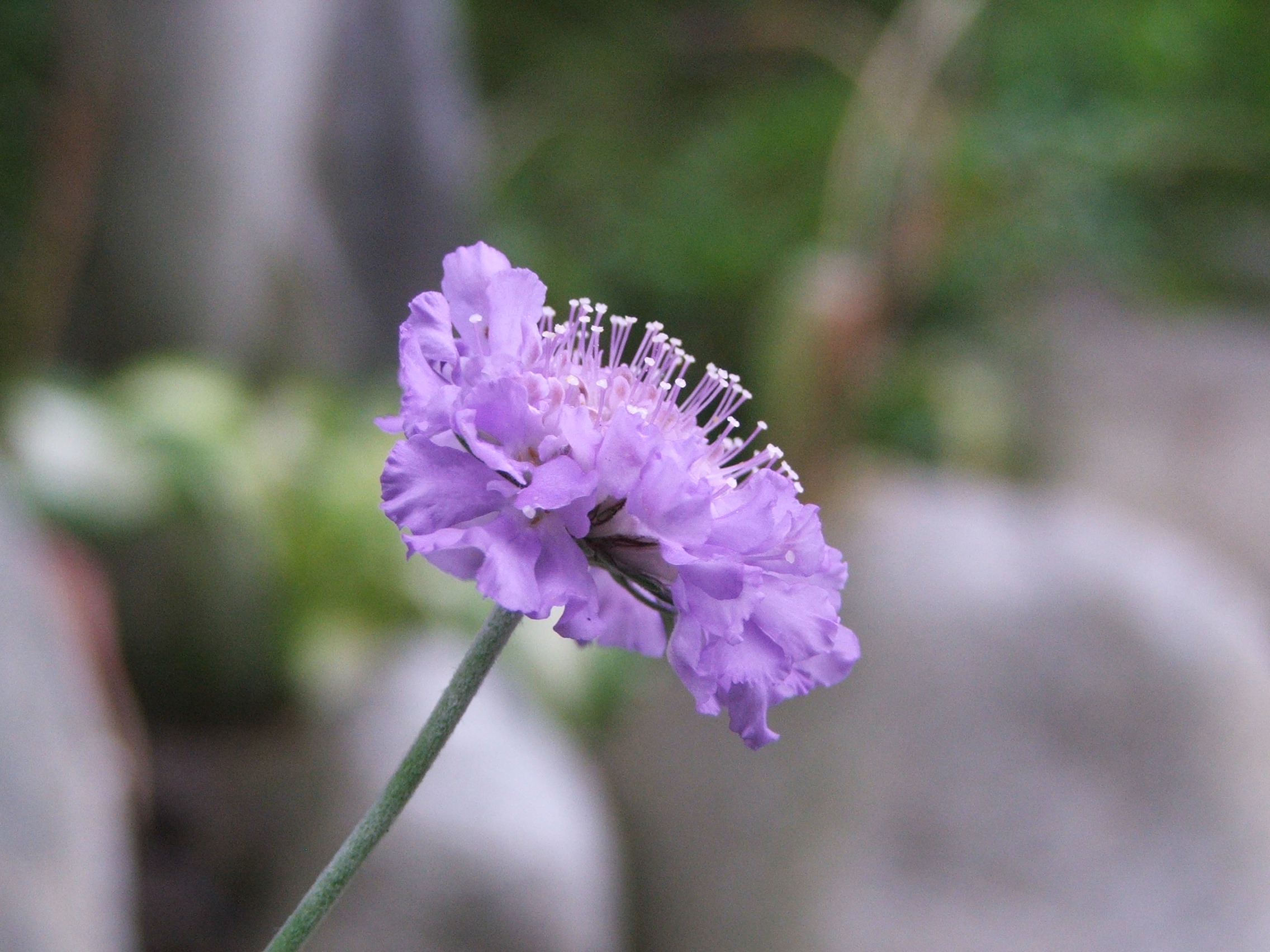
pincushion flower (scabiosa)

pincushion flower (scabiosa)

Archaeology Terms

Last week a person I work with told me a story. He said things like ‘I stepped up when no one else would’, ‘the bullying had to end’, ‘in the nick of time’, ‘down to the wire’, ‘I got in his face’, ‘they picked the wrong guy’, and so forth.

Last week I signed up for an online course in archaeology through Coursera. One of the first lessons was on terminology.

What does that have to do with the opening paragraph? The word ‘context’. In archaeology, it refers to where something is found. Obviously that can tell you a lot more than the object alone.

So the context of the opening paragraph? He’s an accountant type and was talking about a disagreement with an auditor. The context of the story dramatically changed my response.

I’m enjoying the online course a great deal, but I keep getting distracted by how it ties in with writing. Think about the context of a story. Dialog, as with the accountant, changes dramatically depending on context. So does physical movement, internalizations, emotional reactions…well, pretty much everything in a story. And while this seems very obvious, at the same time I have to admit to rarely thinking about it.

It’s so obvious I’m not sure I need to think about it. I mean, I know if a character says ‘Who said you could come in here?’ the line will have a completely different meaning if the character says it standing in the kitchen, to another person, or standing in the kitchen, alone, speaking to the fridge.

Where I need to think more, and where I regularly fall short in writing, is context related to scene setting. If I have a character sit at a table, it’s not enough to say a ‘wood table’ or a ‘littered table’. Is the character sobbing? Then, context beefs that action up. Is there a box of tissues sitting conveniently next to her, or does she hold a crumpled corner of tablecloth? And that’s where I need to work more. The tiny material things that add to the context, bring depth to the character or scene, and that, on their own, might seem trivial but are, in actuality, vital to making writing original and believable. I tend to ignore the little things. At least until the editors point out my characters haven’t put clothes on for 200 pages.

So, look around you and think about context. What is near? What does the context you are in, at this moment, say about you? What, in your proximity, do you value? And for you writers, do you remember the value of context, or do you, like me, forget?

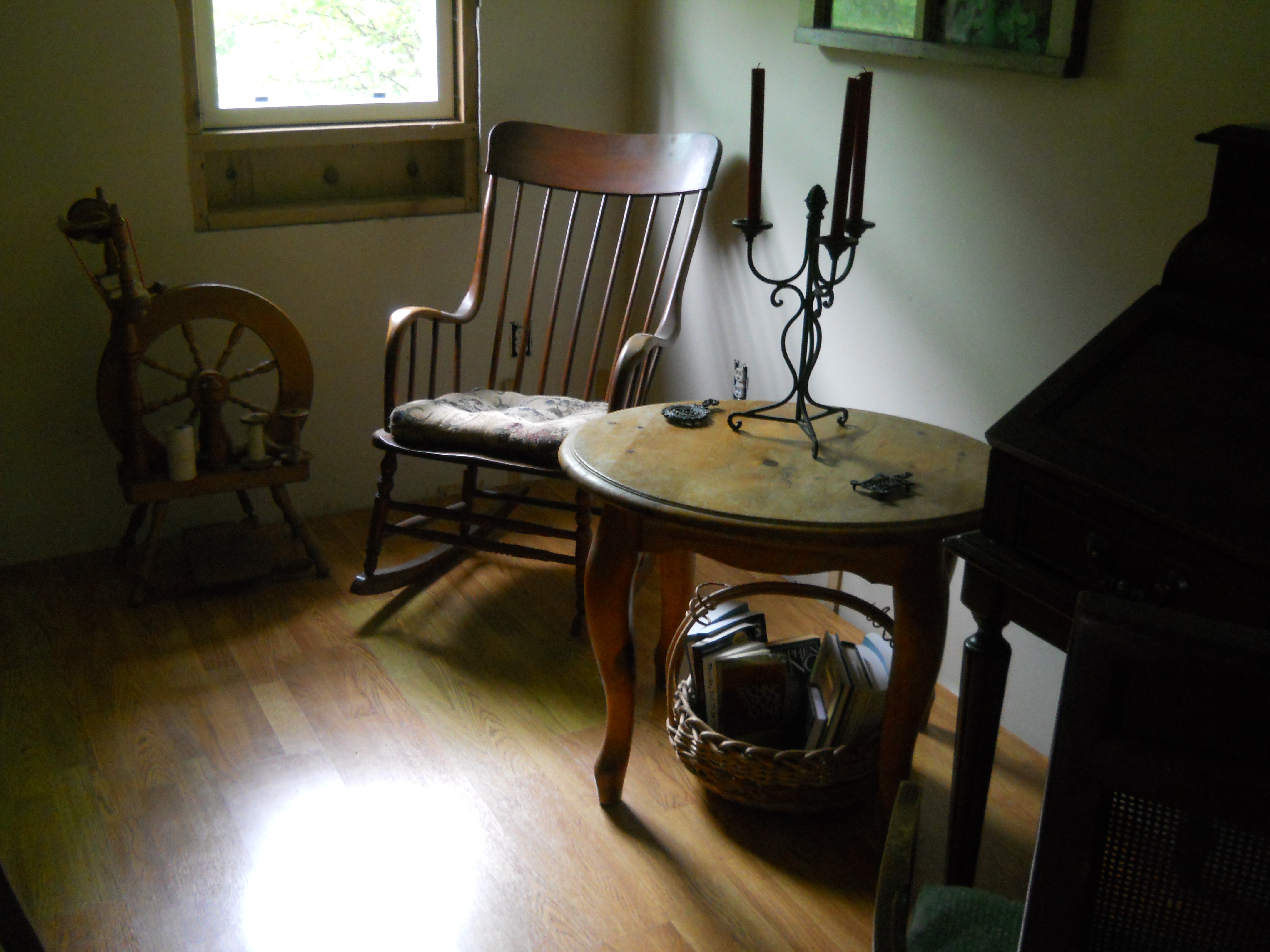
Look at the photo below. Would the rocking chair have the same significance if found alone, as it does found next to the spinning wheel? The context, the proximity, begs a story. Who sits there? Where did they go? What happened to interrupt? The chair by itself, I think, would just look lonely.

Actually, I just wanted to post a photo of the free flooring I was given, that got installed in the writing space of the cabin…

Writing space continues to improve.

Writing space continues to improve.

Chapter Titles

The last post was rather intense so I thought something lighter was in order.

A few  years ago I read a book, or rather, started to, where each chapter had a title. I’m sure you’ve seen these. ‘In Which Our Intrepid Hero Finds His Long Lost Daughter’. At first I was irritated. By chapter 3 I was annoyed. By chapter 4 I gave up. Instead of reading the book I just read the chapter titles and got the story.

Some people do this writing device well. I’ve seen some chapter titles that were excellent teasers. One or two words that raised questions so that you had to read the chapter to get the answers. I’ve seen some books where the chapter titles didn’t actually have anything to do with the chapter, but instead offered little ‘aside’ clues to the story or to a particular character.

Then there are the chapter titles that are quotes from poems, songs, movies, or other books. I like those because they are usually quotes I haven’t heard before and occasionally lead me into reading a new book. But when the pace is whipping along in the book and I’m anxious to find out what happens next, they can slow me down. Mainly because I have a hard time skipping them and going back later. So I’ll be hanging from the cliff of the previous chapter and have to hang on a few seconds longer in order to read the quote.

Finally, there are other authors that simply number the chapter. No messing around, just number and move on. That process reminds me of dialog tags. You know how ‘he said’ disappears into the dialog and doesn’t take the reader out of the story? That’s what chapter numbering does for me. The numbers disappear into the story itself.

Personally I number, rather than name, chapters. The biggest reason? It’s hard enough to come up with one title, let alone thirty.

What do you think about chapter headings? Do they annoy you as a reader, or do you like them? As a writer, do you use them? I’m curious.