Priceless Words

I’m in the middle of The Book of Killowen by Erin Hart, and came across the following passage that made me stop with my mouth practically hanging open. The character is talking about Irish  illuminated manuscripts.

“Well, think of it: there used to be whole libraries full of books like this, copied out by hand…all the time and effort those poor buggers the monks put into each one. We take it for granted now, don’t we – the printing press, the copy machine, the Internet. I mean, words lose their value, in a way, don’t they, when you’re drowning in them?”

So many things jumped into my poor brain. How computers have reduced penmanship for one. But we are drowning in words and I think that has cheapened them. Look at how we contract into slang for twitter and texting. Look how fast and easy it is to share a quick post on Facebook rather than writing out a letter, addressing the envelope, going to the post office for a stamp.

Then there’s the old debate among writers about using a keyboard or paper and pen. Obviously we use what works best for us. Personally I love the computer because I type faster than I write and when those words are flowing that’s valuable.

Sometimes though, there will be a need, an urge, to slow down. To pick up a pen, place it to paper, and watch each letter form. To see the birth of a word slowly, trailed in ink.

I prefer to take notes by hand because the material sticks in my mind. If I type notes, the information doesn’t seem to fix onto the brain cells. It’s as if that slower formation of words gives my thoughts time to absorb.

So now picture those ancient illuminated manuscripts. Think about the time each and every letter took. And not just the time to form the letter but also the time to make the paper, gather the nuts and herbs and bark to mix and create the ink. All that work before being able to even dip the quill and create an individual letter, a whole word, that became art.

As a writer, I strive to make words into story and am happy if it comes out readable. A much lower level of standard than those monks, for whom each individual letter was highly valued.

So what do you think? Do we undervalue words now? Have they become cheap? Or maybe it’s not the words that are cheap these days, but our time to write. We carve out a few seconds in the day to type out a quick tweet, rather than sitting down on a Sunday afternoon with pen and stationary to answer letters.

My oldest sister still sends out cards and letters. With note cards she sometimes makes herself. I value those.

Even though (I’m ashamed to admit) I rarely take time to answer.


Invisibility

Over the Christmas holiday I spent two weeks editing my first draft of The Memory Keeper sequel, now tentatively titled Sparrow’s Silence. Being very honest here, at the time I thought the first draft wasn’t nearly as bad as I expected. There were some plot changes that had to be made as the characters came up with an ending I hadn’t expected, but overall it wasn’t as much torture as I’d feared. I came home and sent it off to my two trusted editors.

I’ve been working hard since. 

I seem to have a love of the passive voice. In particular those pesky ‘had’ and ‘was’ words. In my defense (read excuse), I struggled with this story. It was the first thing I wrote after three years of radiation fallout. You can see where I started getting into the rhythm of writing again, when the story started to smooth out. Right about the same time it was ending. That’s a good excuse but I’m still writing the same way. In this paragraph alone there are two uses of ‘was’ that I could have done without. I could have gone back and edited, changing ‘was ending’ to ‘ended’. But I wanted to show what I’m talking about.

What I can’t figure out is how those words managed to stay invisible when I did all the editing work over the holidays. I mean, I know what to look for. I do know how to use the ‘find’ tool in the Word programs. And yet I never did that because I never saw the words. So because they weren’t popping out, they didn’t exist and I didn’t need to search for them. All I needed to do was pat myself on the back for doing such a good first draft.

It’s a mystery how they all showed up after I got the revisions back. Maybe my editor friends added them in to keep me humble.

If so, they did an awful lot of work. I imagine my word count will have dropped in half by the time I’m done.

Well, maybe it’s not quite that bad, but still, I’m shaking my head. One editor gave up suggesting changes and just started highlighting every usage. You should see all the yellow. I now have a very sunny manuscript.

I need to figure out a way to rip off that invisibility cloak on the next story. Otherwise my two editing friends might run screaming when they see me coming with pages in hand.


I Swear!

I used to say ‘dang it’, ‘darn it’, and ‘shoot’. My husband asked me why I didn’t just say the swear words. He pointed out that I said the words with the same emphasis, for the same reason, and with the same meaning, as the actual swear word. But I couldn’t do it. I’m not sure why. A word is just a word, right? Well, that’a stupid question to ask a writer who knows the value of each and every word.

Years ago my mother decided she swore too much and switched to flower names. Not too long after, she was caught with a swear word passing her lips. My father said, ‘what happened to ‘petunia’? My mother responded, very firmly, that sometimes petunia just didn’t do the job.

I understand that a bit more now. During all the radiation fallout a few years ago, my emotions were erupting. My doctor told me if I wanted to cry, to cry. If I wanted to scream, to scream. So I did. Well, maybe not screaming. But I slammed doors and started cussing.

So a few years ago I pitched a story idea to an agent. During the pitch, he asked if there were swear words in the story. One character did cuss. He told me if accepted, I’d have to change that. His readers expected books with no profanity. I passed on the agent. Swearing was part of the character. Plus, that personality trait served to emphasize the protagonist’s opposite traits of tentativeness, dominated by a parent, and naive about life. (Rachel and Cody for those who have read The Memory Keeper). I decided Rachel was a cussing kind of girl and needed to stay that way.

There will always be arguments for and against swear words in books. There will always be readers who choose books based on those particular words rather than all the other words that make up a story. Which is fine. But writers must be true to their characters and their stories rather than writing to a particular audience.

Swear words also seem to be a cultural thing. Back in the early 20th century, it would have been hard to find books with swear words. Books reflected the times, and you didn’t hear cussing very often on radio shows or television. Whether you think it’s a good change or not, swearing is commonplace now, and art forms reflect that cultural change. Though some swear words are more socially acceptable than others.

It makes me wonder what people think of swearing, in the books they read.

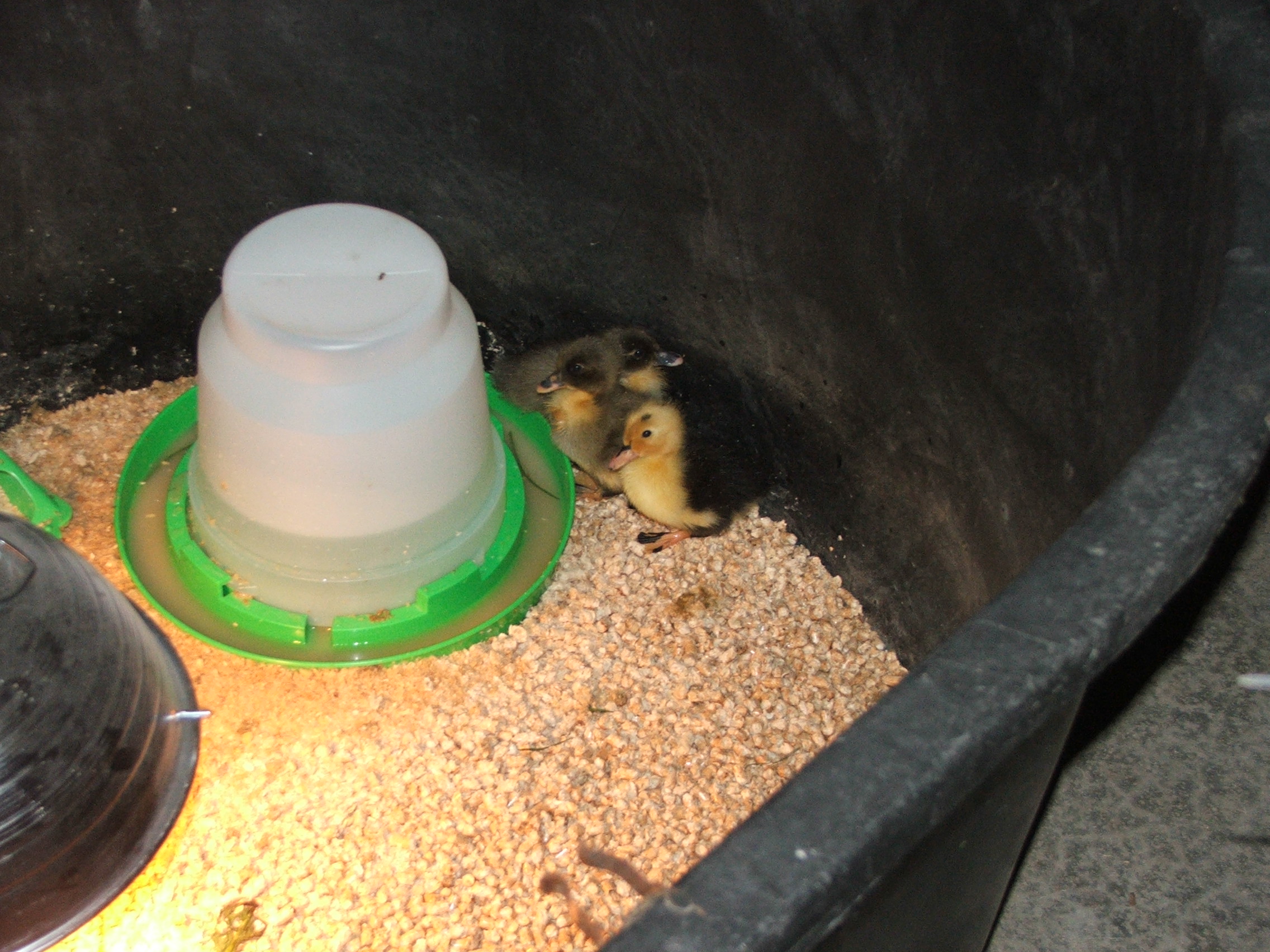
Finally, I just have to say that this evening  I was outside in the dark and rain, with my head lamp as the only light, chasing two ducks named Larry and Curly, in circles around the coop, slipping in mud and duck-do. Shouting out ‘you f***ing birds!’ at the top of my lungs felt a lot better than if I’d said, ‘dang it, you stupid birds, why can’t you figure out the ramp like Mo does?’

I swear. Doubt that makes me a better person, but it lowers the blood pressure. And I’m keeping the character of Rachel and her cussing around for the sequel.

Larry, Mo, and Curly before they started leading me on the merry coop chase.

Larry, Mo, and Curly before they started leading me on the merry coop chase.