Over Exposure

Recently a friend mentioned she likes to have her writing edited as she works, that having a second set of eyes during the process is like flipping a light and illuminating the piece for her. I had this mental image of her sitting with her words, illuminated, just glowing as she wrote. I told her my process and figured it was worth dipping into a bit more, here.

It used to be that if I shared a work in progress before the first draft was done, the piece died and I never finished it. But as those of you who have followed this blog for some time know, radiation kind of fried my writing process and the past two years has been spent discovering the new ways I can write.

Over the past couple months, I shared my work in progress with my friend Jenni, who shows up here in the comment section, and  with two published authors during a writing retreat. I shared by giving them pages to read. I did so with trepidation knowing my history, but it was fine. The story survived.

I got overly enthusiastic and read a problem passage to Jenni. At the time it felt okay, but then that old familiar heavy feeling started, and sure enough I didn’t write. Saturday I forced myself to go back to the piece, wrote very stilted for a bit, and then very slowly found my way back to the flow of words. Kind of like writing CPR.

This is what I picture. Rather than being in that golden glow like my other friend, I’m more like this weird creature hiding in a dark room, caught up in an imaginary world. I can share the story only once I am done with it. If I share it too soon, it’s like the door opens and lets in too much light, glaring spotlight-like, and me and my words shrivel. Kind of like a slug with salt poured over it. No, I am not going to make vampire analogies!

So, letting Jenni read on her own, away from me, was me slipping the paper under the door, so to speak. I was still hidden away with my story.

Me reading out loud to her was cracking that door open just enough to let some light in. Luckily not enough to kill the story. But poor Jenni isn’t going to get read to until the story is done.

It brings to mind photos pre-digital, when you could over expose them and everything would be washed out.

The writing process is just so weird. And so individualized. And so tentative. And so lovely when it works.

I tried to find a photo of light, that would show how I pictured my friend illuminated. The closest I can find is one of my son, taken a few years ago during his first kayak lesson on the Skykomish river. The sun was slanted low, and he’s ringed with a glow.
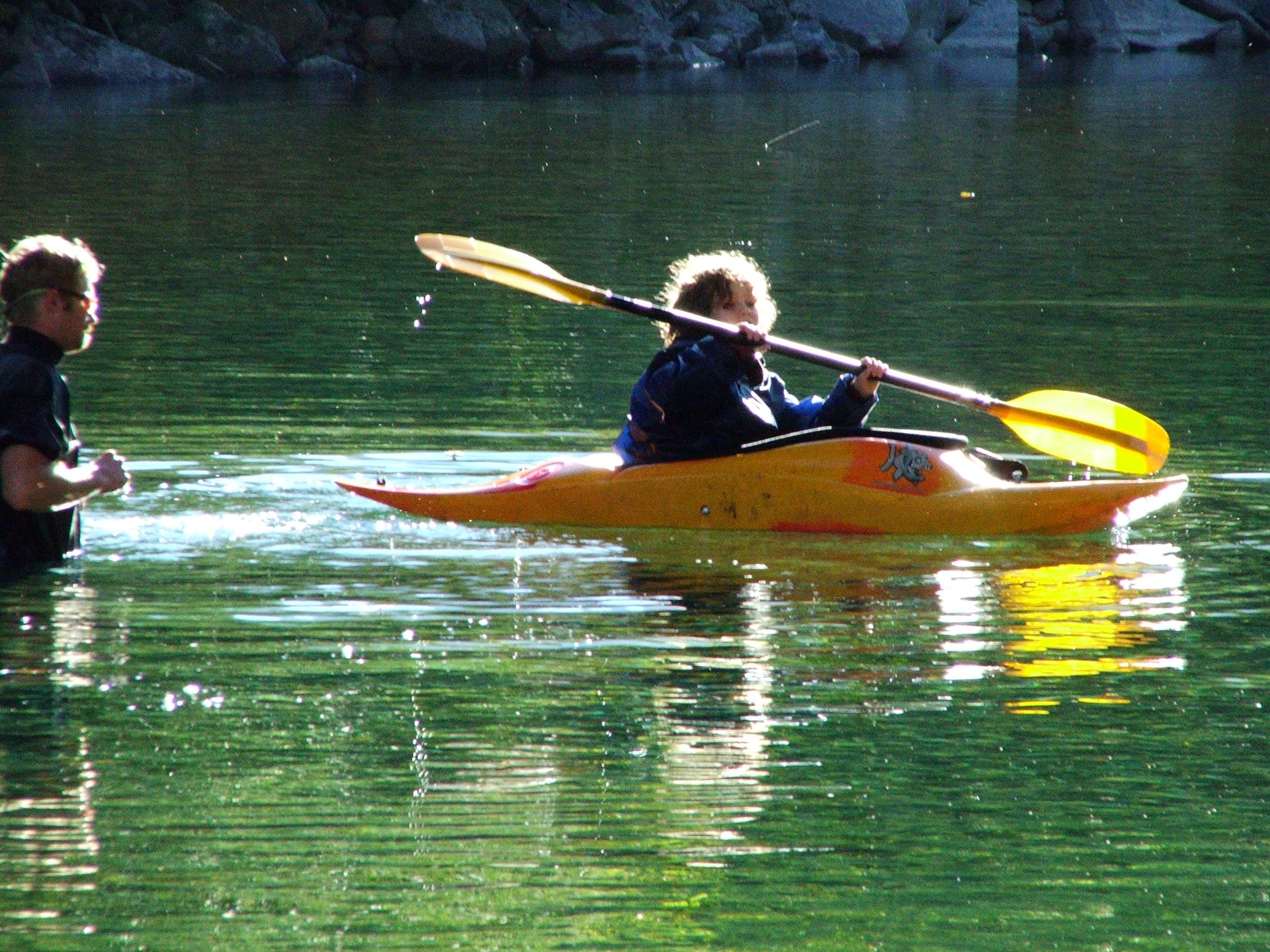


Light

It has rained all day. Dark stagnant clouds that got hung up on the mountains on their way to eastern Washington, too heavy with rain to make it up and over. But late this afternoon a wind gave them a big push. So right now, outside there is this odd light that I have wondered for years how to describe.

Where I am it is still deep charcoal gray.But  ‘down below’ as we call it, that late, low slanting light has broken through underneath the clouds. I love it when this happens because the trees just glow. If any of you have ever found agates on the beach, when the sun is low and illuminates them so they shine amber among dull rocks you’ll know what I mean. It’s that same kind of glow.

But what color is it? Since you can’t see it, how can I describe it correctly? These are the things that challenge me as a writer, more so that stock writing exercises. When I see something that so moves me, and yet the words just aren’t right. How can you describe color unless you are a painter? Well, there’s that old box of crayons. But dang if I can remember any of the names other than Burnt Umber. That one sticks with me because, for some reason, I thought if I could melt it the color would change.

So this late, low light isn’t gold. It’s richer. It’s not amber. It’s a tad lighter. Maybe closer to a glass of my husband’s favorite single malt. It’s definitely not in the yellow shades. And yet it’s also not in the red shades. This isn’t the color you see during a normal sunset, where you get those flame colors, and those deep reds.

A friend of mine who is a poet, swims the freezing Skykomish river. She has talked about the colors underwater, all the shades of green and gold. And she says she can tell when fall is coming because those summer shades deepen. She doesn’t know if it’s from leaf litter in the water, or just the changing angle of the sun.

Her description, the way I picture it (since I don’t swim in that river), is the closest I can find to describing this light. I can imagine those deep greens and golds that she would see underwater, and it’s that same image I get now. Maybe it’s the way water changes color. After a day of rain, when everything is saturated, and the light hits those drops, it might be the same as fall light angling through an emerald river.

It has taken me over 400 words to try to describe a color. That makes me laugh. Is it a sign of being a writer, that it takes so many words, or is it a sign of seeing something beautiful and being at a loss as to how to make you see it, too?

Well, maybe it’s just a sign of a piece that needs some editing.

But…can you see the color? Do you know what I’m trying to describe? Have you seen it? And how would you, writer or not, describe that shade?

Got Rhythm?

Recently I spoke with a woman who has written several screenplays. She talked about what made them work, and what didn’t, and then segued into why some movies fail in spite of a good plot and good actors. As the title of this blog implies, she said it comes down to rhythm. It was great fun watching her because she would start quoting from a movie, then get into the role, and overly dramatize the rhythm to prove her point. It was like watching dialog become music. She even drummed the beats of dialog with her fingers on my desk.

I’m going to state the obvious here and say all our writing, no matter what kind, needs that rhythm.

What I find myself wondering though, is why? Are we working with words, or with notes? I’m certainly no musician (although I have a desire to play something dramatic: hammered dulcimer, harp, bagpipes…) and yet I can feel when a sentence doesn’t work. Usually in the editing process. I’ll stumble over a sentence, go back to figure out why, and realize the way the words meld is wrong.

So which came first, words or music? Do we have some inherited genetic memory of tapping two stones together and realizing we’re creating movement as well as fire? I’m also no archaeologist but I have to wonder if song came before speech

This proves the importance of reading your writing out loud during the editing process. Our ears hear the music, or lack of, in the words, that our eyes might skim over.

I find more and more ties between music and writing. Songs that inspire writing, as I’ve posted about before. The music that must be there in our stories. Even the rhythm of our speech.

The challenge is figuring out how to get that rhythm into our writing. Punctuation to create pauses, leaps, rise and fall. All the tools we have to link words into rhythm.

And our natural ear, tuned to that inner song of the story.