Vocation or Desire?

I just picked up a book at the library called Writing as a Sacred Path, by Jill Jepson. In the opening paragraphs, she compares writing to a vocation, a calling, or an irresistible impulse. I’ve just started the book so I don’t know how good it is going to be, but I like the idea of writing as a sacred path.

But going back to this vocation. The word got me wondering what exactly a vocation is. The Oxford Dictionary defines the word as a strong feeling of suitability for a particular career or occupation. Well, I don’t think of writing as a career or an occupation, and I certainly don’t feel suitable. And rarely capable! Another definition is a person’s employment or main occupation ‘especially regarded as worthy and requiring dedication’. Writing isn’t my main occupation, although I might wish that it was. Finally, the dictionary says the origin of the word could come from the Latin vocare, to call. Okay, now that resonates with me and reflects back to the opening of this library book, when she says writing is like a calling. But what does that mean?

A vocation, a calling, to me, is something we cannot separate from ourselves. No matter where we are in our day, it’s there, under the surface, impacting everything we say and do. Added to that is the urge to write, the simmer that makes us miserable when we are not writing.

I remember a young person telling me she wanted to write a book, wanted me to give her an idea, tell her how to do it, and she wanted  it published within a couple of months. This person obviously thought writing was simply tossing some words down, magically getting them published, and sitting back while the money rolled in. If this person had heard that call, felt that longing, tried to capture the spirit of stories out there in the universe, she would never have asked about writing so flippantly. Yes we want to be published, yes we want to make money. But we write anyway, without those things.

And of course sometimes writing feels less like a yearning call and more like a gorilla on our back. Or a leach sucking us dry. Or an inner critic breaking our heart.

My husband recently gave me some quotes that I think impart what I am trying to say here in a much simpler fashion. So I am going to end with them. Words to take away and think about when that calling pulls you down the sacred path.

Cacoethes scribendi:  insatiable desire to write

Verba volant, scripta manent: words fly away, writings remain

Think about that last one.

Writing remains.
Asking and Receiving

A person wrote a story, and the only comment she received was someone pointing out typographical errors. This person is angry that typos were pointed out, and angry that others didn’t compliment her. In other words, this person did not want honest critiques or editing, she only wanted to sit back and bask in the rave reviews of writing she clearly thought she deserved. I’m not involved in this person’s drama but it did make me think about the whole editing process.

By the way, I’m not referring here to the whole topic of how to do constructive edits.

My friend Jenni, who often comments here, is also a writer. She is tentatively stepping out into the world of releasing your writing to others to read, and has asked me to comment. The first time I edited her work I overwhelmed her. I now ask if she wants comments from me as a reader or an editor. We have found a balance where we can talk about writing without scaring her. But the thing is, her reaction came from the standpoint of ‘I have so much to learn’ rather than ‘I don’t deserve this because I’m so good’.

We writers need to build up a thick outer layer that protects us when we first begin this process of sharing our work. And it’s not just that thick skin to repel unkind, cruel, or unhelpful comments. We need some sort of barrier between ourselves and our emotional connection to the story. Because isn’t that where all these reactions come from? We pull that feedback deeply into our hearts as a commentary on us personally, rather than realizing the comments are about the work.

I know, it’s nearly impossible to not take critiques personally. After all that work is something we’ve poured ourselves into. At the same time, in order to grow as writers, we need some way to step back from that emotional connection.

For me what works is time. If I immediately pass my writing on, I’m still extremely emotionally attached. If, however, I wait even a few weeks, I regain a healthier, more realistic attachment to the story. The longer I wait, the less emotion is involved. It’s like looking at that newborn child and knowing he’s a genius vs. looking at the teenager and counting down the days until they can drive themselves.

Years ago I had a cartoon with an older woman standing, arms across her chest, smug smile on her face, and wearing a sign that read, ‘I’m more humble than you are’. I am picturing that woman’s face tonight as I think about the person who expected only compliments. I would change the wording on the sign to read ‘I’m a better writer than you’.

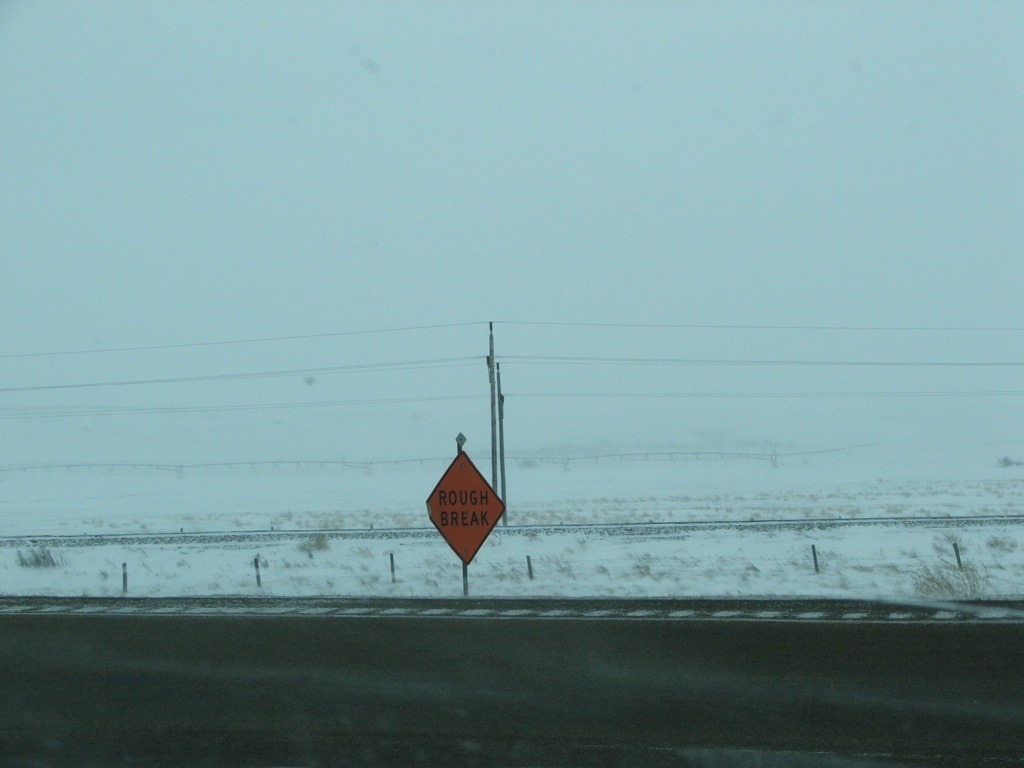
I’d say she’s had a rough break this week, finding out that maybe she’s not as good as she thinks she is. I can only hope that with time she loses that emotional attachment and gains the distance to see that when a person points out some typos it’s not the same thing as saying you stink as a writer, or your writing stinks.

Don’t ask until you have the protective barrier in place and have the distance to be able to receive. I’m going to try very hard to follow that advice.


Favorite Authors

There are some authors that I wish could write really, really fast, as I anxiously await their next book. When a new one does come out, I delay reading it, choosing instead to let it sit beside my bed while I read thrift store paperbacks, overdue library books, favorite blogs. Not only to delay gratification, but because the longer I wait to open that new book, the less time I have to wait until the next one comes out.

Several of us chatted before about Elizabeth Peters, so I thought I would like to bring up another author I like, who, by the way, is nothing like Elizabeth Peters.

Carol O’Connell has a mystery series out with a main character named Mallory. I won’t tell you her full name as that is one of the mysteries and a subplot in one of the books. Mallory was a street urchin picked up by a police officer and eventually adopted by him and his wife. She’s grown up to also be a police officer. She’s strong, independent, has a very small circle of people she trusts, and solves mysteries. Oh, and she’s a sociopath.

I first picked up a Mallory book because I was bored with protagonists who were beginning to all sound alike. I’ve stayed with this series because Mallory is so flawed, so injured from her past, so vulnerable. In spite of being one of these super strong female protagonists. I root for her while reading because I want her to find happiness. And yet I don’t want her to change because her sociopath behaviors not only give her strength but also, oddly enough, give her empathy for others who are also injured. She’s the classic hero of the underdog, even if she doesn’t realize it, and her methods are usually illegal. There is also humor in the things she does, and I have laughed often reading these books. O’Connell writes with a wry humor that catches me unawares.

You don’t have to read these books in order, but it does help to understand the character of Mallory if you do. Chalk Girl is the newest in the series, and I have finally given in and opened it. There’s nothing like the smell of a new book, the feel of pages not yet dog-eared, the sound of a book spine being cracked open for the first time.

Chapter One. A little girl, hundreds of rats, Central Park, a sunny day. Now there’s a combination to make me want to know what’s going to happen, where Mallory fits, and what she’s going to do. Excuse me while I go turn a page.