Serious Doubts About This One

I am worried about this post. It is not my intention to offend anyone but the thought won’t leave me alone and I know by now that if words are haunting my brain they need to seep out the fingers or nothing else will get written.

Let me start by making it clear I am not knocking or mocking anyone’s religion. We all find the belief that we need to make it through this crazy world and I am not saying one is right and another wrong. So this thought I’ve had really, really, does not mean anything against what is sacred for another.

Several years ago I attended a Presbyterian church and an associated Bible study group. I went for a long time. My close friends attended, and I so wanted something to believe in. I worked hard to make it work for me. But these niggly little questions kept coming up. For instance, I remember asking the teacher how we could know that the books of the Bible were authentic, when they were written by very human men. The response was that the words were ‘God-breathed’, that the Holy Spirit moved through them and gave them the words. The analogy was that of a sailboat at the whim of the wind.

Recently, I was writing on a sequel story, and the words were flowing and all you who write know that feeling when the story takes over. When I was done, I sat back, drew in a deep breath, read back over what I’d written, and thought ‘did I write that?’

And then I remembered that Bible study group all those years ago, and had this thought I’m worried about sharing. Those books of the Bible, those words about the spirit moving through the apostles…isn’t that simply what happens to all writers?

I’m not saying my writing is holy! Far from it. But, what is it that moves through us that we call the muse? What is it that we writers can open up to and let in and let free, that separates us from people who don’t write? Personally I think those who don’t write just haven’t tried it yet. But really, how do you describe what happens when the story takes over and becomes words? When it leaves that ozone and finds a berth on the paper, or the computer screen? Word become form?

Christianity did not work for me. I suppose I’m closer to pagan than anything, although I usually say that trees are my religion. I find peace in the woods. But belief system aside, labels torn off, prejudices removed, think about it. Since the beginning of time, since oral storytelling, since the printed word, there is something that connects a writer to a story.

Tomorrow the days begin to incrementally grow longer. The winter solstice begins its slow turn back toward light. Whatever your beliefs are, I wish you a peaceful holiday.


Product Placement

I have to admit I get annoyed with blatant product placement in movies. I don’t mind something subtle, and I love it when off brands are used. But blatant advertising pulls me out of the movie.

So this past week I was working on the first draft of the sequel to my story and had a character pick up a book to read. We all know the advice that if you are going to have your character sit, make them sit on something. A hardback chair, a sofa, an orange crate. I figured I’d better not have this character just read a book, so I had her pick up a Susan Schreyer mystery. It was the first thing I thought of as I’d just been talking to Susan.

I’ve read favorite authors who have their characters interact with specific books, sing along with specific music, admire specific paintings. I didn’t think anything about it.

Until I suddenly realized, I just committed the sin of product placement. Had to laugh. I then asked Susan if she minded, which of course she didn’t.

Have I succumbed to the crass world of advertising? Man, I hope not. I’d rather think of this as a writer giving her story world verisimilitude.  However, I’d love to hear what other writers and readers think of this level of detail in a story. Should it be there to bring a world to life, or is it product pushing? I’m thinking it will be like all things in life. Balance. Just the right amount of product, placed in just the right hands at just the right moment so that it is seamless and almost transparent.

Thoughts?

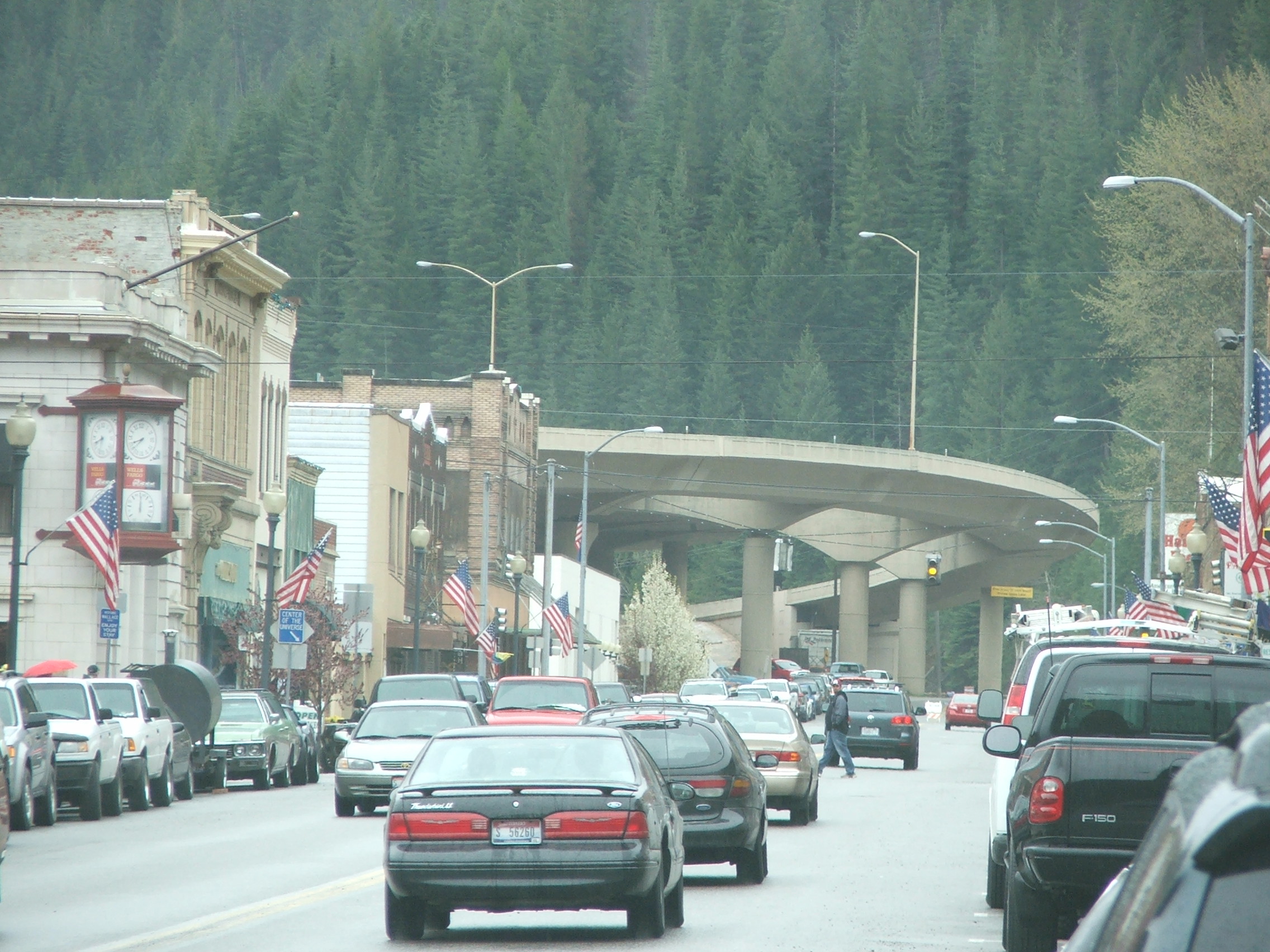
Here’s a product placement photo, taken in Wallace, Idaho. And why would it be considered advertising? Because it is where the Wallace Mining Museum and the Oasis Bordello Museum are located, which figure in my stories. A historic mining town with the interstate soaring in a world of its own high above the history and hidden stories.

Wallace Idaho

What’s Your Book About?

I’m dreading that question. Because the way I want to answer it is to start listing a blow-by-blow account of everything that happens. And the action, the plot points, aren’t what the book is about. So if it’s not, how would I answer that question? This confusion took me back to one of my favorite books on writing, Between the Lines by Jessica Page Morrell. I ended up reading about theme and premise, and here are some quotes from the book.

‘Theme is not the message of your story, nor is theme a moral as stated in Aesop’s Fables. Instead, it is the central concern of the story and it gives the story a focus.’

‘Theme is not the same thing as the story’s subject.’

‘Imagine theme as an invisible thread that links the disparate elements of a story together.’

‘Theme can evolve organically as it emerges from the character’s actions, or it can be the basis from which you write.’ (Jessica had a lot more to say about this subject, including the pros and cons of both ways. For me, theme evolves organically without me being aware of it. In other words, I finish the story and say, ‘Theme? What theme?’)

‘Premise is linked most specifically to the story’s conclusion.’

Premise is defined as a truth, or conclusion, usually but not always about human nature that is proven by the story’s events and ending. It often reflects the protagonist’s journey of understanding and ramifications of the character’s actions. Most often it can be summed up in a simple statement such as ‘true love never dies’.

‘Premise is sometimes confused with story concept which is basically a one or two-line summary.’

‘Premise also connects the character arc because at least one character must be changed by what the premise proves.’

‘The premise and the ending of the conflict must always reinforce each other.’

So with all that floating in my tea-soaked brain, what is the theme of  The Memory Keeper? What’s it about? Well, the emotional bonds of family I guess.

And what’s the premise? Well, that family is not just those of blood relationships, history impacts the present, and the bonds that bind can also free.

Honestly, that premise stinks. The theme is okay, but I have to put some more thought into this before someone asks me the dreaded question. How would you answer that about your stories?

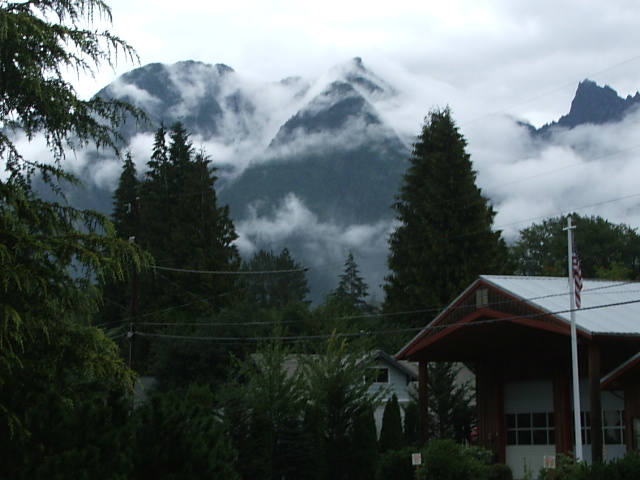
The photo below is the view from my desk at work, just for your enjoyment.