The Mystery Woman

Some writers develop the character first, and once fully formed, the story arrives to surround them. Some writers are the opposite, getting that story idea first, and then populating it with life. And of course some writers create with a combination.

Those sentences are nothing new to anyone who’s been writing a while. And I’m not here to say you have to develop characters a certain way. I just want to pause a moment and think about this because for the past two years I have been haunted by a character.

My normal process comes from the ‘what if’ question. I see or hear something, or have some random thought from outer space, and immediately think, ‘well, but what if…’ and away I go. Usually I know the very last line of the story before anything else, and then figure out how to write my way there. The characters come along after the ‘what if’ light bulb flashes.

After radiation treatments a couple of years ago, my writing process changed dramatically. And one of those changes involved my brain being introduced to a fully formed character. I can picture her, hear her, know all her motivations, how she will react. And yet for two years I have not found a story for her to populate. Over the months I have pondered her internal wounds and jotted down her back story. I’ve tried to write a story for her and have many beginnings that have ended.

In the meantime I have been finding my way back to writing, and have finally started a sequel to ‘The Memory Keeper’. And guess who showed up in the story? She’s a secondary character, the plot won’t revolve around her, she’ll be a path to friendship for the main character, and this time, it feels right and the words are flowing.

This character has stubbornly hovered out of reach, waiting for the story she belongs in. I now see that this one I have started will be her stepping into life, staying in the background, and working her way slowly toward a story of her own. This is one character who was smarter than me.

I love the mystery of writing.

Speaking of  mysteries, take a look at this photo of an old railroad bridge (now foot bridge) over Icicle Creek. Don’t you want to cross into the wilderness? Don’t you want to see who that is at the end and why they’re standing there, and where they’re going, and if they’ll let you pass? Talk about the ‘what if’ question.

Who Needs a Secret Garden

A young friend reminded me of the pure joy I felt years ago when first beginning to write. Think back, especially if you’re female, to those stories in the pre-teen and early teen years. I was telling stories long before that, but I’m talking here about those first purposeful creations.

There were no thoughts about character arc, plot arc, believable dialog.No editing, no worrying about a future audience, a critique partner, a writer’s group. Instead there was that secret thrill of a story I had control over, that was mine. I could give myself adventures that I would never have tried in real life. The kid I had a crush on would not only notice me, but we’d head off on a grand adventure. The heartbreaking drama that left me in tears could be rewritten into a tale where I knew just what to say. It was total control during a time when girls feel not in control of anything. Not emotions, body, life. All that could be escaped by slipping into that dream world and living in the story.

I’m not talking here about those people with imaginary worlds that take over their life, or keep them closeted away while life flows by. What I’m talking about is something I don’t want to lose. I don’t want to get so caught up in syntax and grammar and structure, that I lose the deep happiness of stepping into that story world.

My young friend wrote a story about a boy she ‘might, or might not’ have a crush on. Does that bring back memories? Does that bring a smile to you? A secret smile, thinking about an old story you may have written? I’m picturing paper covered in pencil, full of adventure and dreams, paper that allowed me to control the things I feared, things I was uncertain about, changes I didn’t want.

Writing gave me power in an age when there was very little I had control over. When I think of the stories now, they make me laugh. They were so badly written. But so wonderful.

And there were several stories written and shared at teenage girl slumber parties about the photo below.

Character Observation

I am going to be interviewing Kaylan Doyle, author of ‘Survivors’ Dreams’, but one of her answers spiked my curiosity about what others thought, so I decided to post it separately and use it as a forum for some discussion. I asked Kaylan this:

Q:  Your action/reaction character interplay always seems exactly right.  How do you manage the balance; where does the inspiration come from?

KD:  For me, the key to character/character interplay comes from observation.

Because of a decades-long hearing impairment, I’ve studied every aspect of social interaction – whether or not I was involved. I “heard” with my eyes. Compensating for the lack of words, I ‘read’ body language, guessing (not always successfully), while trying to fill the gaps of missed dialogue.

The more my hearing deteriorated, the more my other senses expanded to assist. Watching movies (or other people – ex. in the grocery store or at public venues), I found myself keying on the set of a jaw, the squaring of shoulders, the pace of breathing or whether one character invaded the personal space of another. The classic use of “show, don’t tell.”

In writing situations, I use the senses: Sight, feel, taste, smell, hearing plus a large dose of intuition. Applying all these bits of information enriches a scene or an interaction between characters.

For inspiration, I draw characteristics, traits from people I know. Combined with abilities I wish I had, or ones my characters will need to survive, my novels are peopled with composites. I love the freedom to create and amplify my characters’ abilities. Writing a thumbnail sketch of each personality keeps me true to the proper action/reaction of each. And some, I just make up for the fun of it – but I always try for authenticity, believability. I need my readers to nod and say, “Yes, this could happen – or yes, he/she would do that.”

About balance: I’ve found, in real life, there are few all “bad” or all “good” people. Everyone has their good points and everyone has flaws. Each has some personal code of behavior or ethics – even serial killers have methodology (eeek!). Murderers have their own twisted reasons for what they do, why and how. I try to portray the belief system of each character and reflect it in their actions.

In creating a ‘balanced’ character, I believe four things need to agree: dialogue (what the character says), internalization (what the character is thinking), body language (what the character does), and proprioceptive reaction (the involuntary physical reaction of the character to stimulus). If they do not agree, (a very useful tool if applied deliberately) it is easy for the reader to guess something is amiss. Often, writing what is “not happening” is more effective than writing what “is”.

My favorite character to create:  I love strong female protagonists.

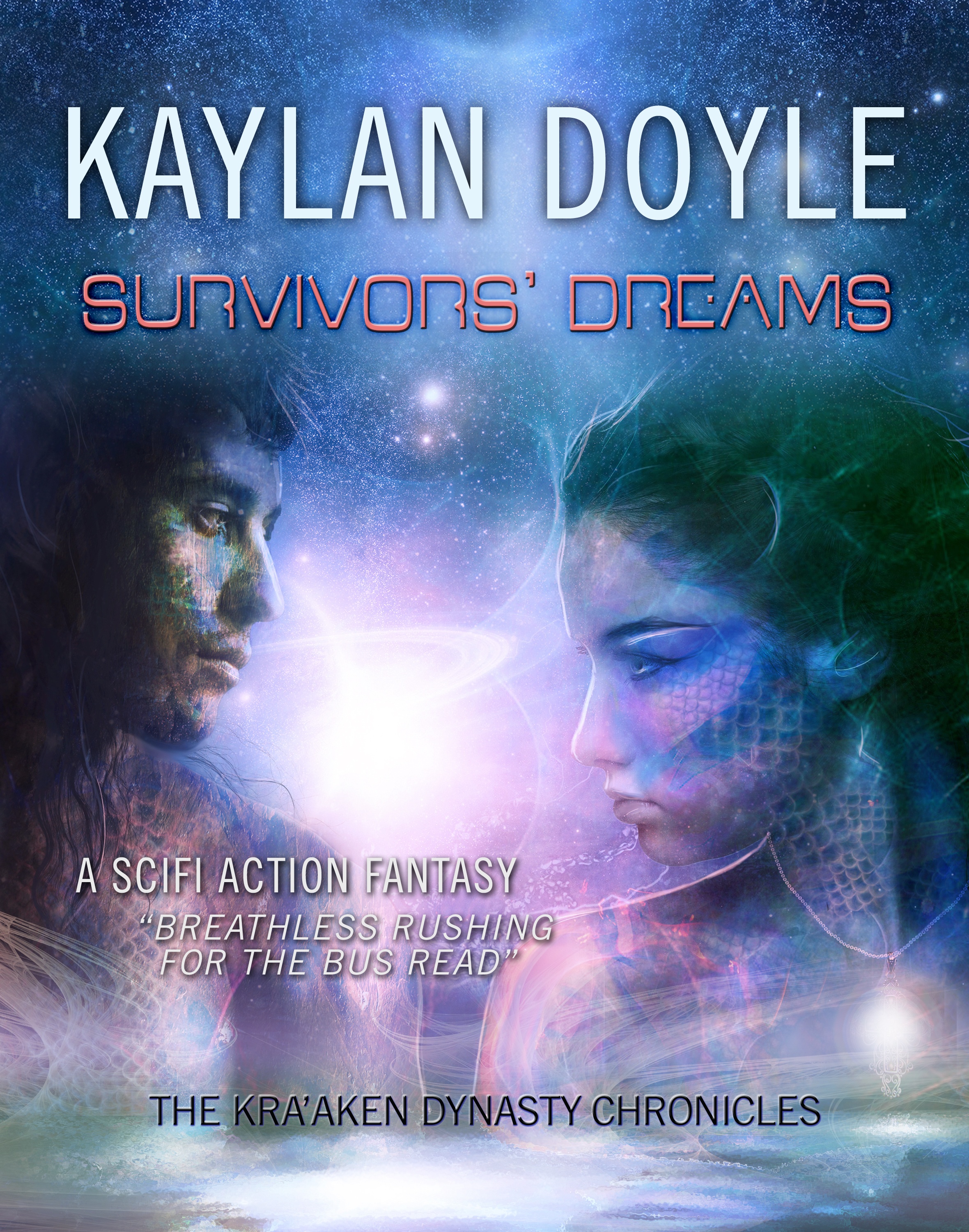
So, tell me what you think of character interplay. Kaylan’s right, that close observation translates to body movement that makes characters more believable and real. Below is the cover from her book.