Where There’s Smoke…

The 1910 forest fire in Idaho was so devastating it’s still known as the Big Blowup. Ten thousand forest rangers, miners, and farmers became firefighters. Many died and were buried where they fell. Some towns were evacuated by trains racing ahead of flames.

This history figures in the plot of book three, which is in process, and because of it I’ve been thinking a lot about fire. What it would have been like to face it, how it comforts and terrifies, warms and burns, provides safety, and destroys. And memories of my own firefighter days. But on a lighter note I thought I’d share a story that is nothing like the 1910 fire.

Once, we camped our way across Montana and found a beautiful, secluded campground on the Black Foot River. We had the place completely to ourselves and set up camp under huge old pine trees right alongside the river. My husband stood out there in the sunset fly fishing while I followed our young son, tossing rocks. Peaceful and perfect.

Until the wind started up, and kept coming, roaring over the mountain, bringing with it the smell of smoke and hot ash that burned holes in our tent. We had a camper on our truck so we retreated as thunder and lightning joined the wind. Pitching a tent with metal poles right under very tall trees suddenly seemed vulnerable.

In order to keep our son from being too scared, we resorted to happy voices. “Wow! Isn’t that cool how the wind tosses the tent?” and “Look at those tent poles break! Isn’t that funny! Let’s play Monopoly!” and “Bet you didn’t think tree branches could make such a loud crash when they hit the camper!”

The storm was violent enough that it blew the thought of ash, and what might be causing it, from our brains. Just like our tent blew away, along with the heavy-duty stakes.

After a long night in which our son slept soundly and we didn’t, we got up with the beautiful dawn illuminating the Black Foot. we packed up and pulled out. Rounding a corner not even a quarter-mile from the campground, we came across hundreds of identical tents in many, many rows. Firefighters.

There was a huge forest fire nearby. Everyone except those fighting the flames had been evacuated. Someone, on the way out, forgot to put a ‘closed’ sign at the campground. The high winds the night before had whipped the fire into a frenzy, but somehow the mountain had kept it from raging our way.

A good friend, Paul, was at the time a forest ranger who fought fires. As we drove by all those identical tents, a happy voice from the back seat piped up. “Let’s find Paul!”

Someday I want to return to that campground because it really was beautiful. Doubt we’ll have it to ourselves though.

Wonder if there’s still pieces of tent hanging from the trees.

One of my favorite camping pictures of Arthur.

One of my favorite camping pictures of Arthur.

Giving Voice to the Name

Do you ever go back and think about the names you have carried through your life? And how each name has defined that stage of your life?

For example, I was June and Frank’s daughter for four years. Then I became June and Chuck’s daughter. While I carried my maiden name, I was lacking in self-confidence, hid my writing, lived in day dreams, and blushed fire engine red at the slightest hint someone might spot me in the corner. I lost that fear only when safe in the circle of my close friends.

Under my married name, I became confident and sure, proud of writing (though the confidence in writing still sucks), able to release anger, able to talk to anyone, anywhere, about anything, even comfortable speaking to crowds. I saved lives. Sounds dramatic, doesn’t it? That comes from the years as an EMT. So I did save lives, but only with the help of all the other fire fighters and medics.

Then I took on the name ‘mom’ and became yet another person. I took on the name ‘orphan’ and started life without parents. I took on job titles, took on an unwanted label of someone who had cancer. I’ve had the labels of ‘daughter’, ‘sister’, ‘wife’, ‘friend’ and even ‘bitch’ to some (kind of proud of that one).

Each name, or label, tags a piece of my personality. That piece comes to the forefront when I go by the associated title. With all the changes, the three names I am most proud of, and that I never want to lose, are ‘writer’, ‘wife’, and ‘mom’.

All of which got me to thinking about what a great tool this is when used in writing, giving a character nicknames to pull out certain personality traits. This is used to great effect to not only show traits, but also to show conflict, to reflect a character’s growth, etc. Of course it has to be done with a very light hand or it becomes a clumsy plot device.

What I realized is that I don’t think I’ve ever taken advantage of this writing tool. I’m going to have to work on that.

Until then it’s time to put on the labels of ‘fire builder’ and ‘dog walker’.

What names have you worn throughout  your life, and how have you grown into, or past, those labels?

The sources of two of my labels: 'mom' and 'sister-in-law'.

The sources of two of my labels: ‘mom’ and ‘sister-in-law’.


Melancholy

Last winter's heron

Last winter’s heron

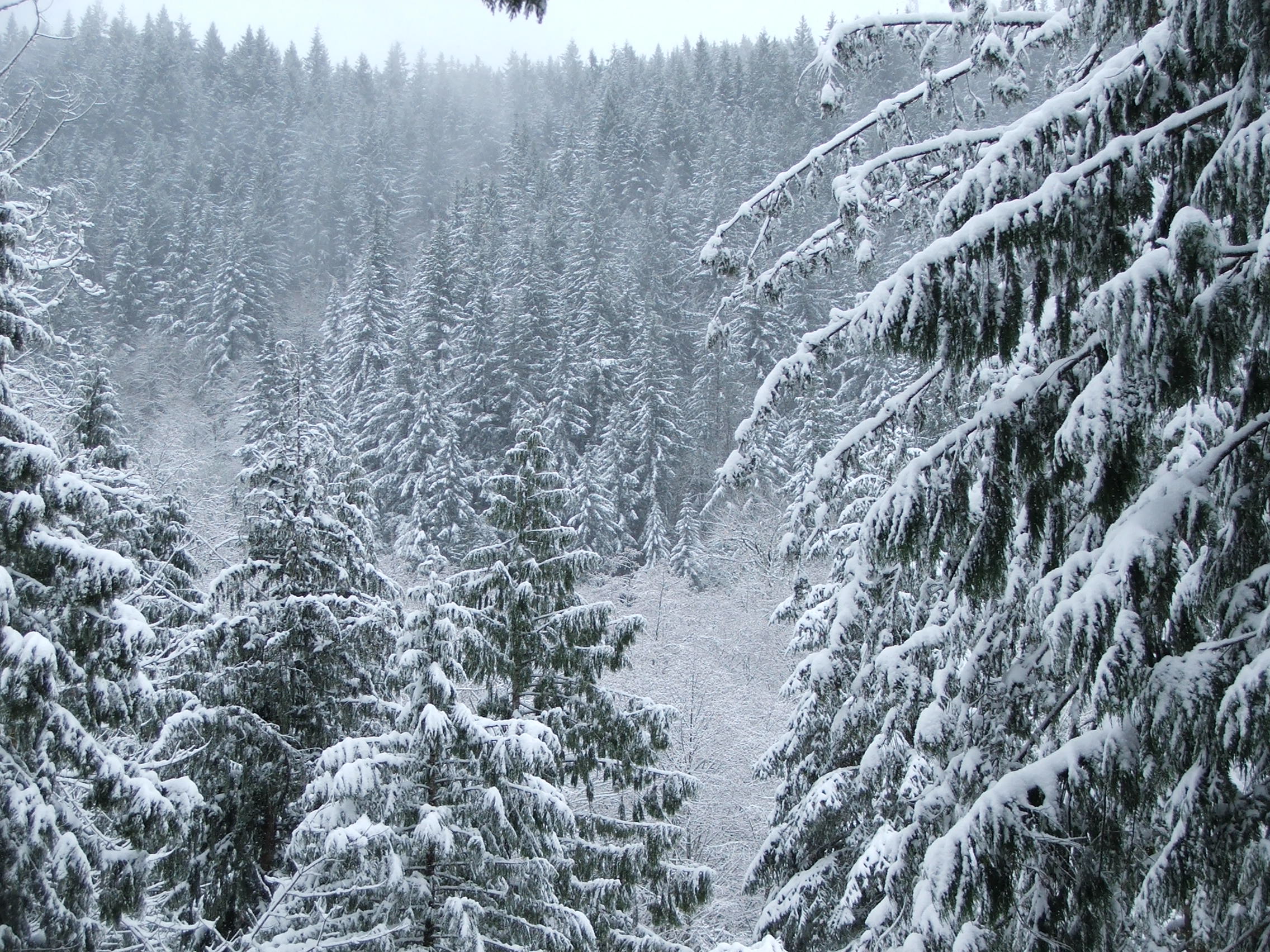
This time of year, drawing close to winter solstice, I crave solitude and quiet. Especially on Christmas Eve, I have to find a few moments alone. There’s something about when the woods around me are dormant, when earth seems to be sinking into a deep sleep, turning slower, that makes me need the same. Of course this is such a busy time, it’s hard to find that quiet space. But I need it.

Memorial Day is just another day for me. This time of year, however, is my memorial time. It’s when I remember those who have passed, when I touch decorations that my baby fingers touched, when I smell spices and resin that take me back years. The holidays used to be a time for my large family to gather, but no more. And so this time of year I remember all the old stories.

Melancholy is most commonly defined as sadness or gloom. However, another definition is ‘pensiveness’. That, to me, is more accurate, and how I feel this time of year. Pensive. Tears feel close to the surface. But it’s not because of sadness. It’s closer to mourning what has passed. Whether that’s people, seasons, the year, changes that have happened, the person you used to be. And it’s a form of farewell and endings.

After winter solstice, when the earth begins to turn slowly back toward spring, and we can start seeing the signs of waking up, all of this melancholy will go away. But for now it’s important to slow down with the season, to pause, to dream, to remember.

This pensiveness draws me out into the trees. It’s when I go out in the dark and freeze my butt sitting on a specific granite boulder near a yew tree. There I can sense that deep sleep under my feet, can feel the slow revolution of seasons, and wait for my time of remembering.

One memory in particular is of auntie, an elderly woman who raised my mother. On Christmas Eve, she created magic fire, sprinkling powder over flames and turning them all colors of the rainbow. All kids should have magic fire on Christmas Eve.

So for the next few weeks I shall be remembering and honoring the past.

Sleeping trees

Sleeping trees