I Swear!

I used to say ‘dang it’, ‘darn it’, and ‘shoot’. My husband asked me why I didn’t just say the swear words. He pointed out that I said the words with the same emphasis, for the same reason, and with the same meaning, as the actual swear word. But I couldn’t do it. I’m not sure why. A word is just a word, right? Well, that’a stupid question to ask a writer who knows the value of each and every word.

Years ago my mother decided she swore too much and switched to flower names. Not too long after, she was caught with a swear word passing her lips. My father said, ‘what happened to ‘petunia’? My mother responded, very firmly, that sometimes petunia just didn’t do the job.

I understand that a bit more now. During all the radiation fallout a few years ago, my emotions were erupting. My doctor told me if I wanted to cry, to cry. If I wanted to scream, to scream. So I did. Well, maybe not screaming. But I slammed doors and started cussing.

So a few years ago I pitched a story idea to an agent. During the pitch, he asked if there were swear words in the story. One character did cuss. He told me if accepted, I’d have to change that. His readers expected books with no profanity. I passed on the agent. Swearing was part of the character. Plus, that personality trait served to emphasize the protagonist’s opposite traits of tentativeness, dominated by a parent, and naive about life. (Rachel and Cody for those who have read The Memory Keeper). I decided Rachel was a cussing kind of girl and needed to stay that way.

There will always be arguments for and against swear words in books. There will always be readers who choose books based on those particular words rather than all the other words that make up a story. Which is fine. But writers must be true to their characters and their stories rather than writing to a particular audience.

Swear words also seem to be a cultural thing. Back in the early 20th century, it would have been hard to find books with swear words. Books reflected the times, and you didn’t hear cussing very often on radio shows or television. Whether you think it’s a good change or not, swearing is commonplace now, and art forms reflect that cultural change. Though some swear words are more socially acceptable than others.

It makes me wonder what people think of swearing, in the books they read.

Finally, I just have to say that this evening  I was outside in the dark and rain, with my head lamp as the only light, chasing two ducks named Larry and Curly, in circles around the coop, slipping in mud and duck-do. Shouting out ‘you f***ing birds!’ at the top of my lungs felt a lot better than if I’d said, ‘dang it, you stupid birds, why can’t you figure out the ramp like Mo does?’

I swear. Doubt that makes me a better person, but it lowers the blood pressure. And I’m keeping the character of Rachel and her cussing around for the sequel.
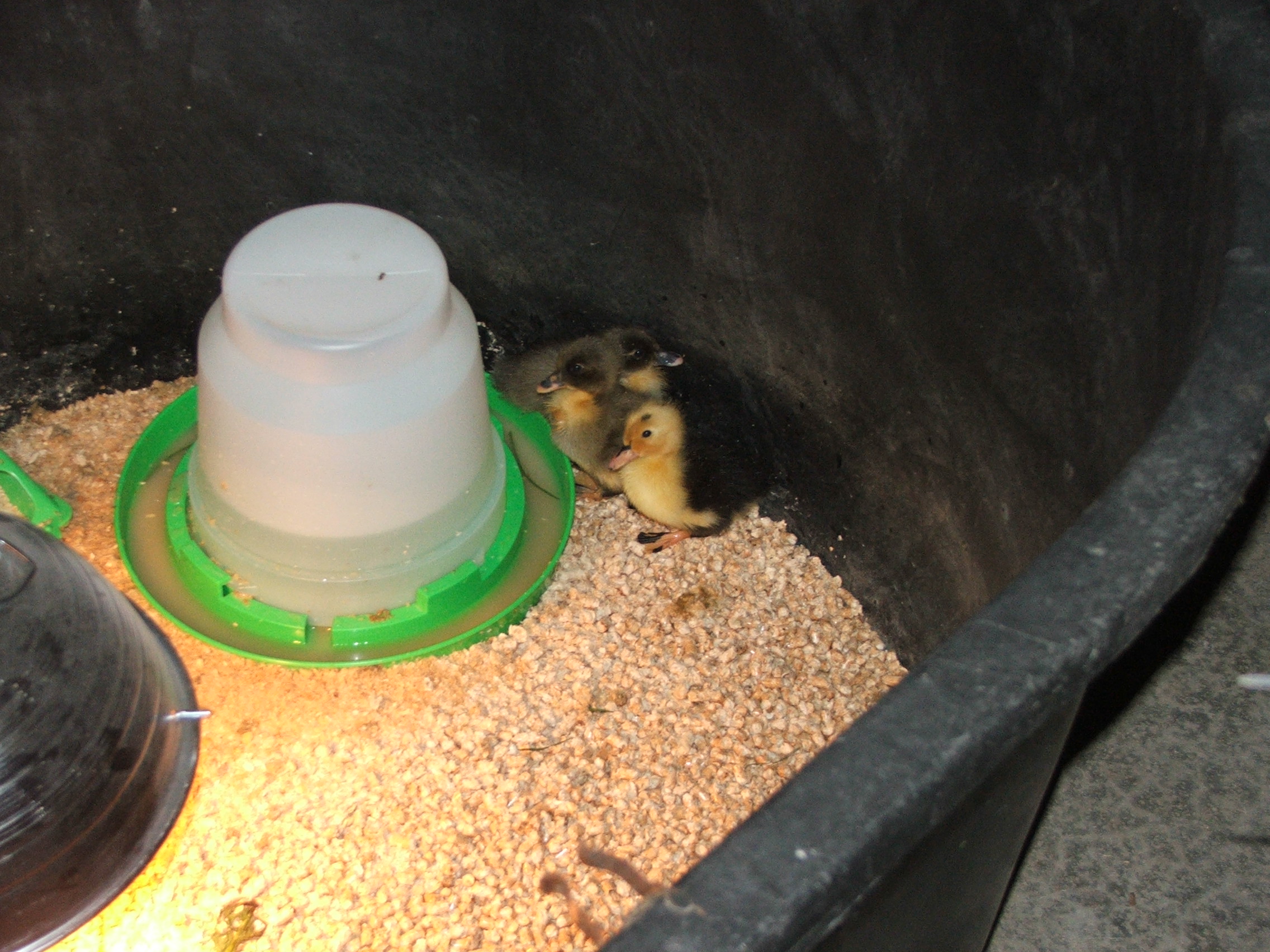
Larry, Mo, and Curly before they started leading me on the merry coop chase.

Larry, Mo, and Curly before they started leading me on the merry coop chase.
Fear

I’ve been thinking about fear for a scary story. Thinking about what scares me and why, what scares people I know, and why. For instance, a sister and a friend are afraid of spiders. Personally, when I find a spider I put it outside. Why are spiders frightening? Is it the way they run so fast, the fact that they have so many legs? But why are those things scary? When people talk about spiders they use words like ‘scuttle’ and ‘dart’. I think it’s the unpredictability, the feeling of being not in control. Well, my sister says spiders have hairy legs but then so does her husband and he doesn’t scare her.

The same friend (I’ll let her identify herself in comments if she wishes) told me she’d be uncomfortable house sitting for us because she’d be afraid to go outside. I assume it’s the lack of any light, the surrounding woods, the wild animals. Those things that I rarely give consideration to. But this is the same friend who managed to walk a lonely road through the woods late at night with no flashlight, because she had no choice. So she has the courage to function in spite of fear. I still wonder though, what is at the root of that fear of the dark. The unknown? The unseen?

This same friend lives in the city and thinks nothing of standing at a bus stop late at night. Now that would scare me. Why? Strangers, noise, crowds. And what is the root of that? Unpredictability, lack of control.

Thinking more about this I realize we also fool ourselves into thinking we are safe. Like the following scenario, which happened to me.

You’re in a tent on a camping trip with your husband and small child. It’s late in the season, few campers, cold at night. Your food is stored in iron ‘bear boxes’ with padlocks to keep the bears out of your food. It’s late, pitch black. You’re cozy in the tent, snug in your sleeping bag, safe. Until you hear the clanging of something banging on the bear box. And hear loud snuffling. And see the wall of the tent bulge inward. At that moment you realize that the safe ‘home’ is simply canvas material, easily ripped. And your snug sleeping bag is simply a trap you cannot get out of fast enough. Finally, you realize that by locking all your food in a bear box, the hungry bear must look elsewhere. And now you’re terrified.

In our case all worked out well, of course. But what was terrifying? Again, at the very root, vulnerability, lack of control. And for me, the sudden terror that I might not be able to keep my child safe. Which could be interpreted yet again as lack of control.

So in this story I’m working on, it doesn’t seem to matter what the character is afraid of so much as why they are afraid. If I figure out the why, then maybe the reader will feel that same fear.

So what are you afraid of, and have you ever wondered why?

The photo below is a bronze maple leaf that hangs in a yew tree. My son says it’s creepy because the eyes ‘follow’ him when he walks by. A fear of something inanimate acting like something animate? Who knows.

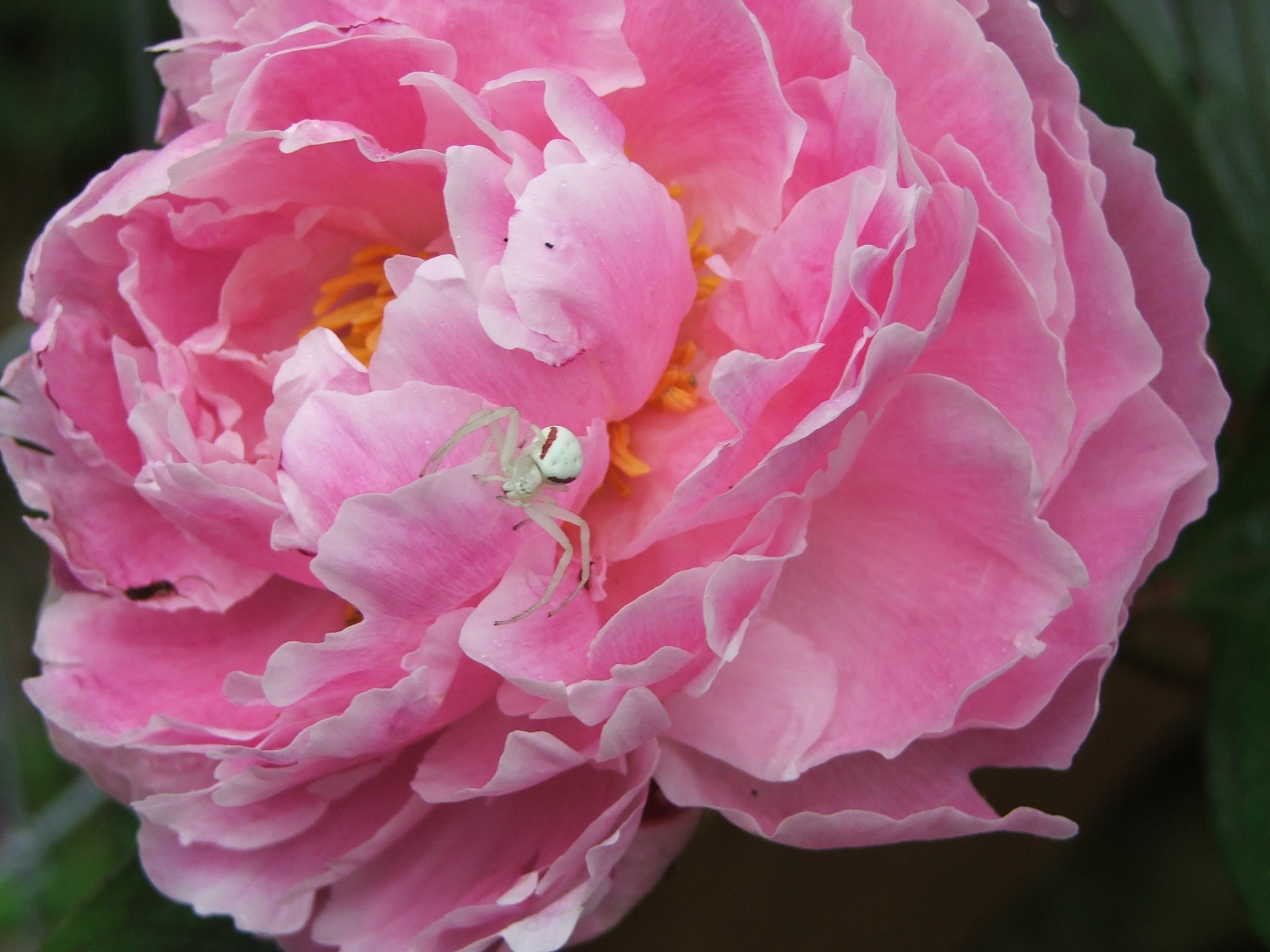
And okay, I added a spider for my friend. Couldn’t resist.

Do the eyes follow you?

Do the eyes follow you?

Peppermint - looking spider on a peony.

Peppermint – looking spider on a peony.


Reality

It’s been snowing and raining all day and I have looked forward to this moment of getting home, getting the fire built up, warding off the damp and chill. Which I have now done. But here’s the thing. The wind followed me home and it sounds like Halloween out there. I can hear it blowing loud along the river channel, and up high on the ridge tops. I don’t think it knows I’m down here under the trees in a sturdy home. Well, home felt pretty sturdy until a few minutes ago when the coyotes joined the wind. They have an eerie sound at the best of times let alone on a breezy night when I’m home by myself. But I have to laugh. Because really, here I am with full kerosene lanterns, fresh batteries in the head lamp, a roaring fire, dogs at my feet, writing waiting, and a shotgun. What is there to fear from wind and snow and coyotes? Nothing. Which is why I locked the door.

Here’s what I meant to write about though. On the radio this evening a man talked about a rare disorder where a person feels like they have ceased to exist, that the things they see and touch are not real. It’s possible that something in the brain between our thoughts and our perceptions disconnects for these people. I found that so creepy. Which is the real reason I locked the door. One patient thought she was dead. Think about that.

And then think about how, in writing, the story world, the imagination, the dream, become so real.

This past December we went to Wallace Idaho. I wanted to get winter photos of Nine Mile Cemetery for possible cover art for The Memory Keeper sequel. While there, we wanted breakfast, and I suggested a particular café.

And then remembered that the café doesn’t exist outside of the story. Oh, I based it on a similar one that does exist, but in a different location. In those few moments, my reality was actually my story. It was quite disorientating. I had to actually pause to discern which was real.

The light side is when we fall in love with a story and become immersed in that world so deeply that our stresses and disagreements and worries disappear for a short while.

The dark side is when we forget which is real and which imaginary, when the story becomes the truth. I sometimes think that is what has happened to a young man who lives near here and carries on conversations with people who only exist in his mind. Yes, I know the medical diagnosis of his condition, but sometimes I watch him talking to them and have to wonder.

 Who decides what’s real?

 Okay, I’m very glad the door is locked. Wonder if my husband can leave work early…

Image