Novels and Scotch

My son came up for dinner this evening, and wandered around with me afterwards while I watered roses.

DSC_0017

He talked about a short story he wrote, that he would like to turn into a novel. But he doesn’t think there’s enough to make a novel-length story, even though he has a fully developed world, lots of characters, and an extensive plot outline.

We talked about what he doesn’t have, to flesh out something that would translate to a novel.

First, there’s not enough sub-plots. The major plot line, like I said, is done well. But without sub-plots to hold it up, the main plot will sag, most likely about mid-way through. The lack of sub-plots is almost always the reason a first draft dies about halfway in.

Second, there’s no conflicts between the characters. Either external, or internal. He realized that these characters all get along too well.

And third, in a short story it’s okay for the good guys to win the battle. In a novel, it won’t work to have the good guys winning every single battle as they make their way forward to the final scenes. So they need to lose, and there has to be reasons for them to lose, and ways for them to learn and continue.

Arthur Luke 3

A boy and his dog, many years ago.

While we talked, I remembered one of my favorite mysteries, that I never did anything with. I loved the premise, loved the characters, really loved the setting. I finished it, beta readers loved it. But there were lots of problems.

Not enough characters, so the antagonist was obvious. Not enough sub-plots to carry the novel. Predictable battles. Sound familiar? Sure did to me, even if the genres were completely different.

I’d like to go back and edit that story, but it needs more than just editing. It needs serious revision work. I’ve tried that a couple times but wow, what a task. It might be simpler to just take the premise, hang on to a few characters, and rewrite the whole thing.

Thinking about that story also reminds me of a funny conversation. The foundation of that mystery is a cask of Highland Park single malt scotch. I’m partial to Highland Park even though I don’t like scotch, because the distillery is on the Orkney Islands and I have friends in northern Scotland. That’s the main reason I chose that scotch.

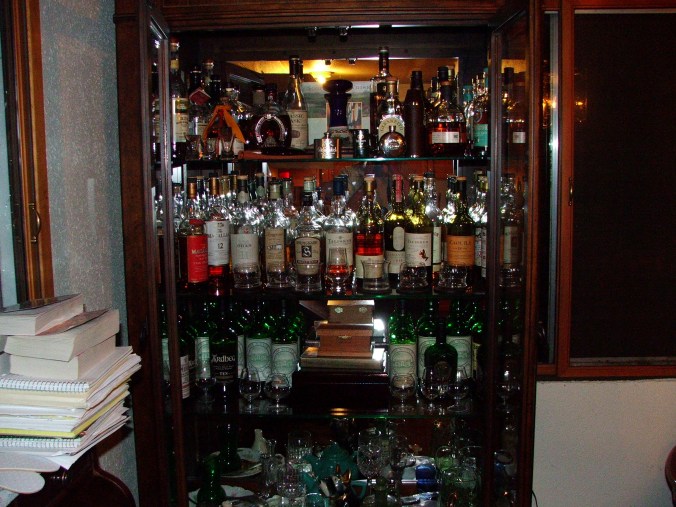
My husband collects single malt scotch. So as I wrote the mystery, I would go to him and say, ‘I need a whisky with a peat flavor’ or ‘I need something that’s fruity’ and he would supply me with way more information on scotch then what ended up in the story. Plus he’d have to extensively sample, to find just the right one to meet my needs.
miscellaneous 080

Also from several years ago.

When it came time to do our taxes that year, our accountant told me we could write off the scotch my husband bought as research for the story. I thought that was a bit farfetched and didn’t believe the CPA.

My husband, on the other hand, decided the mystery needed to become a series. Set in different distilleries that we would have to visit for research.

I guess one of these days I’ll have to rewrite that mystery and create that series. Just to keep the scotch flowing and the husband happy.

DSCF2976

Genre Originality

I’ve been wondering lately when the requirements of specific genres in writing slide over into the realm of clichés. Which leads to other questions. How do you keep a reader who loves the genre from getting bored? How do you stay within the confines of a genre and yet write an original piece? How do you keep a genre-specific story from becoming predictable?

Arts birthday & climbing 091

I obviously love mysteries. As a mystery reader, I know the basic road map the story will take. I expect a series, a hero’s journey, meaning a protagonist who struggles against self as well as plot, and a climatic ending. What makes me reach for a new author is a setting I haven’t yet visited, a mystery that isn’t based on the discovery of yet another young woman’s body, and an ending that isn’t just the protagonist facing down death. I mean, it’s a series, right? Do we really think the author will kill off the main protagonist? Of course that happens, but it’s rare. So if there’s no chance of killing the golden goose, there’s no tension at the end because you know the character is going to survive. Give me something more to worry about.

The things I look for in mysteries are those things that keep the genre from becoming boring for me. The things I try to avoid are those things that feel like mystery-series clichés.

In apocalyptic genres (think Stephen King’s The Stand) there are always the disparate groups of people who eventually come together. There’s conflict between the characters as well as whatever outside danger is stalking them. You’re always going to find characters like the athlete, the brooding type with a past, the woman from a broken relationship, the overweight nerdy type, etc. You get the idea. The unique twist is usually whatever is out to kill them all. Oh, and who survives. This genre has more freedom to kill characters off.

Jennie Aug 2010 037

As an aside, Stephen King is a master at developing characters. His are the only books I read where I flip to the end to see who survives. I don’t want to get emotionally involved with someone who’s going to be killed off mid-story.

morning star 09 064

Readers of specific genres expect those rules to be in place. They know what they are going to get when they open the book. The only surprises the books should offer up are the unique twists the author adds. The underlying plot structure should be predictable, to a point, so the reader gets what he or she loves out of that genre.

Of course there are always the books that overlap genres, combine genres, are genre-less, or even create a whole new genre. But you get what I’m saying here, I’m sure.

The challenge for a writer within a genre is sticking to the rules while breaking them at the same time. But not breaking so many that the reader is left feeling cheated. And not sticking so closely to the rules that the author is bored.

And avoiding becoming a cliché.

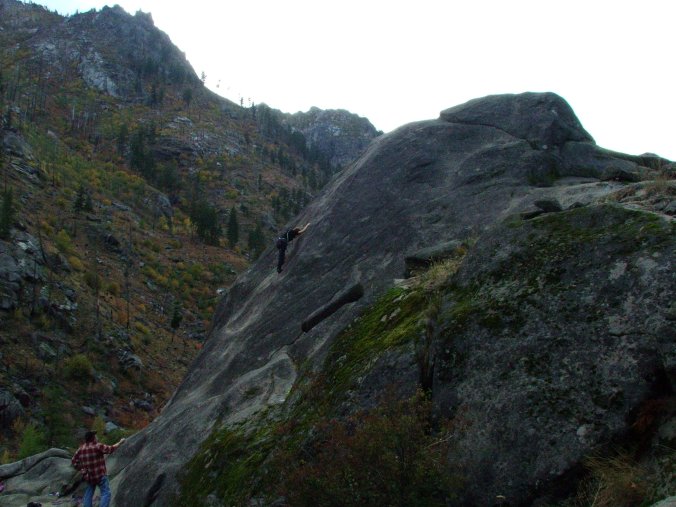
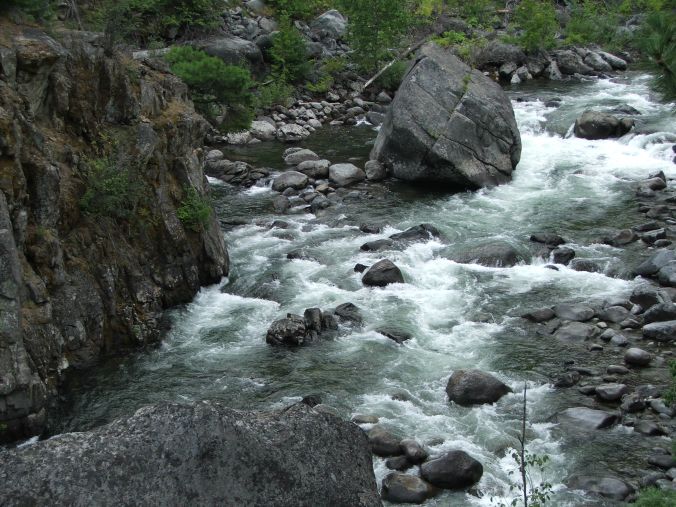
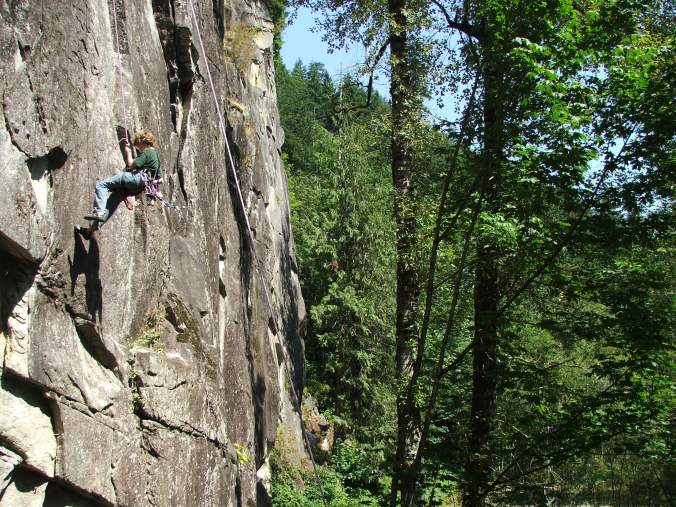
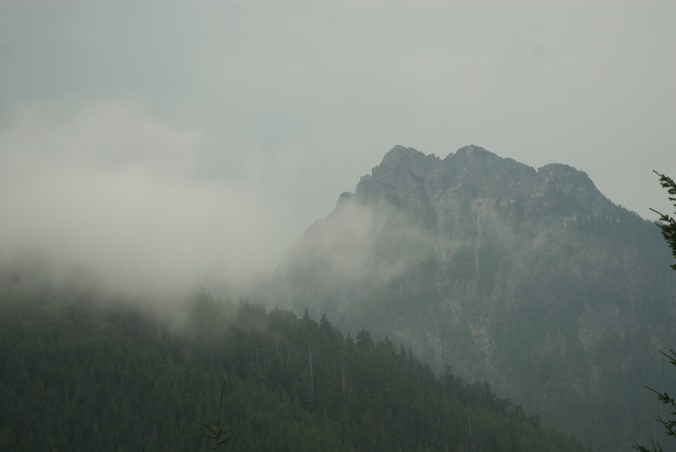
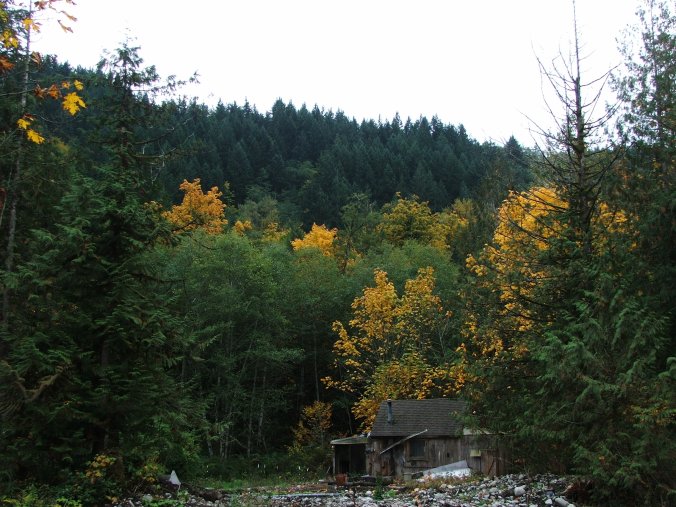
What’s with the random photos not connected to the blog subject, you ask? Maybe an apocalyptic genre story in its infancy, set in the mountains.

DSC_0029

Solitary Thoughts

Some yearn for solitude and some don’t. I’m one who does.

For years I planned on being like a woman I knew. She was a hermit, out in the woods, that lived with her animals and her books. And her words; she wrote children’s stories. Her contact with the world was me, when I came once a week with her groceries.

trees 003

Except for the ‘hermit’ part, I reached that goal. Out in the woods with books and animals and writing. I didn’t think a man would sneak up on me. Luckily we prefer each other’s company over crowds.

Art Lisa Hitler Vaila

Wow, we look young.

Then there’s the solitude writers need. Not just for writing, but also for moving through the story world. Of course, that quiet time needs to be balanced with being out in the world because how else will you create believable characters? Yet, even among people, there’s a sense of the solitary, of being the observer rather than the participant. Though, don’t get me wrong. I can talk to anyone, about anything, anywhere.

An inner solitude also exists. Sometimes it’s a place of refuge. Strength. Sadness. Melancholy. Recharging. Withdrawing.

I visited that inner solitude going through radiation treatments the first time. It was a place where I could encapsulate fears I didn’t put in words. Didn’t want to share. Some think of that inner place as a room with a door that can be shut when they leave. For me it’s a sanctuary. A clearing in the forest. I could go there and be allowed to grieve without having to worry friends and family. Oddly, I always left that place feeling as comforted as after a crying jag against the husband. I don’t cry often, but I did in those days.

icicle creek 023

Clearing with a granite erratic

Physical solitude is something I value. And it seems to be something many people don’t understand. Sometimes you can’t avoid hurting friends when they want to get together and all you want is quiet time with your solitary partner, in order to recover from all the chaos. It’s the need for quiet space in order to breathe.

I have memories of the first summer we moved to the mountains. I lived alone in the tiny cabin, a couple miles from a tiny town, and have posted those stories before. Those months were when I realized the absolute soul-filling need for quiet, for trees, for water, for granite.

property 009.jpg

Of course that’s also the time I learned about fears that walk with solitude. It’s so black out there at night. When the sun sets behind the ridge and your kerosene lantern is just a tiny point of light, you realize you’re a solitary interloper.

But the value of solitude outweighs those faint fears, every time.

Do you find peace in solitude, or peace out in the world? What is your inner haven like?

raindrop

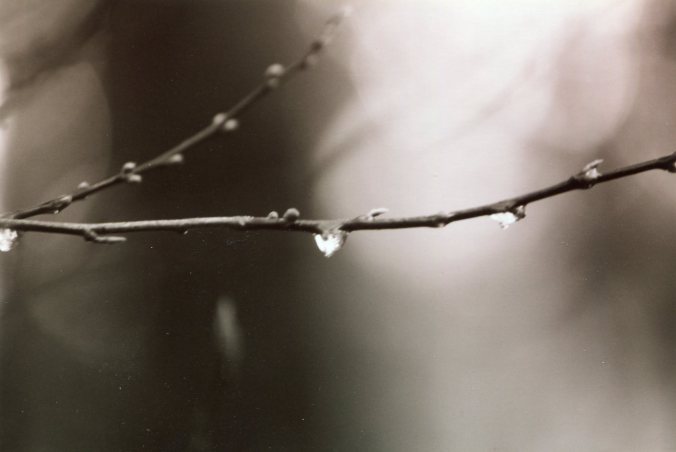
I do love the rain

Art on Cat boat

He likes water a bit more than me – he’s in the orange cat boat