Goals, Motivations, and Action

I’m using Janice Hardy’s wonderful Editorial Map for revising the first draft of book four, found in her equally wonderful book Revising Your Novel. But I got hung up on a few things.

The map asks specific questions for each scene or chapter. By answering, you see where you’ve gone astray. After mapping out the whole draft, you have a snapshot of where the story needs work.

One question has you list out the goals and motivations for each scene, and one question asks what the point of view character is doing in the scene.

How are they different? Isn’t what the character does, her goal?

So I did what I always do when I have a writing question. Went out to dinner with my friend, author and editor Susan Schreyer. (It’s our excuse to eat out.)

What I realized while talking to her is that the ‘goal’ question relates to the over-reaching goals and motivation. The internal goal, so to speak, which ties to the theme or premise. What the character is doing relates more to the physical, immediate goals and motivations attached to a specific scene.

Of course I knew that.

Right, Susan?

I then talked to Susan about a couple of scenes I found that didn’t have any goal or motivation, whether out there in the ozone or right in the character’s lap. I knew the scene had a purpose but it wasn’t quite fleshed out enough to make that purpose clear.

Susan, of course, had a great suggestion. She said to go back to the previous scene and see what the decision was. This doesn’t mean a physical decision made by the character like deciding to get tea instead of coffee. It means the conclusion of the scene.

Not to confuse that conclusion with the ‘sequel’ which should follow each scene. In other words, the scene is me finding an earwig in my hair, and the sequel is lots of yelling and thrashing about. You can’t have a scene without a sequel. Think ‘action/reaction’. The decision is what the character does after the sequel. Like washing hair for three hours.

That decision should always tie to the next scene. The decision causes the next step in the plot or the character arc to happen.

And in the scenes I struggled with, I realized they didn’t tie to the previous scene or decision. They were just kind of hanging out there on their own. No place in the story arc.

It’s going to be a fairly simple thing to revise them to find their place in the story. Right at the moment, I love this revision process. We’ll see if I feel the same later.

And I already knew that about scene/sequel/decision.

Right, Susan?

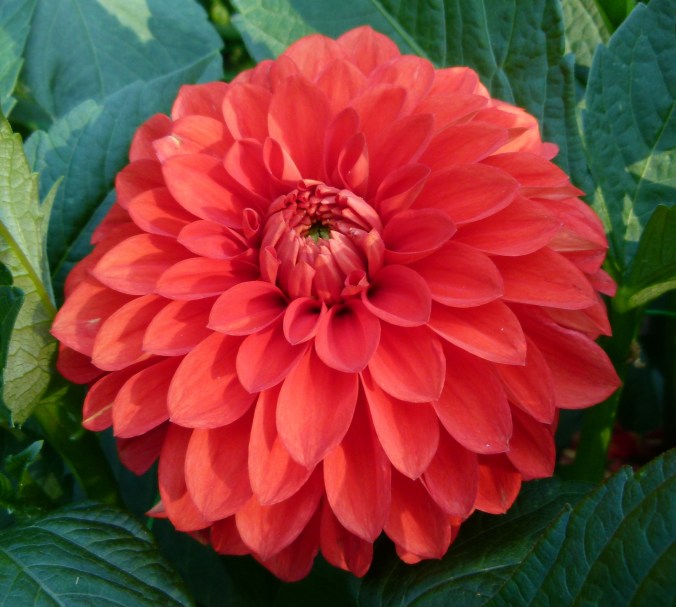
Dahlia_concours_international_2012_Parc_Floral_3

Dahlias (aka earwig flowers) from By Dinkum – Own work, CC0, https://commons.wikimedia.org/w/index.php?curid=21343403

When You Write Slow

Someone once told me that my books start out like an easy ramble through the woods and you don’t realize you’ve been sucked in until it’s too late.

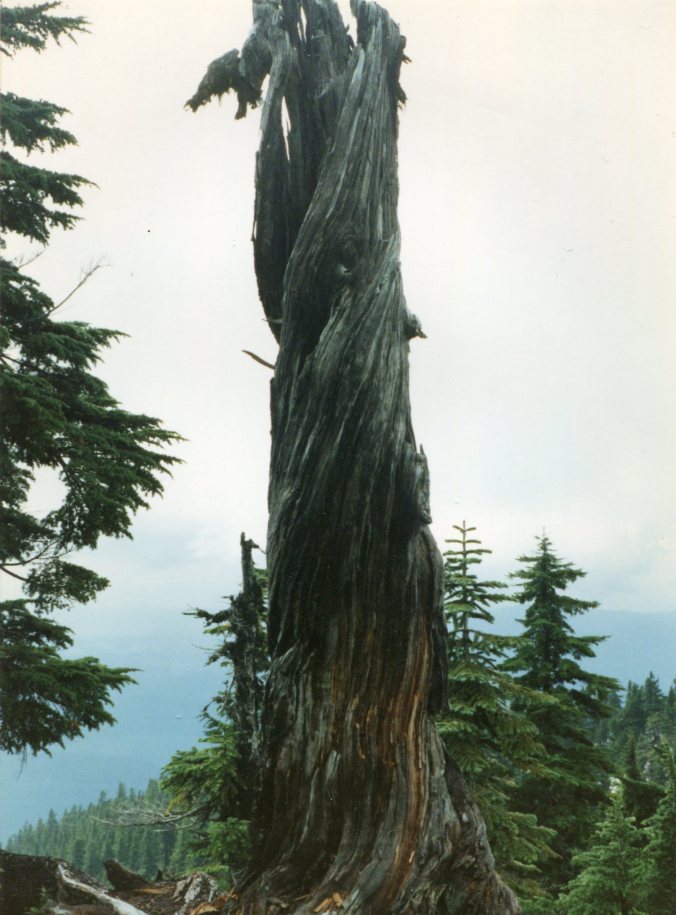
tree on Mt Pilchuck

How long did it take this tree to get like this?

I liked that even though I spent an inordinate amount of time wondering if it was a nice way of saying I better work on pacing. Well, okay,  I still wonder that.

It takes me a while to write a book. I firmly believe that if I outlined in a traditional manner, I could publish books much faster. But that type of outlining has never worked for me. I prefer to amble along daydreaming the story.

On the positive side that means I usually don’t have a lot of revising to do at the end (unless my editor asks me the ONE question I never thought of that impacts the whole story…thanks, Susan Schreyer). It also means I’ve given characters plenty of time to show me who they are and how they fit in the landscape.

Mt Baring

Mountains – my favorite story landscape

But on the not-so-positive side, it means two things in particular for the story I’m writing now.

I’m working on the ending currently. And one of the characters finally decided it was time to tell me about family relationships. Really? You wait until NOW to tell me? Yes, okay, that makes sense as I think about it. Yes, okay, it ties perfectly to the theme of family angst in my stories. But still, NOW?

I started Sunshine On My Shoulders almost three years ago. At that time certain things were going on with the Sunshine mine in Wallace, Idaho. Now that I’m almost done, those things have changed so the story is now out of date. Some of the plot moments can be left because this is, after all, fiction. But as I revise, I’m going to have to bring several things up to date or the book will be ‘old’ before it’s ‘new’.

Does all that make me feel pressured to write faster? Not really. I enjoy the slow ramble through the woods. I love the process of the story unfolding in its own time.

I saw an article recently that questioned whether slow writers could survive in this day and age of everything delivered instantly and the vital need to stay in the public eye or be forgotten. I didn’t read the article. Why? Because the purpose of writing isn’t to quickly shove product into humanity’s hands. It’s to tell a story. And any story, in any writer’s hands, will reveal itself in its own time.

My stories just happen to be a bit shy.

taken by Art

There’s a story out there…

Words Vs. Plants

I recently joined a plant identification group while trying to identify a plant I found in the woods. There are currently, I believe, around four thousand international members of this group.

DSC_0002

Identified by friends and local conservation district – not by the online group. Daphne mezereum

I also belong to a writer’s group, which has thousands of international members.

It’s hard to avoid comparing the two. And it’s been a bit of a shock.

Within the plant group, a person can seek all sorts of help around identification, habitat, and so on. The members consist of those who can easily list off the latin names and those who know only the common names. But wow. The rudeness. And I’m not one of those types easily offended.

Recently a person posted a photo of a plant that looked suspiciously like blueberries. She found it in a raised bed where she had planted blueberries. She thought it was one of her plants. Who wouldn’t? But when she ate a berry, she realized it was different. She sought help identifying the plant, and instead was slammed with hundreds of people belittling her for eating something she didn’t know. Many of the responses were quite cruel.

Within the writer’s group, members run the gamut from experienced journalists and novelists to raw beginners.

Recently a person posted a question about her fear switching from freelance journalism to attempting a novel. She sought help and advice. She was slammed with hundreds of people offering help, listing resources, encouraging her to try something new, and excited on her behalf.

cabin

Books on the craft of writing, waiting for tea and highlighters

Now don’t get me wrong. This isn’t one of those broad generalizations. There are rude responses in the writer’s group once in a while, and there are kind responses on the plant site. But the percentages are skewed. On the plant side, the kind responses are in a minority. It’s the opposite on the writer’s group.

This has me wondering what makes the difference. I don’t think it’s tied to ‘writing’ or ‘plants’.

Is it social media? The freedom the internet gives one to say things they wouldn’t to another’s face?  That’s simplistic and an overly used excuse.

DSC_0188

What my yard would look like without the guidance of friends

Is it art vs. science? The rude responses on the plant site seem to overwhelmingly be from those who can spout Latin names without typos. Is an artist more willing to share, and learn from sharing, where the science type leans to snobbery? I don’t believe this for an instant.

So what’s going on?

It’s the administrators. Those who do the writer’s group monitor things closely. If a comment is uncalled for, the person is called on it. I had many years as a facilitator of a writer’s group to understand the need for quick involvement. In the plant group, there are rules you agree to when you sign on, and supposedly there are administrators out there somewhere. Occasionally, like the thread about blueberries, these guys step in and put their foot down. But by the time they do, the thread has gone on way too long and the damage is done.

In other words, it seems we can’t be left alone in our play groups without our parents. Or at least some of us.

So I’m going to drop the plant group. Who needs that in our short lives? I bet there are other plant groups out there that are more professional, and that have members more like writers.

Then I’m going to go soak in the writer’s group for a while to clean off the plant group.

DSC_0022

In case you are wondering about identification, or want to describe it in a story – it’s a daylily (hermerocallis)