Sick Humor

I’ve struggled to come up with a blog post about writing while my brain is briefly occupied with other matters. So I thought I’d write about what is on my mind.

I’ve joked around lately about being an expert barfer. Radiation treatments and anti-nausea pills have brought that home. I’m actually serious.

When I was pregnant the doctor said I was the only patient he’d ever had who got tendonitis in their feet from kneeling so much in front of the toilet.

When I was an EMT I could work on a patient, grab up the handy little waste basket, and go back to work without the patient (and sometimes without the paramedic or driver) knowing anything gross had just happened.

Over the past year I’ve provided hilarious moments for doctors and staff as they try to teach me to gargle without barfing. I can’t gargle. It’s unnatural. They want me to gargle numbing medication so I can have endoscopes. They now tell me that swallowing is okay, too. Oh, and they have to give me a double dose of the amnesia anesthetic because – you guessed it – even when I’m unconscious I’m busy.

And let’s not forget sympathy. I feel so sorry for someone else barfing, that I have to keep them company. The dogs in particular. And especially while trying to clean up a dog that’s rolled in dead salmon. But if the dog does something on the rug, I have two options. Join in as I clean. Or, stare at the wall as I drop paper towels in the vicinity, hoping to hit the target, and then leaving the neatly covered bit for the husband.

The husband told me once that I was a ‘dainty barfer’. I had no idea what he was talking about until the first time he got sick in our life together. My god, that man is a pro. I swear he puts his whole head inside to make it echo. You could be down below in town miles away and know what he’s doing.

I sympathized.

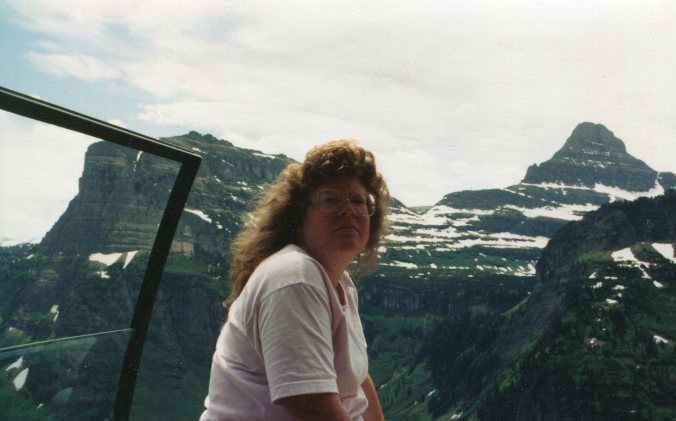
I know blog posts are supposed to have photos so people read them. But I don’t believe in ‘selfies’. Especially when I’m being dainty.

And now I’m going to get in the truck for the drive to work. With ginger tea, handy little barf bags from the doctor, and a roll of paper towels.

Yep, I can barf and drive at the same time.

High Stakes in Mysteries

I’m reading Revising Your Novel by Janice Hardy and here’s a bit from the book that made me laugh. It’s from a section dealing with how to fix scenes where stakes might be too high, or not high enough.

“If the protagonist walked away, what would change? This can help spot stakes that seem high, but aren’t really. For example, ‘they could die’ should be the highest stake of all, but if the protagonist walks away she’ll live. Problem solved. Sure, others might die, but do readers really care about a faceless mass of unnamed people? Nah.”

That made me think about something similar, one of the biggest issues for me in reading (and writing) a mystery series.

Those ending scenes when everything’s about to be wrapped up, all will be disclosed, and there will be the final life-or-death battle between the good guy and the bad guy. Yes there are authors out there that kill off the protagonist of a series, but that’s rare. So is there any reader out there who thinks the protagonist might actually die in those scenes? Most commonly, no.

So then how high are the stakes, really? If you know the main character is going to survive, then there isn’t any reason to have that whole final scene. When I’m reading a mystery series and get to that part, to be honest, I skip it and go the ending where all the threads get explained. And even as I write one of those scenes, in the back of my mind I’m thinking ‘how many are going to skip this?’.

What makes those final high stakes scenes work for me as a reader, and that I need to remember as a writer, is to place the risk elsewhere. Since I know the protagonist is going to survive, then what keeps me reading is if the author has taken the one thing that is most important to the protagonist, and put that at risk.

If that character cares deeply about something, and that could be taken away, then I’m going to be hooked as a reader and race through the tense scenes. Think about it. An author may not kill off the protagonist, but it’s way easier to remove something the character cares about. Secondary characters can be mourned and then replaced, right?

I want the risk, the scene that keeps my heart racing, to be something where I don’t know what the author is going to do. Something where I don’t sit back and scoff and say, ‘go ahead and pull the trigger; you’re not going to kill off the main guy in your series’.

As an additional thought, that type of scene might work just fine in a stand-alone mystery (since there’s no series, the protagonist might not make it) or in the first or second books. Mainly because you don’t know if the author is going to stick around and make a series or not. But after the third book, when a series is here to stay, that final scene stops working for me.

And I stop reading them.

There are some cases where I stop with the whole series. My husband and I used to be big fans of John Sandford. But after twenty-some books they all sound alike. The protagonist wanders around and asks questions, the answers lead up to the final life-or-death scene, and the protagonist survives. The books are so boring now I can’t even go back and re-read them.

And after this, I go back and re-read the endings of my books and squirm a bit. In my defense, it’s the first few so the series isn’t in concrete yet. Which means…who knows what’s going to happen in the next one?

(Ha! Aren’t I tricky, sneaking in a blatant teaser?)

Labels, Irony, and Writing

Yesterday I posted a personal essay that was difficult to do. Today, I want to tie that to the craft of writing.

If you write something that dips into your deepest emotions, if you write something brutally honest, something that makes you squirm uncomfortably, or be a little fearful of ‘putting it out there’ then you’ve written something true. And even if those who read it have never been in that situation, they will respond and recognize the underlying emotions.

If you read something that makes you squirm a bit, that causes an emotional reaction, that sticks with you and won’t let you go after the last word has been digested, then the writer has succeeded.

If you can’t touch those deepest wells of emotion, if you can’t be brutally honest in your writing, if you can’t pull up words that battle to stay hidden, then you’ll have a hard time eliciting responses in your readers.

No one ever said writing was easy.

When you write something that scares you because of that honesty, and your trusted friend reads it and says ‘holy shit!’ then you know you’ve been true to your inner soul.

When you think your writing is filled with believable characters with honest emotions, go back and see if you can dig a little deeper, pull off a few more scabs, and expose a few more wounds.

If you’re afraid to write it, then it needs to be written.

If it won’t let you go, it needs to go into words.

lisa-glacier-park

From the 1990s, a photo to tie into the Labels post.