Photography as Art, Part 2

Photograph property of Mark Klein and used with permission

Photograph property of Mark Klein and used with permission

Seahawks anyone? Mountains? Photography, perhaps?

The similarities and differences in types of art interest me – how our creativity chooses to come out. Earlier I interviewed my photographer friend Jane, and promised a second part with a different type of photographer. I’d like you to meet Mark Klein, who, when not doing photography, can be found hovering about his coffee stand, the Espresso Chalet, under Mt. Index on highway 2 near Index, Washington. You can reach him there  or by phone at 360-793-7932. By the way, that coffee stand is where the movie ‘Harry and the Henderson’s’ was filmed so you will also see Bigfoot there. And my personal favorite is a drink called the Black Wolf – dark chocolate and cinnamon. My husband’s favorite, which I find horrifying, is called a Lift Ticket. Eight ounces, four shots of espresso, and topped off with heavy cream.

So grab your coffee, put up your feet, and hang out with Mark and I for a moment. And by the way, Mark is the photographer who made me forget the camera was there for my author photo.

When you pick up the camera, and your subject is before you, what are the first things that come to mind?

The first thing I do is to make sure my camera is on and batteries are charged and card has sufficient space to capture the moments. Then check settings accordingly for the subjects movements or ambiance. Also I’m looking to create focus on the exact point of interest where viewers will be drawn in. Some images look best with a long depth of field. Others points of interest are isolated by a short depth of field. You can totally change the mood of say, a parade, where there are many people doing the same movement or same expression where a long depth of field tells the story. Or the same window may contain a special emotion where I can concentrate focus on by zooming in  or increasing the lens opening. A certain lens (I have 12 lenses) can change everything. Telephotos can capture a special candid emotion. While a circle fisheye can broad focus on a microcosmic scene…my nickname for this lens is a “party” lens. I also use a variety of lenses and filters to bring out certain features of landscapes. So if I am just walking through the woods, I want to be ready for almost anything from a fleeting deer to a trickling stream with special natural light. So I usually set up a hiking scenario with a fast shutter speed and push the ISO to capture the creatures. Then if I find a landscape scene I would perhaps set up a tripod or change to a slower more light absorbing setting. Professional sports requires my fastest settings and lenses.
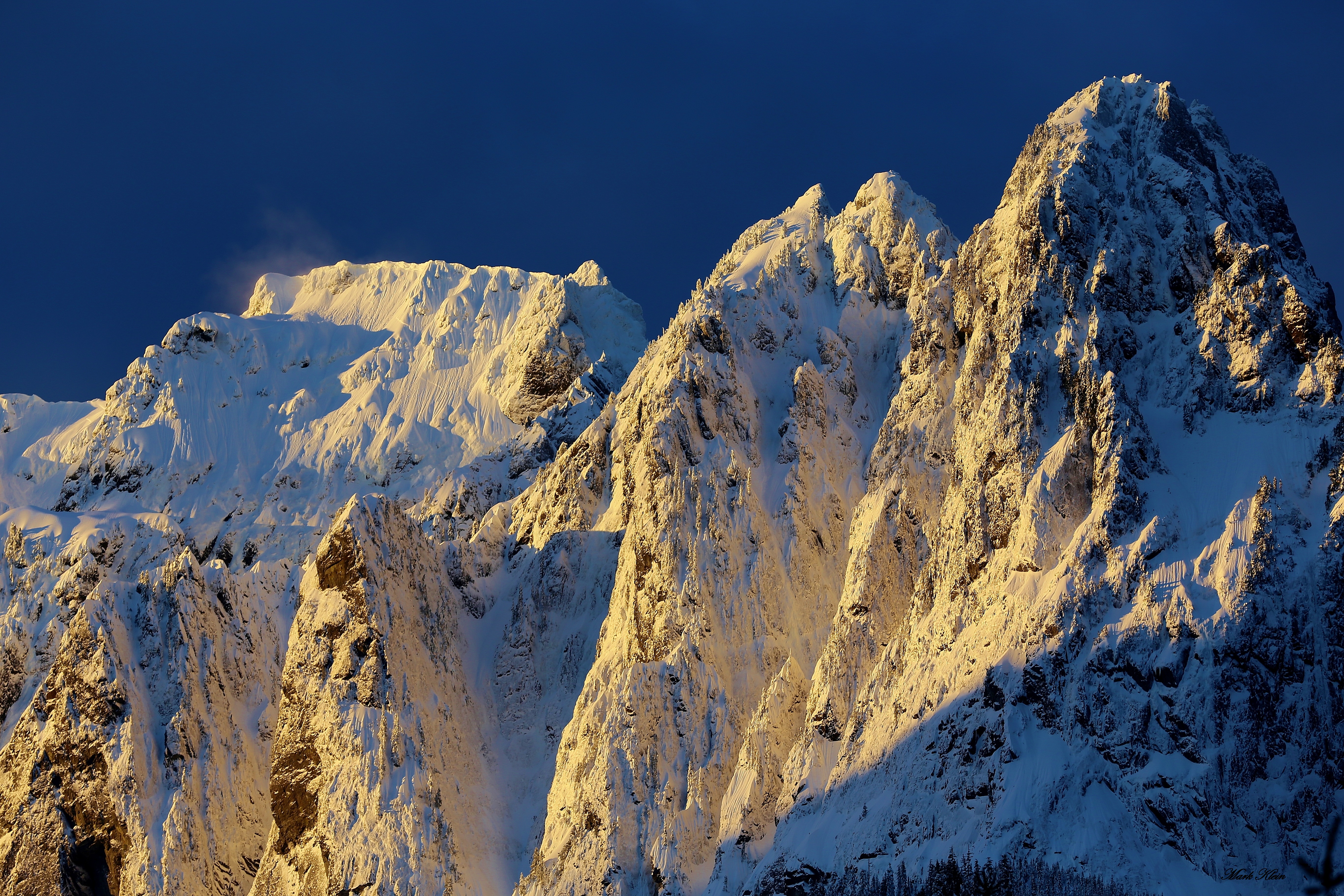
Mt. Index - photograph property of Mark Klein and used with permission.

Mt. Index – photograph property of Mark Klein and used with permission.

It seems like light and shadow could be manipulated to tell the story and I know those can be used to illuminate or create depth. But how do you know to use those tools? Or, more simply, how do you know how to use light and darkness?

I always tell new photographers to “follow the light”….that’s where magic scenes appear amongst the darkness. It can be miles away and create a tremendous capture. So also knowing how an image will respond to post production enhancements comes into play. Digital images can now be changed to appear totally different from the original. So how do I know where and when to use light…..it’s an internal perception or feeling I get much like an artist creating a painting.

Your photos, especially those that are taken outside, always look unrehearsed, as if your subjects are part of their surroundings. How do you pose them to get this natural connection with their surroundings? Or do you pose subjects?

Photography venues vary greatly as I mentioned above, but they all should contain a main theme in common with the message and that message should be the center of attention to the eye. Focus, light and color play a big part here again. I can stop sweat flying off a football player reflecting in the light during a hit or look for a quiet slow-moving post play moment that the player is reflecting on with a blurred sea of color background. Still and staged photos where the photographer controls the scenes can certainly go wrong if the subject does not feel comfortable….photography captures the exact mood of the subject….so this is epic that they feel at ease and understands and see the final image in their mind that you are trying to achieve.

As you go about daily routines, what kinds of things catch your eye and make you think, ‘that would be a great photo’? A similar question would be the more traditional ‘what inspires you?’.

What makes a top-notch photo is finding a scene that creates that uncontrollable and sometimes audible “wow” coming from your mouth or inside voice. If the scene doesn’t draw that out of you as a photographer it’s not as easy to create magic. Scenes with dramatic or unusual features and balanced fore and background help to frame the photo. Sometimes I become so excited about a scene that I have actually stumbled over logs and water, etc. to get the capture. Magic scenes don’t last forever….light changes quickly and all is lost, so you have to be ready. Even as a young boy fantastic photographs have inspired me….capturing an image that truly moves people to that “wow” place keeps me looking and hungry for the next adventure.
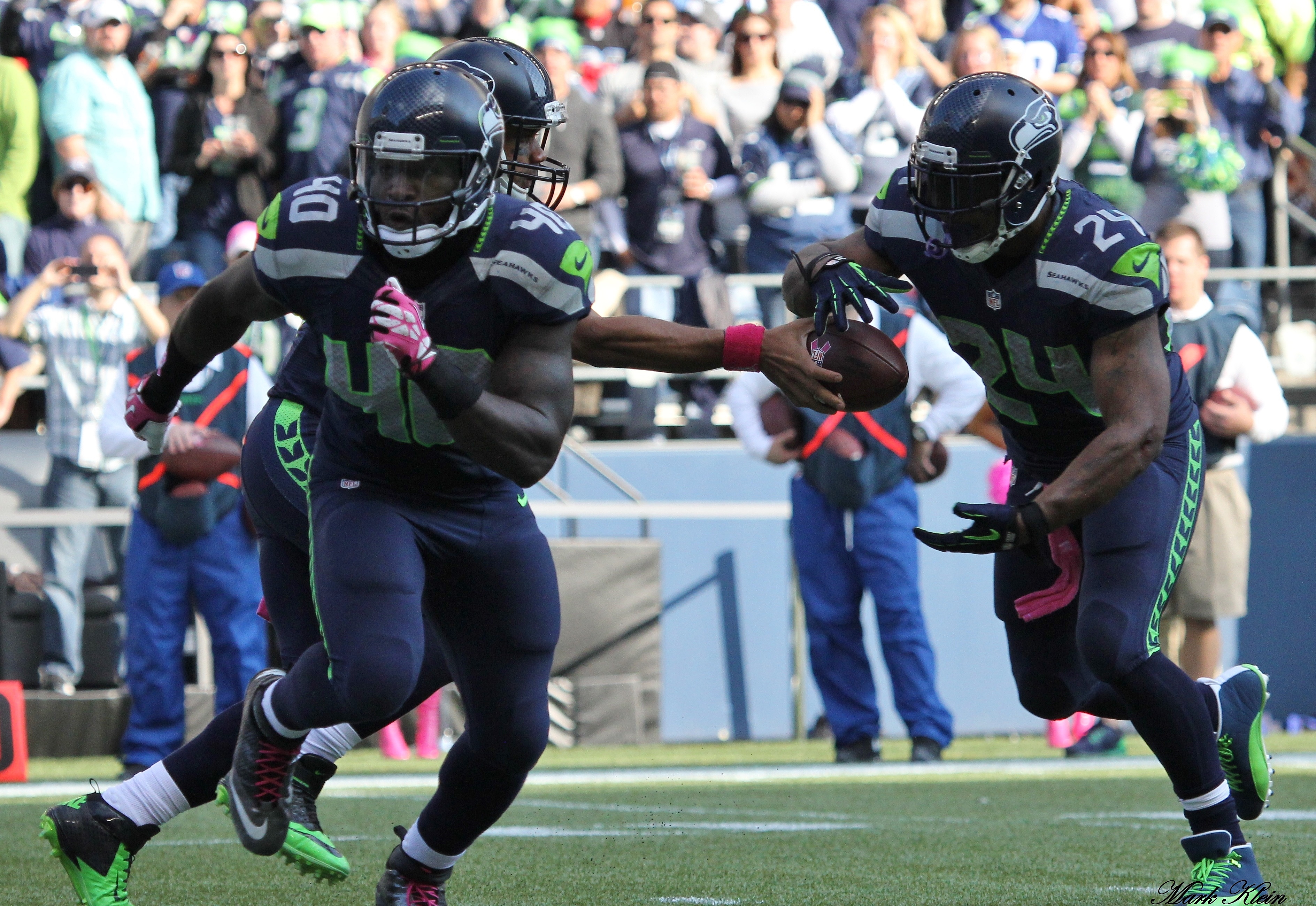
Property of Mark Klein and used with permission.

Property of Mark Klein and used with permission.

Storytellers ask themselves ‘what if’ and that question can be the well that stories spring from. It seems to me that this would work for photography, too. Do you have questions that you ask yourself as you move through the process?

What if……comes to mind a lot on the trail or in the moment. It’s the X factor of a scene. What if…. can be created nowadays by digital layering or it can be natural. I prefer natural “what if” because if you’re always running into Bigfoot on the trail….you can lose interest with your followers thinking your photographs are all faked.

It seems that photographers, just like painters, musicians, and writers, hope to elicit emotional reactions in their audience. Do you think about what sort of response you want as you take photographs, what you hope the photo translates to the viewer?

Once again the desired response is to create a breathtaking “wow”…..or send a clear message of the purveyance to the reader/follower.

Have you ever been surprised by someone’s emotional reaction to a photograph?

Yes I have been surprised by reactions…especially in sports or competitions where emotions run high….being photographed is not always appreciated. On the other hand shooting a crash by a mountain biker can “be like” …..”hey man, did you get my gnarly crash?” or “I hope you don’t publish that photo” …..In the latter case….I would never publish a photo the subject was not happy with….I just wouldn’t and I seem to be able to sort those out anyway.

Have you ever thought about why photography speaks to you over other art forms?

I do like many other art forms….but photography is my true passion and passion is what it takes to keep producing quality images and captures. Passion drives me to stay ahead of the curve and the ever-changing digital advancements. It’s something that just works out with my lifestyle and where we live here in the mountains.

What are one or two questions that you wish someone would ask you about photography?

I guess my favorite question is from parents at races “did you get my son or daughter on that jump”? Or ‘did you get that amazing sunset?’ On the techy side….is when I get questions from up and coming inspired photographers asking how to shoot a scene. I do like to share advice on camera gear and settings. I think I’d like to own a camera shop and sporting goods store in our next chapter……

Thanks for the opportunity to talk photography on your blog.

And one last photo from Mark for you Seahawks fans.
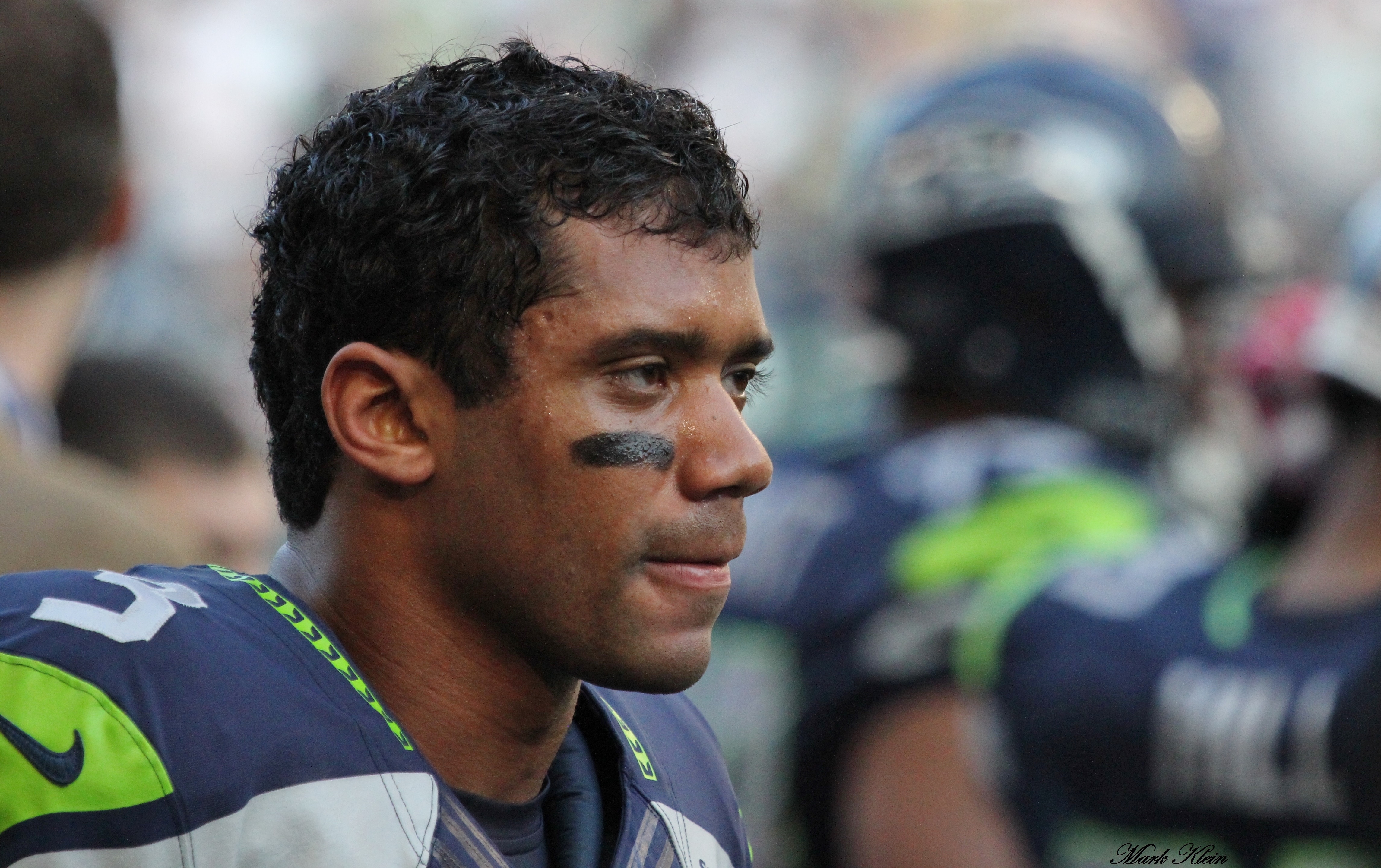
Property of Mark Klein and used with permission

Property of Mark Klein and used with permission

Touching Death in Art

There were two years after I completed radiation for lymphoma that I didn’t write. I battled high anger and deep sadness. My wonderful doctors said my brain chemistry was messed up because of where I received radiation.

They told me it would pass and I would write again.

They were right. But…

Yesterday, while at the doctor for mundane reasons, I asked him why, after almost six years cancer free, that sadness was still there. It isn’t that I’m depressed. As I explained, it’s like an entity of sadness down in there somewhere. All I have to do is pause and look for it. When I consciously make that effort, I feel it and want to cry. If I let it come up, I do cry. I call those my blue moments. They are connected to nothing that is going on in life at that moment.

My doctor actually got a bit teary. Coincidentally, I’d asked him this question on the anniversary of a cancer related date for his wife.

He then said people who have been through cancer tell him the same thing. That they can feel something left behind. He hears it especially from writers, artists, creative types. And many of them tell him that in a way it’s an odd gift because they can dip down into that and use it in their art.

When he said that, I had the revelation that I’d done exactly that in the third book, Ghost Roads. As I wrote, and tried to imagine how the character of Harlow felt as she faced betrayals, I would pull up that sadness, ponder on how it felt, and use that to help describe similar emotions for the character. While I knew I was doing that during the writing process, I hadn’t put it into conscious thought until my doctor said that.

He then went on to tell me that his personal belief was that cancer survivors have briefly touched death, and that’s what the hidden sadness is.

Our conversation then went like this:

Me: I don’t think of myself as a cancer survivor. I didn’t have it that bad. I only had to have radiation.
Him: You were bolted to a table every day.
Me: Yeah, but I didn’t go through anything like my sister did, or friends are. I didn’t have to have chemotherapy. I only lost part of my hair.
Him: Your throat was so swollen you couldn’t eat. Water tasted like blood.
Me: Yeah, but…my sister invites me to go on cancer survivor walks but I don’t.
Him: You earned the right to wear one of those tee-shirts.
Me: No, not really. She did. She had it a lot worse. I just was sick for a while. I was never told I was going to die. I didn’t have to face the prospect of death.
Him: You still touched death.

And there we were back to the original topic.

Do I believe I touched death? Honestly, no.

I do believe something was left behind though, because I can feel that something in there. And yes, it does feel like a deep sadness, which is completely separate from depression. That’s a difficult distinction to explain.

And then there’s this realization I came to a little bit ago that made me write this post instead of working on the current story.

Every time I sit down to write, I immediately feel a weight, a sadness. Many times I can’t move past that weight and so instead of writing, I visit Facebook, or play solitaire, or chat online with friends. Occasionally, if I think about it ahead of time, I start music as soon as I sit down. The music distracts me from that weight, and I can then write.

In every day life that sadness rarely becomes visible. But I’ve just realized that every time I sit down to write, it surfaces.

After the visit with the doctor yesterday, and spending some time thinking about that conversation, I realize I’ve made a mistake.

When I sit down to write and feel that weight bubble up, rather than avoiding it with the internet, or drowning it in music, I need to learn how to control it. Let it become part of the writing process so that I can draw from deeper emotions.

I’m not quite sure how to do that and I imagine learning will involve forcing myself to write when I would rather give in to the weight and leave writing behind. After all, if I did that without realizing it while writing Ghost Roads, there must be a way to make it more of a conscious decision.

In the meantime, there’s a lot to think about. And that appointment yesterday? It ended with my doctor giving me a huge hug and thanking me for reminding him of the things he needed to mourn, and celebrate, with his wife that evening.

lincoln city jan 06 017

Photography as Art, Part 1

Following is an interview I did with photographer Jane Speleers of Royal Squirrel Photography (http://theroyalsquirrel.com). I’m always fascinated by what draws us to specific forms of art. And photography, like so many forms of art, tells a story.

Besides being a photographer, Jane is an adventurer, horse woman, climber, and all around very nice person. How do I know? I’ve known her for a few years now and she was very nice when my dog peed on her new carpet.

Vala - the carpet-peeing slob

Vala – the carpet-peeing slob

Jane asked me to edit her comments as she worried about English being her second language. I chose not to for two reasons – I didn’t see anything to change, and I prefer to have the words remain true to the voice. Hope she doesn’t mind!

When you pick up the camera, and your subject is before you, what are the first things that come to mind?

What I think is: “Who is she? What is she feeling? Does the camera make her uncomfortable?”. I try to not affect my subject with my presence. I try to understand and relate to my subject’s emotions so I can act/interact in a way that would make them feel that I’m part of what they already know, their environment, and keep them comfortable.

It seems like light and shadow could be manipulated to tell the story and I know those can be used to illuminate or create depth. But how do you know to use those tools? Or, more simply, how do you know how to use light and darkness?

Light and absence of light can be manipulated to intensify emotions in an image. These are perceived by our senses like music in horror movies. If you cover your ears while watching a suspense movie, you might not get scared at all. If I use artificial lighting when taking a picture of a living room, it will make it look bright; all the furniture, built-in features and details will stand out as a “whole” since they all receive the same amount of light. It might even look spacious. In this case you can see it all. Maybe this image would be used for a home ad. However, if I take this same picture without studio lighting, with only natural lighting coming in through the window…you will only be able to see what is within the light reach. Or not even that…you might only see furniture silhouettes. In either case, many questions would come up to your mind, like.. “Is that a chair or is there someone behind the table?” “Is that an abandoned house?”, “Is that a haunted house?” The absence of lighting changes the concept of this picture from ‘A nice living room’ to ‘a haunted/abandoned living room”. I’m not saying that absence of light has negative connotations. When light is absent in some parts of the image, this increases the tension on whatever is brighter and leaves more room for the imagination to complete the image based on what this is able to decode.

Your photos, especially those that are taken outside, always look unrehearsed, as if your subjects are part of their surroundings. How do you pose them to get this natural connection with their surroundings? Or do you pose subjects?

It depends on the subject. It normally takes me about twenty minutes to understand how my clients think, how they verbally communicate, what subjects makes them laugh and the way their bodies unconsciously communicate. This last is the most difficult to understand and direct. I would say that I usually manipulate 50% of the image by choosing the location and directing the photo-shoot. Ideally, the other 50% is natural and spontaneous. Some clients are a bit nervous at the beginning and later on they get super creative and silly during the shoot, which makes the most fantastic portraits. Plenty of laughter, playful poses, and some people even dance in front of the camera! I want my clients to enjoy not just the final product but the photo-shoot as a great experience and the portraits as a souvenir from that memorable day. However, for some people it’s hard to be spontaneous when there’s a camera capturing every move they make. And I can include myself in this group. For which I am in constant communication with them, joking around and explaining to them what I’m doing and what my vision is. When they feel that I’m being honest with them, that I am aware of their emotions and I explain to them that there’s nothing to be worried about. They seem to feel a lot more comfortable because they understand that I’m working with them and for them. And looking at the camera is not an issue any more. They share thoughts and memories with me and this leads to making spontaneously happy and meaningful portraits.

As you go about daily routines, what kinds of things catch your eye and make you think, ‘that would be a great photo’? A similar question would be the more traditional ‘what inspires you?’.

Most days, I’m inspired by my dogs, Frida and Whiskey. Their body language, facial expressions, silliness, naiveness, and the way they communicate with me. I could photograph them every day of my life and there would always be something new to smile about.

Other than that, nature with natural light in the early morning.

Storytellers ask themselves ‘what if’ and that question can be the well that stories spring from. It seems to me that this would work for photography, too. Do you have questions that you ask yourself as you move through the process?

I ask myself “what if” every few minutes. There’s many, I even dare to say “hundreds” of ways to capture one moment in time. You can only choose one. I do it and I continue with the following “What if”.

When I go to bed after a full day photo-shoot, many of those ‘What if.. I did something different about that one” come back to me.. and I try hard to let go.

It seems that photographers, just like painters, musicians, and writers, hope to elicit emotional reactions in their audience. Do you think about what sort of response you want as you take photographs, what you hope the photo translates to the viewer?

I hope that every one of my images say “I feel alive”.

Have you ever been surprised by someone’s emotional reaction to a photograph?

Yes, many times. It was precious.

Do you have a preference between taking photos of landscapes, still life, animals, people, etc.? What draws you to that specific preference?

Professionally, I love capturing people when going through strong emotions. Weddings are the best for these. My favorite moments are when the bride walks down the aisle and when the bride dances with her father.

Personally, landscapes & natural events that show how alive the earth is.

Have you ever thought about why photography speaks to you over other art forms?

I’d say that photography can speak to you in a particularly intimate way because this can bring back and revive a real moment from the past, but this time it’s frozen, for as long as your mind wishes, allowing you to explore it, relate to the subject, and think about the possibilities. Even though it doesn’t exist any more. It can contain plenty of visual information to be decoded.

But I’d say that Video can speak to you over other art forms.

What are one or two questions that you wish someone would ask you about photography?

Personally, what do you love and don’t love of being a photographer?

I love to capture life for my clients to remember it, but I don’t love feeding people’s vanity.

Thanks, Jane, for taking the time to feed my curiosity. If anyone has questions for her, you can post them in the comments below or contact Jane directly through her website, noted above.

I called this post ‘Part 1’ as I’m hoping to convince another photographer friend, who has a different type of photography business (think on the yard line face to face with Seahawks) to answer similar questions.