Westward Race

Several years ago I read a book called Women’s Diaries of the Westward Movement. One thing that became clear from that book and subsequent reading, is that the majority of women took that hazardous journey, not because they wanted to go, but because their husbands went and they were basically dragged along for the ride.

What fascinated me researching this was that it was extremely rare for a woman to go alone. I came across one incident of a woman who traveled alone, and she had to hire men to help her. Her reason for going? To find a husband.

I was intrigued by this lack of women taking on that challenge alone. Since then I’ve felt I have a western story floating around me. I even started one a few years ago with two sisters who take on the journey. But the amount of research needed intimidated me and I never followed through.

Today on NPR I heard a story about a mother and daughter who traveled west on the Oregon Trail without a husband or father. They settled in Oregon and lived out the remainder of their lives. I again was fascinated by this. Two women taking a covered wagon and oxen and their worldly possessions and heading out. Leaving safety and security for the unknown and danger.

Then I realized that the NPR story wasn’t about two women traveling west. It was about two African-American women traveling west. The narrator talked about how most people, when they picture that covered wagon, picture a white family, and how there were a lot of African-Americans who also took on that chance for a new life.

I found myself at first a bit irritated, to be honest. With the knowledge that it was so rare, and so dangerous, for a woman to do this alone, why did race have to come into the story? I wondered when we, as a people, would tell a story without having to define it by race.

And then I thought about these two women. I realized that these two women had to face even more danger, even more obstacles, simply because of their race. So an event that was rare to begin with, became even rarer. These two women stand out in history because of both gender and race.

They must have been incredibly strong women. The NPR piece didn’t explain why the mother and daughter took on this challenge in spite of obstacles in their path. What would have sent them out their door? What did they have to face and overcome and surmount? Did they find happiness at the end of the trail? Did they have regrets?

So many questions. I’d have the same questions no matter what their race.

I wish I could have known them.

I wish I knew their story.

Activism Lost

Road trips meant talk radio. Many late night hours were spent dozing in the back of a smoke-filled car while we crossed miles, the family off on another vacation. Dad would drive, we would sleep, and pavement passed. I’d wake to see headlights shining on the center line, my dad with his cigarette, and the sound of debate. We grew up with debate. If it wasn’t talk radio at two in the morning, it was questions with no easy answer my dad asked at the dinner table.

Now I have these same kinds of talks with my son and husband. I love the feeling of power, the words flowing around something strongly felt, the sense that change is within grasp. And I especially love learning, hearing the other opinion, being swayed to think of things from a different angle, being forced to question my words and make sure I truly believe.

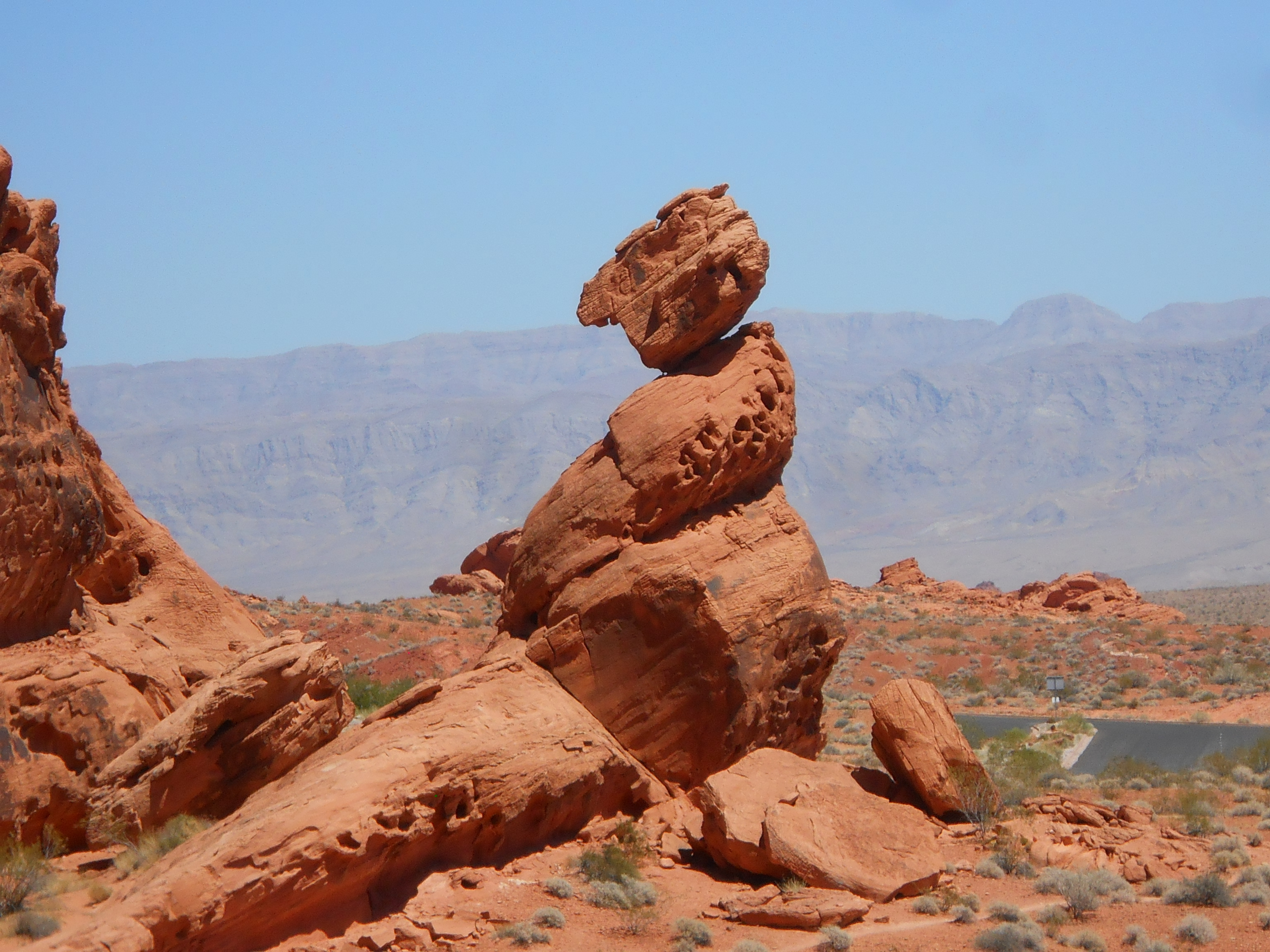
So last week in Vegas my husband and I drove out to the Valley of Fire State Park. Absolutely stunning rock formations, billions of years in the making. And we puny, infant humans driving in air-conditioned cars (it was 111 degrees!) gawking. Art and I started a discussion around the current politics. Well, okay, it was a debate about as heated as the ambient air outside. Our opinions don’t matter here. What does, is I asked him why, if he felt so strongly, did he not do something.

Which brought up the question.

What?

As he said, he couldn’t even see the reason to start a blog because there were so many out there with the same opinions and he didn’t feel he could contribute anything that hadn’t been said before. I laughed a bit at that. What writer doesn’t question how to make their story original when it’s all been done? But he was right.

I was a kid in the sixties, the wrong age for the peace and love revolution. I envied my sisters. Too young to actively take part, I was still convinced they would change the world. I’m not a historian or philosopher so I can’t tell you what went wrong, if anything actually did go wrong. I mean, hey, we got the Grateful Dead out of that period. And the Age of Aquarius. Oh! and the Partridge family!

Parked next to us at the Valley of Fire. Not the Partridge Family bus but appropriate for alien landscapes.

Parked next to us at the Valley of Fire. Not the Partridge Family bus but appropriate for alien landscapes.

But what about now? You can’t go on Facebook without seeing a lot of photos posted with opinions written across the photo. It’s like the new generation of tee shirts with statements. After talking to Art though, I’ve been wondering what good that does. What physical, tangible change is made? Art said in that very hot valley, that all those thousands of people who posted photos of themselves holding signs saying ‘bring back our girls’ put pressure for action that wouldn’t otherwise have happened. Maybe.

What risk was entailed for those people who had to do nothing but post a selfie? Does activism have to include risk? Can you change the world without risk? Can you change the world at all? I hear stories about children and homelessness and desperation, and wonder, what can one person do? Donate money I suppose, but that’s a degree of separation from reality and is that really activism?

I’m not smart enough to answer questions I’m not even sure how to phrase. In the Valley of Fire Art got pretty upset. He didn’t feel he was eloquent enough to get his point across. He always feels he loses when we debate. Well, he was eloquent enough that a week later I’m still lost in thought. Still on that dark road trip with talk radio as background noise as I try to figure out how to bring back peace, love, no war, and songs like ‘Where Have All the Flowers Gone’.

It’s going to be a long, long drive.

Valley of Fire

Valley of Fire

Balancing act

Balancing act

I Mentioned I Love Questions…

If you haven’t yet visited Maryn’s blog, The Well, please take a moment and drop by at http://www.thewellspringblog.com and you will find it well worth the time. Maryn recently answered questions posed by Twyla Tharp’s The Creative Habit, and passed those questions on to me. After reading Maryn’s responses I am going to look into this Habit a bit more.

But anyway, Maryn suggested I respond to the same questions.

1. What is the first creative moment you remember?

Kindergarten, show and tell day. I’d forgotten to bring anything. So I told the class about seeing two men with gas cans going into woods where we kids played and built camps. I said I followed them, saw they were going to burn our woods down, and managed to save the day. The kids were in awe (the teacher less so). Even though I was too young to put the feelings into words, I can still remember clearly that moment of realizing something powerful had just happened. Little did I know it was opening my eyes to the strength of a story.

2. What is the best idea you’ve ever had? What made it great in your mind?

I find this question really difficult. I’ve had a lot of good ideas over the years. Such as ‘let’s have a baby’ and ‘let’s find mice in the field and make them into pets’ (my brother broke his nose during that one). But I think to answer this is to talk more about a realization rather than an idea. The gradual realization that I belong in the woods. That there’s something about being in the forest, surrounded by trees, that brings out my creativity and releases something inside so I can write. All my daydreams happen in the mountains.

3. What is the dumbest idea?

Possibly catching mice. Followed by the idea, cemented over many, many years, that I am homely and of lesser value than those around me. I’m chipping away at that cement, but it’s pretty set.

4. What is your creative ambition?

To capture the stories surrounding me and get them on paper before they are gone. To honor those stories and tell them in the way they want to be told.

5. What are the vital steps to achieving that ambition?

Oh, great question. To achieve that I need to value my writing time as being just as important as the things I see as responsibilities. Which also means needing to value myself a bit more.

6. Describe your first successful creative act.

Successful as in finishing a manuscript, having it edited, and putting it out into the public view would be The Memory Keeper. It started as a way for me to answer a question of my father’s, and ballooned into a fictional mystery I didn’t expect. But my first complete manuscript was another mystery dealing with green garnets and Bigfoot (A Place of Wild Things). Someday I’ll resurrect that one and rework it.

7. Describe your second creative act. How does it compare to the first?

The Memory Keeper was extremely difficult to write because I was in the midst of what I called radiation fallout. Just coming off treatments for Lymphoma. The creative side of my brain was dormant as I was in survival mode, and many, many times I thought I would never write again. The anger inside was terrifying. The struggle for each word was unbelievable. Luckily my husband held me up through that. So then the second book, Sparrow’s Silence, was like a celebration, a triumph, proof that words still flowed.

8. Which artists to you admire most, and why? What do you have in common?

For writing, Elizabeth Peters, Meg Gardiner, and Elly Griffiths. Each, in their unique style, have this amazing power to transport me to other worlds. In music, Lisa Gerrard and Loreena McKennitt for the ability to inspire me to write with just their voices. In art, Lisa Hsia (www.satsumabug.com) for her honesty in portraying her struggles and successes in her creativity. What do I have in common with all of these? Not much. But I strive to.

9. What is your greatest fear?

Returning to those days of living with no stories inside.

10. What is your idea of mastery?

My wonderful friend Kathy called me one day, crying, and read a passage to me that had spoken deeply to her. She said it was from The Memory Keeper. I thought she’d made a mistake; I thought, clearly, ‘I didn’t write that’. Then I returned to the book and realized I had. And I thought, just as clearly, ‘where did that come from?’ For me, mastery is those moments when words that have come through me touch someone. I see that as a goal to still be reached.

And now I’d like to follow Maryn’s lead and challenge all of you to answer these questions no matter what form your creativity takes. And let me know when you do so, in order for me to learn from your answers like I did from Maryn’s.

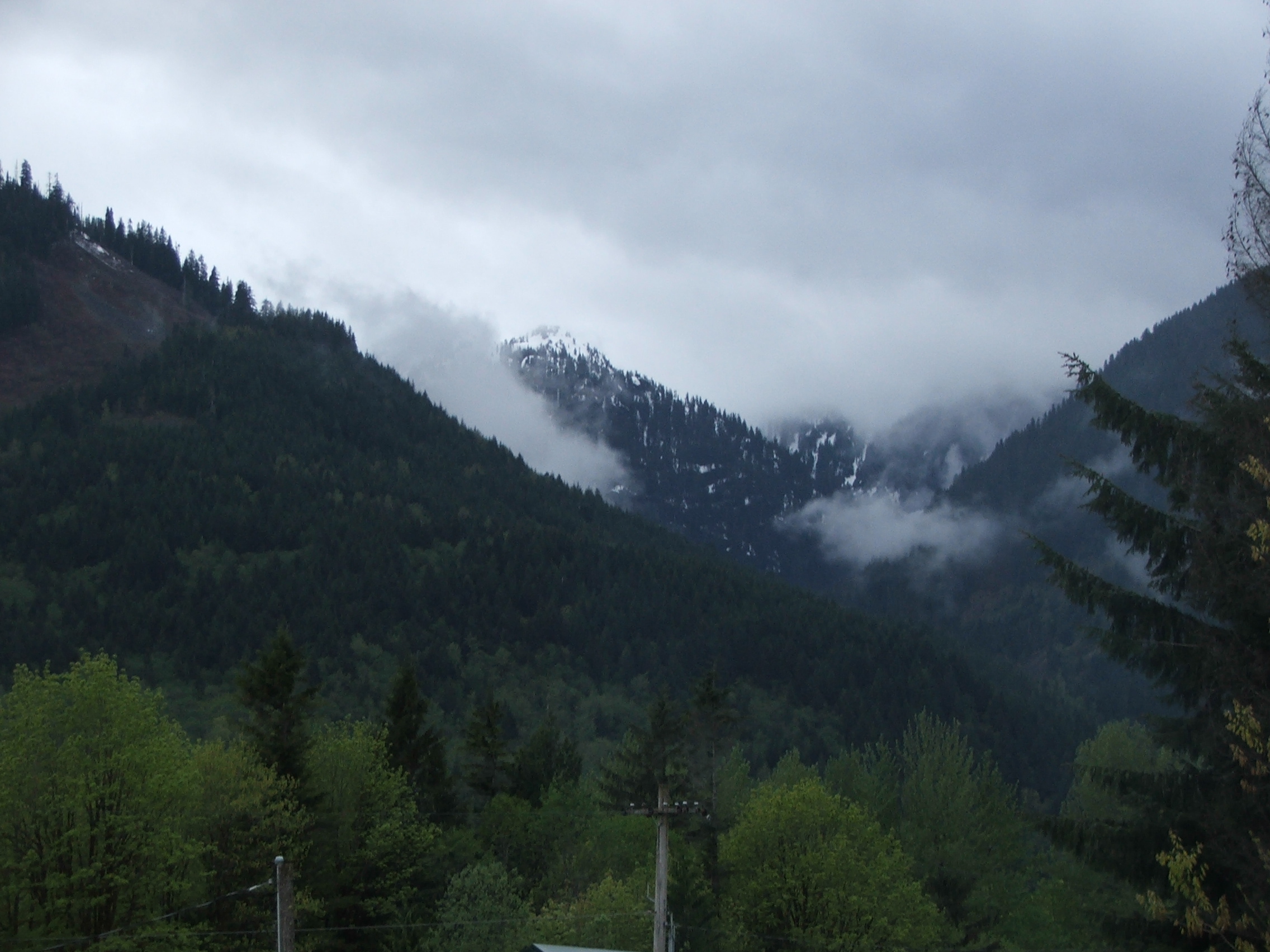
The view from my back yard

The view from my back yard