I’m in that fallow period between writing projects. Waiting for Otherkin to move through the publication process and waiting for a new story to come to me. It’s like the winter season, quiet and dormant, cozy and gestating.
In the meantime I’ve made a few discoveries relating to hearing.
Several years ago I lost hearing in one ear. Three little bones that should vibrate, calcified. Surgery replaced them with an implant that didn’t work. More recently, my ‘good’ ear has been getting worse. So I gave in, got a referral, and found out just how bad my hearing actually was.
I didn’t realize how much hearing was related to context. When face to face with someone, in a conversation, able to watch faces, you can anticipate what the words are going to be. But when you’re in a little room alone with headphones on and a specialist speaking random words with no context, it’s a completely different matter. I couldn’t figure out any of the words. After a series of interesting tests, I left with a graph that showed where normal hearing was, and where mine was, way, way, way down at the bottom. I also left with an appointment to come back and be fitted with hearing aids. When my husband saw the graph, his response was ‘Sh**, you can’t hear f**k all’. Succinct and true.
This past week has been the trial, and I’m not adjusting well. The hearing aids are extremely painful, there’s a loud echo to everything, an odd high-pitched regular beeping like a miniature car alarm in my head, and, of course, noise. Most of this will be adjusted at the next appointment.
In the meantime, I’m startled by noise. Birds! So many birds. The squeak of the floorboards. The sound of traffic. It took me way too long driving home to realize the odd breathing sound I heard was cars passing going the other direction. Conversations and clanking and voices of strangers. It all sounds so exaggerated.
It’s made me realize how quiet my world has been. How muffled. I can no longer hear my own heartbeat. I’m no longer cocooned. Which has made me realize I’m not sure I want to be in a noisy world.
Hearing aids are going to be fantastic at work and out in public where acoustics make it impossible to pick out individual voices. I can see other benefits, too, such as the fact that music will play directly into my hearing aids and no one will know.
I find myself using the pain though, as an excuse to take them out. To return to that quiet place with just my heartbeat. I might choose to only wear them at work.
There’s something to be said for quiet, for the ability to remove hearing and step away from the noise. I suppose that’s why people use ear plugs, putting something in, to find quiet, rather than taking something out to prevent sound.
Though I think my husband just said something. He hasn’t realized I took the hearing aids out. This might actually end up being fun. Either way, it will be an interesting learning curve.
As some of you know, I used to journal but several years ago, I burned them in a giant bonfire. Why, you might ask? Because I was burning my mother’s diaries at the time, and I was horrified by the realization that someone I cared for might read mine and my words might break their heart.
Do I have regrets? Only one. That I didn’t give my sisters or my brother a chance to be part of that decision.
Anyway, since then I’ve never journaled. I love the idea of it but shy away from the reality.
Instead, I’ve found a way to keep a diary of sorts without the deep intimacy of one.
For some time now I’ve been jotting things down in a little brown book. Bits of advice and lessons on the craft of writing I come across. Quotes. Poems I find. Song lyrics. And wow, I had a thought the other day that made me laugh.
I kind of want to keep this non-journal a secret in the hopes that some day I can haunt those I love and watch them trying to figure out my diary.
There are things in this little book that I write down because it triggers a fantastic story idea. Or a poem that an amazing character can be built from. There’s writing advice I want to share with my son. There are snippets I want to remember to share with a poet friend, or something that makes me laugh that I really want to pass on.
Then there are words that make me cry. That reach down into my soul and breathe out ‘this is who you are’.
Which is which?
Well, I know, obviously. But it will be so much fun to haunt those loved ones as they read the non-journal and wonder if I was crazy, or depressed, or a closet witch.
That is, if they can read my handwriting. In the meantime, I’ll leave you with this little poem from the non-journal and you can wonder about why I might have chosen it. This is by Lauren Oliver.
“It’s amazing how words can do that, just shred your insides apart. Sticks and stones may break my bones but words can never hurt me – such bullshit.”
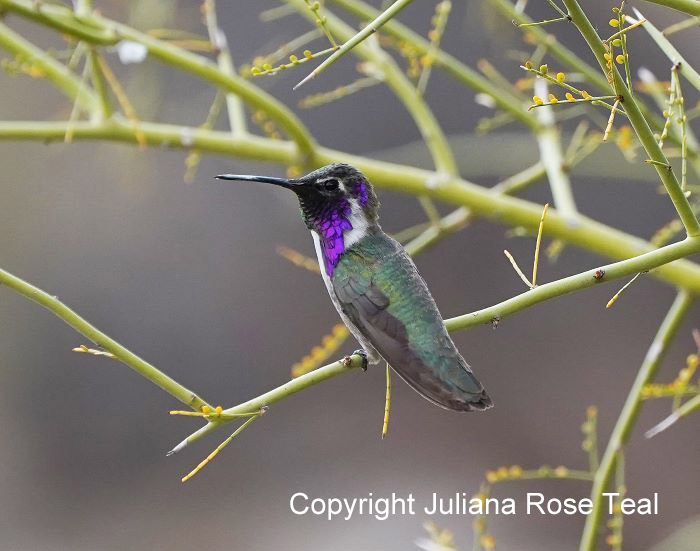
Juliana Rose Teal has just published her memoir, Flying to Freedom: Healing From Ritual Abuse Through My Life’s Work and Flight. As with all memoirs, the road to this point has been long and difficult. Yet, she has a powerful story to tell and I’m thankful that she found the strength she needed to stick with writing this. The memoir itself may be difficult for some to read, but as Juliana says below, this interview will be gentle with the reader.
Your memoir tackles a difficult subject, and healing is a clear theme. Did you consciously set out with that theme immediately apparent to you, and were there other themes or messages you wanted to explore?
Yes. I wanted Flying to Freedom to be about healing. That is my sole theme.
I wrote my memoir to shed light on satanic ritual abuse, but I wanted to be as gentle with the reader as possible. For this reason, scenes of my astrology, medium, and healing work, scenes of flight training and flying, and descriptions of nature far outweigh the scenes of abuse.
Each chapter that describes flying is tied to my healing process. I showed how I persevered through learning fears and gained confidence as I mastered different aspects of flight. Each flying accomplishment began breaking the hold the cult and my abusive parents had over me.
The chapters about my work are also tied to my healing. I gained self-assurance as I worked with clients, and learned to trust myself and also the guides (angels) that work so closely with me. My work and my intuitive abilities opened and healed my spirituality which was something that had been taken away from me as a child.
My goal is to show that no matter what trauma we have endured, healing is possible, and even though our scars remain, we can find enjoyment and fulfillment in life.
You had many, many roadblocks to telling your story, from the personal to the professional (as in editors telling you it would never happen). What helped you remain true to this story?
I sure did! The whole process of writing and publishing has been quite the learning experience.
I was about halfway through the book when I realized I needed some help. I know how to write (this is something that has always come naturally to me), but I felt something was missing in terms of tying my theme to the different storylines in my book. I began to look for an editor to help me, which was difficult because I had no connections to the writing world. I found the names of two editors in the back of two New York Times best-selling novels. I contacted them. Neither would edit books on abuse, but both saw samples of my writing, and I received the gift of them telling me that I was a talented writer. I had never shown my writing to anyone (besides my monthly astrology newsletter). Their belief in my writing abilities helped me continue to move forward.
Then I approached another editor. She thought my life story sounded interesting and agreed to edit my book. We exchanged many lengthy emails, where she asked too many detailed questions about the books I have read and my approach to my book. She eventually asked me to send my manuscript. A few weeks later I received an incredibly abusive email from her, letting me know that I should toss this manuscript and write something else. She said some terribly harsh things that were untrue and uncalled for. I fired her.
I despaired that I would not find an editor, and thought for a short time about stopping. But what helped me to remain true to my story and continue was an inner knowing that I was called to shine light on ritual abuse, and that my story is unique and must be told. I felt my book would be healing to other survivors of any trauma, and that kept me going.
Over time, I not only found one editor, I found three to work with! All had different talents and focuses. The information they shared helped me to complete my book. Their belief in my story and their desire to see it published healed the pain of dealing with the abusive editor and helped solidify my determination to publish my book.
How do you think the manuscript evolved during the editing process?
My book changed quite a bit over time. I cleaned up sentences and fixed typos. I was reminded to expand certain parts of the book—I had been concerned that I was giving too many details of my life in certain sections, but found when I expanded these sections, it actually added more richness and interest to my book.
I also changed some of the content of my manuscript. I learned that each book has one theme. Just one! Chapters that stray from the theme of the book take away from the storyline and can cause a loss of focus that can weaken a book. I deleted several chapters that did not contain healing themes. It was difficult to do, because I liked these chapters, but ultimately, it tightened and improved my book quite a bit.
Because this is a memoir, obviously you have lived the story your whole life. But at the same time, you’ve carried the weight of needing to share the story, to write it down, for a long time. What does it feel like, having the memoir finally done?
It feels amazing. I worked hard on it for over five years, and to have the finished product in my hands feels surreal. It is very exciting, yet it is also a bit scary. I did not have a difficult time writing the book, even the abuse scenes, because I have wanted to write my entire life. I am fascinated with the writing process and this distracted me from the difficulties I could have experienced when writing about abuse.
But putting my book out there into the world is another matter. There is a feeling of vulnerability that comes with it. I have always been a private person, and now the world knows intimate and painful details of my life.
There is, unfortunately, a lot of denial that satanic ritual abuse exists. I am sure I will run up against the people who will say that my story is not true because such horrendous abuse is not possible.
But I am happy my book has been published, and hope that it helps other survivors and their loved ones.
You became a healer because of the life you had but I’m wondering what you dreamed you would be when you were young.
I was made to believe, from a very young age, that becoming a doctor would be a good career for me. I am not sure why my parents insisted on this. It would not have been. I have always loved animals and nature but never thought it was possible to make this love into a career, so I imagine as a child, any musings about this were stuffed deep inside of me. From a young age I wanted to be a writer, but I found no encouragement for this path, and did not have the confidence to pursue it. I did have a hidden interest in the metaphysical/spiritual, and if I had been allowed to dream about having a career that I desired, I most likely would have dreamed about this as well.
After all it’s taken you to get to a finished book, to be able to hold your voice in your hands, do you think there is another story waiting to be told inside you?
I would love to write another book, but am not sure what to write about. I am thinking about it.
With the knowledge of the writing process that you now have, what would you do differently when writing another book?
I have learned a lot about linking stories together in a book to help with the flow. My first draft did not link stories within a chapter or even chapters together well. Now that I am aware of how important this is, I would make sure my next book had good flow from the start. Other than that, I would proceed in the same fashion—motivation was never a problem, so I would write every day, and when I was ready, submit my manuscript to editors.
Thank you for taking the time to answer these questions, but thank you even more for sharing such an intimate, difficult, and powerful story.








 Lisa Stowe - The Story River Blog