Why Did the Mouse Cross the Road?

Most people ask why the chicken crosses the road. I want to know about the mouse.

Driving home tonight, in the dark and snow and forest, a little mouse ran across the highway. He made it safely, but I was left pondering his action the rest of the drive.

Think about that little body and tiny little feet. A whole expanse of highway. Why? What made him put his life on the line?

I imagine his mouse family sobbing at home as the intrepid explorer sets out. Rather like wondering what’s out there in the ocean, what’s at the edge of the earth, what’s on the other side of the mountain. What did he hope to discover? Did he hope to someday be able to return to his mouse family with tails (sorry, tales) of the great beyond? Will they believe him? Will they think he’s nuts? Well, they probably already do.

More than likely he simply caught the scent of a discarded sunflower seed or crumb tossed out a window. How dull.

So while this post has nothing to do with writing, it is how a writer’s brain works. One little mouse darts out and off we go into the why, and what if, and but then…

And now I wonder if he made it. Or if he got across that pavement only to be scooped up by an owl.

What Did You Just Ask?

I just finished a Frequently Asked Questions page dealing of course with writing. But sitting this evening looking for reasons to not work on book four, I started remembering other questions I’ve been asked, or been witness to. Such as…

My son (age 3) to my mother: ‘Do you have a vagina?’

My son to my mother: ‘Can I see?’

From a Sheriff’s Deputy, to me, as I climbed in the back of an aid car: ‘Can you check his breathing? He just ate his cigarette.’

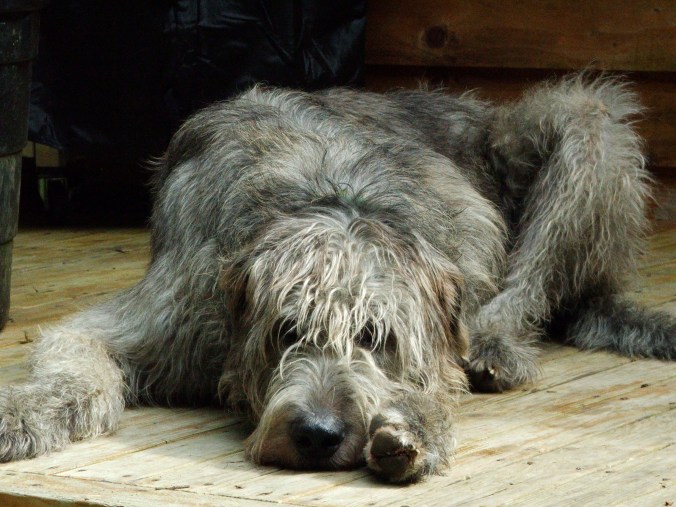
From many, many people, variations of ‘What is that?!? A horse?’ as I walked my Irish Wolfhound.

miscellaneous 009

The one and only Strider

From a friend, during a walk with me, and asked with a certain note of rising panic: ‘Is that bear poop?’

Followed by: ‘What do you mean it’s fresh? How fresh?’

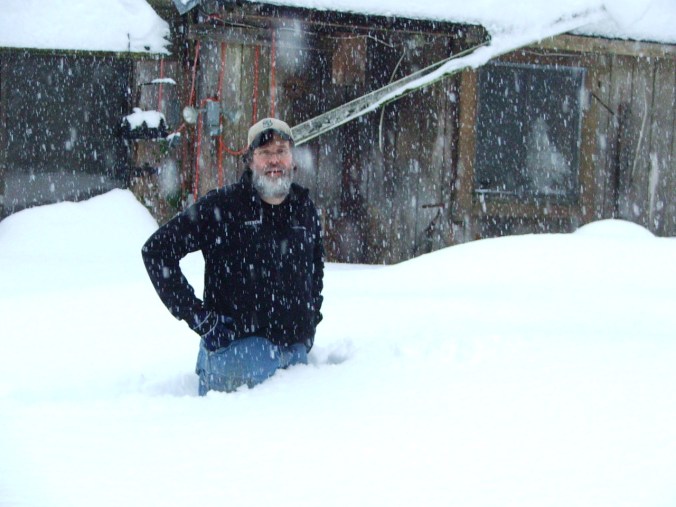
The romantic marriage proposal: ‘Don’t you need health insurance?’

winter 08-09 005

And he’s not short, folks.

Asked by a stranger from Scandinavia after hearing my American accent: ‘Do you have ice beers?’ (He meant polar bears; I wanted to give him directions to a bar.)

Asked by an ER doctor outside the hospital room where a young woman,  broken bones treated by me during a call, sustained as she tried to rescue her three year old daughter from raging whitewater, when the news came to us that the daughter died during the air lift: ‘Can you tell her? You’ve established a relationship with her.’

Me, very young and teary, asking my grandmother after a conversation with uncles: ‘Do freckles really come from walking too close behind cows?’

And so many more. What questions stay in your mind as the years go by?

Who’s Your Antagonist?

A friend of mine asked if books always have to include a ‘bad guy’ or if the antagonist can just be ‘life happening’. That made me wonder if the underlying question isn’t actually more along the lines of defining just what an antagonist is.

miscellaneous 085

Life happening…just quietly. More conflict than you might imagine though!

I know there are genres out there where antagonists are still villains, still the black hats out to destroy the world. But for the most part antagonists these days have to be as multi-layered as everyone else. Believable, in other words, as most of us already know.

But at it’s most basic definition, an antagonist is the one who causes conflict for the protagonist. And that could be anyone. In some ways it almost needs to be all the characters. I think each one should provide some sort of conflict (internal or external). Their purpose for existing in the story must tie into the plot. Even the friend, or supporter, or lover of the protagonist must in some way add conflict. Think about it. How boring would a secondary character be if all she did was be the ever-cheerful, ever-supportive best friend?
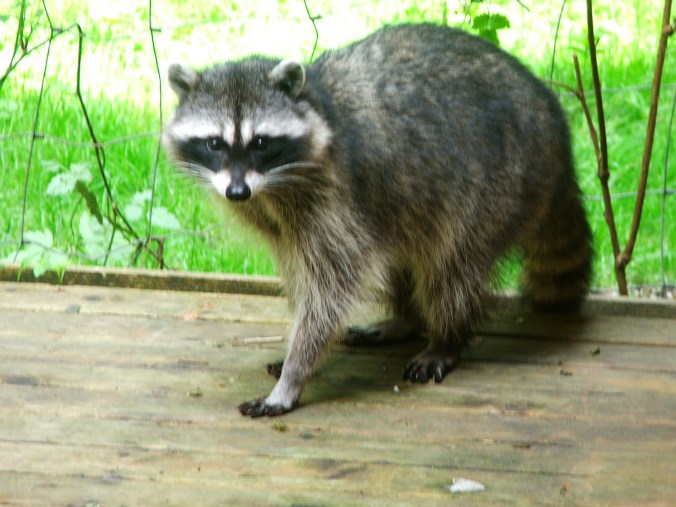
animals 071

A huge source of conflict for our dog, Vala

And of course the antagonist can be non-human. You have the solitary survivor of a plane crash trying to make it through the bush in Alaska and she’s the only human in the book. But her antagonists are hungry wild animals, nature, her own fears, her own lack of knowledge, etc.
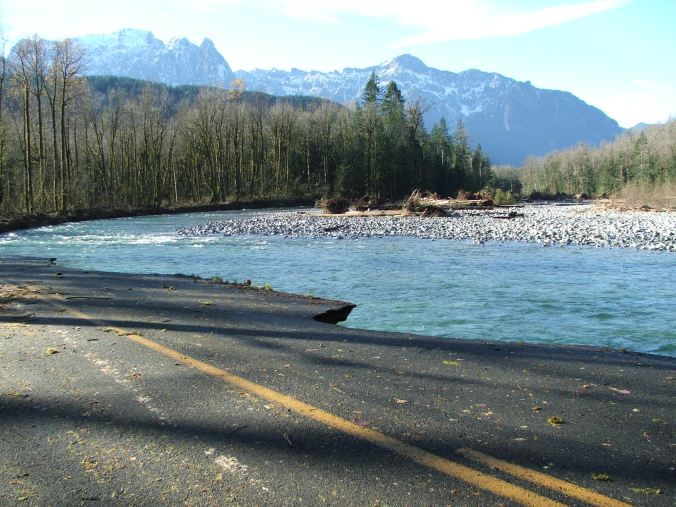
DSCF2977

Conflict with Nature. The road lost.

Each antagonist creates something the hero must overcome, adapt to, survive, etc. In that sense, going back to my friend’s question, I suppose depending on the story, the antagonist could be  ‘life happening’. Depending on how that was written. If it’s someone simply dealing with the stresses of long grocery lines, though, those conflicts are going to get mighty boring.

Because us readers want someone to root for, and that means needing someone to root against. Or something to root against. No matter what type of fiction we read, I think we all want to see someone win and someone lose. How they win, or how they lose will depend on the genre, story, market, etc.

And hey, let me just tip my black hat here before I stroll away. Because at the even more basic layer, the author is the biggest antagonist of them all. Think about it. Aren’t we always looking at ways to screw things up for our hero?

What do you think? Does a story always have to have an antagonist? And how do you define one?