Dogs and Rules

Hubert Horatio Humphrey was a dachshund mix with the classic body shape and size, but with scruffy gray fur. And this long silky white hair on top of his head that I’d part down the middle and comb.

Hubert chased cars. So dad took a small board and hung it from Hubert’s collar thinking it would bang the dog’s knees and keep him from chasing things. But Hubert figured out how to run with a weird hip-swinging gait in time with the board. It didn’t slow him down at all and eventually at an advanced age, he lost a race with a garbage truck.

Brandy 4

Brandy. One of the few dogs who didn’t break rules. But knocked over Christmas trees.

Then there was Peppy Le Pew, a teacup poodle. He also didn’t like to stay in the yard but his thing was visiting. Our house had huge windows along the back of the house. Dad put chicken wire up around the outside of one of the windows. We could simply open the window and put Peppy out into his little yard, fenced six feet high.

Peppy climbed the chicken wire.

After all, aren’t rules made for breaking and boundaries made for crossing? Or at least challenging?

Vaila in bed

Vaila, who wasn’t supposed to be on the bed.

They are in writing, as long as you purposely break rules for a reason that improves the whole. If you understand the rules, you know how to revise them or ignore them as a specific story requires. But it’s something you have to be cautious of because readers have an expectation and if you don’t live up to that, they may simply move on.

The Longmire series by Craig Johnson comes immediately to mind. A typical dialog rule is that each speaker has a separate paragraph so it’s clear who’s speaking. But Johnson combines multiple speakers in one paragraph, sometimes with no dialog tag to help a reader follow the conversation. A lot of readers like this, obviously, but how many others have walked away? I know I did. That device took me out of the story.

It’s always a gamble to break a rule. It’s especially risky for a new author.

But hey, that’s also a rule that can be broken. If the story and characters are strong enough and vivid enough, even that rule about new writers can be ignored.

Then there was our dog, Sorka. Fences, windows, doors, cables, and crates were all boundaries to be broken. Rules that involved words like ‘sit’, ‘I said sit!’, ‘come’, ‘come back here right now’, ‘COME BACK HERE YOU F***ING DOG!’ were ignored. Breaking the record for how long a dog and its owners had to work with a canine behavioral therapist was something to strive for in her world. Two years, in case you’re wondering.
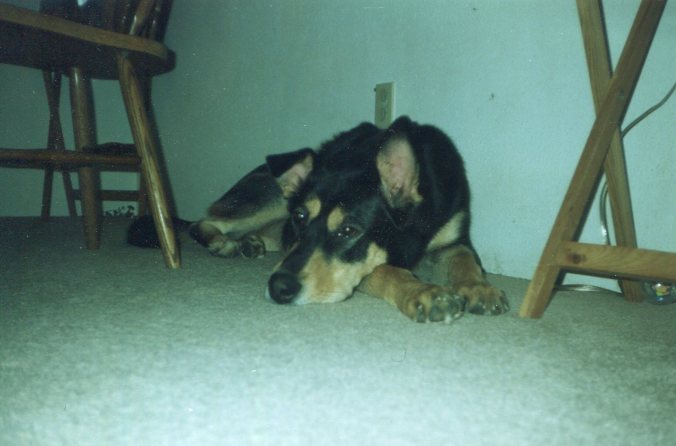
Sorka

Sorka in a rare holding-still moment.

It’s one thing to break a few rules. It’s another entirely to excel at breaking every single one.
IMG_2030

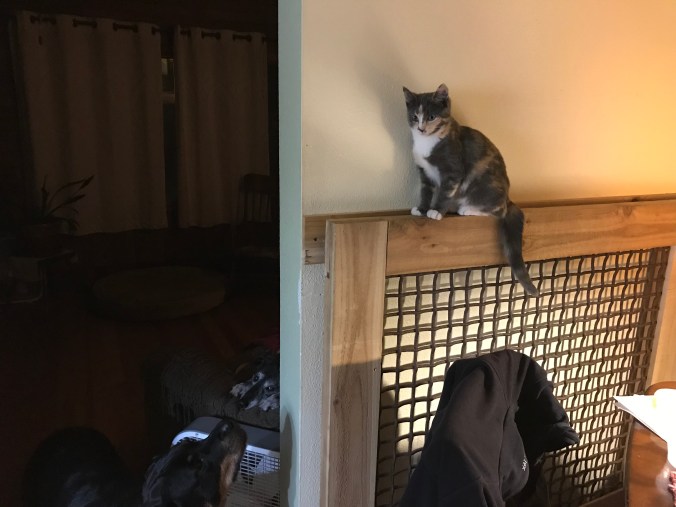
And then there are cats…for whom rules simply do not apply.

Words In Music

I just finished the first book in Rachel Caine’s Stillhouse Lake series. I gobbled that book right up even though I knew who the villain was as soon as he was introduced. The protagonist was so wonderfully drawn that I wanted her to fight, to win, to be strong. I’ve pre-ordered the second book. This one had a satisfying ending but left open something I didn’t expect.

At the end the author listed the music she wrote the book to. Isn’t that a cool idea? I knew a few of the musicians because she listens to the same kind of music my husband does, like Birthday Massacre. But it was an eclectic list.

I’ve mentioned before here that I like to write to soundtrack music. It gives me lots of background drama. I also like Celtic music.

I’ve recently discovered the soundtrack to the new King Arthur, Legend of the Sword movie, thanks to my son. The music is perfect for the current work in progress.

Briefly, here is the music I wrote Sunshine on My Shoulders to.

Caravansary, Into the Forest, and The Bell Tower, by Kitaro

I Don’t Believe and The Start of Something New by Chrom

Everything by Two Steps From Hell (basically the people who make movie soundtracks)

Aran Boat Song by Darol Anger

Bring Me To Life by Evanescence

Demelza’s Song from the new Poldark series

Cows On The Hill by Jay Unger

The Expanse‘s opening music by Clinton Shorter

Jewels in Indra’s Web by Jami Sieber

Katuman Kaiku by Turisas

The Robin Hood soundtrack – the version with Russell Crowe

Song For Odessa by Spare Rib and the Bluegrass Sauce

Beyond the Night, from the Stargate Atlantis series

Hey Little Girl by Icehouse

And any music from the Lord of the Rings and Harry Potter movies.

Obviously that’s a short list but I don’t want to bore you with more. You get the idea. It used to be, with previous manuscripts, that the music had to be instrumental. Lyrics distracted me as I paid too much attention to the stories within the songs.

But this time the lyrics actually faded somewhat into the background, and in some instances, like Song for Odessa, which is a ballad written for a woman we knew who died in an avalanche, the poignancy and loss in the lyrics added to the story, especially when writing about a character’s loss.

I imagine there are lots of writers out there who need silence to give their story space to be born. Not me though. With the exception of a couple scary scenes where I needed no music in order to hear if anything was creeping through the house, I like that background of music. It pulls up the emotions I need near the surface.

I also imagine this is true for all walks of life, not just for writers. What music do you consider your personal soundtrack?

Peeking At Reviews

Book reviews are weird things and I think most authors have a love/hate relationship with them. They also know the old adage to not read reviews, understanding that not everyone will like their books.

And yet, authors need book reviews. Don’t worry, this isn’t a post pushing you to write a review. Indie-authors in particular need them. The more reviews, the higher the book floats to the top of the visibility pile. It’s vital to have reviews. It’s vital to have people ‘share’ posts rather than just ‘like’ them. All these little things equate to word of mouth advertising, which, as everyone knows, is the best kind.

Warning: I have no idea what kind of photos tie to book reviews, so I’m just inserting whatever catches my eye. Except for the last one that SO relates to peeking.

DSC_0062

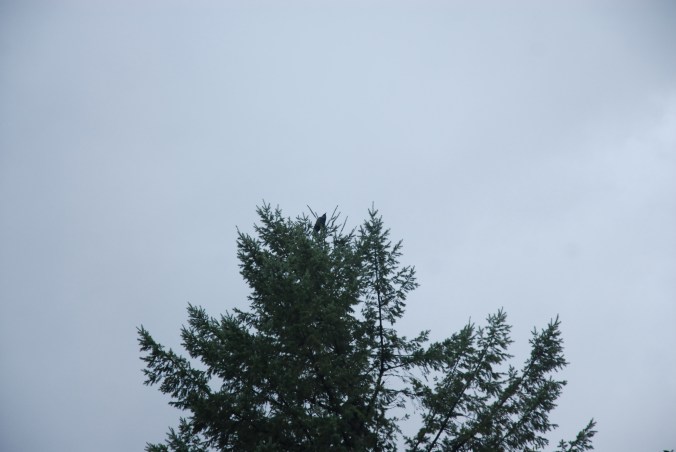
Prax – the local banded raven waiting for cats to be fed so he can steal kibble

But here’s the thing. Even though we know not to read reviews, sometimes the temptation is just too much and we peek. Or at least I do. Kind of like peeking in the Christmas stocking before everyone else gets up. Or peeking at the last page of a book to see if the author agrees with you who the bad guy is. Or peeking at the text being typed by the person crammed intimately into the airplane seat next to you.

I just realized peeking is like solving a mystery. And I do love a good mystery.

DSC_0063

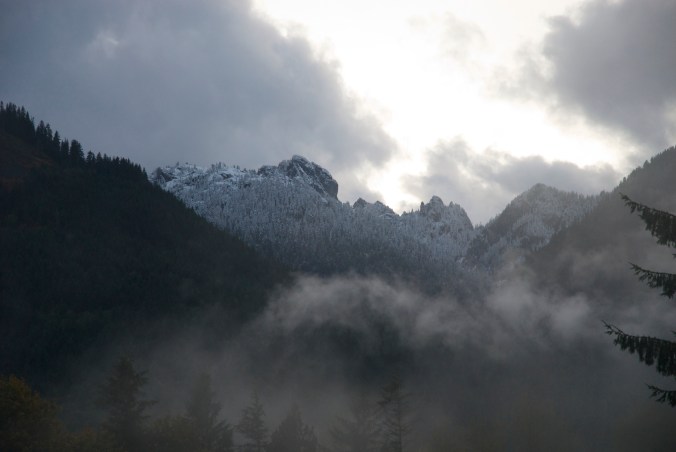
Taken from the back door last week. Snow level is dropping.

Anyway, this is my problem on those rare occasions when I peek at a review. It’s one thing when someone writes out a review, but those people who just click on the number of stars and don’t say why can be frustrating.

It has nothing to do with the number of stars. I don’t care if the book got five or one. As long as there’s an explanation, that is. You hate the book? Tell me why, because maybe it’s simply that my book and you weren’t a good match. Or, more importantly, maybe it’s actually something I can learn from.

Those who say nothing and only assign the stars, aren’t giving me the end of their story. They’re not allowing me to peek into their life, to see why, to understand. Sounds selfish, I know.

DSC_0061

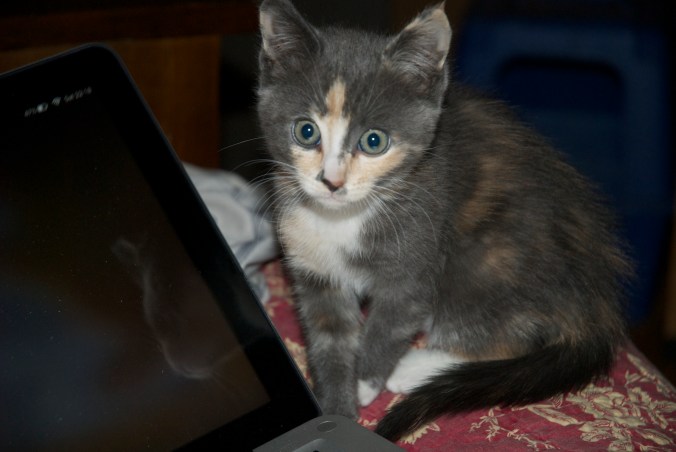
Rocci – the kitten someone dumped a couple weeks ago that the husband rescued

That can drive a mystery writer bonkers. Probably all writers. You immediately ask the same questions you asked yourself when you started writing the story. What if…Why…How can I…In other words, there’s a need for dialog.

Let’s talk. Explain it to me. Help me see your view. Allow me to explain. Allow me to show how the words ended up the way they did.

That may sound a bit pathetic but I’m sure you get what I mean. It’s not out of desperation. It’s out of a desire to understand, to interact, to grow. It’s also an excuse to talk writing with people, which is absolutely wonderful.

So if you take time to click on stars, consider taking a few seconds to tell the writer why.

Because even if writers know they shouldn’t read reviews, everyone peeks.

Bath 2

The epitome of peeking. Look how happy I am. I started young.