Blog Life

This is how it goes.

It’s been two weeks! I need to post something!

What can I write about? What haven’t I already written about? What can I say that hasn’t been said, and said better? What’s going on in my life right now that might be interesting? (not much, by the way)

I need photos. People don’t read long narratives anymore. They skim and look for photos. I don’t have much variety. I need new pictures. But my camera was dropped (by me), and  broken in many pieces. I have to get a new camera and then wander around and take a bunch of pictures.

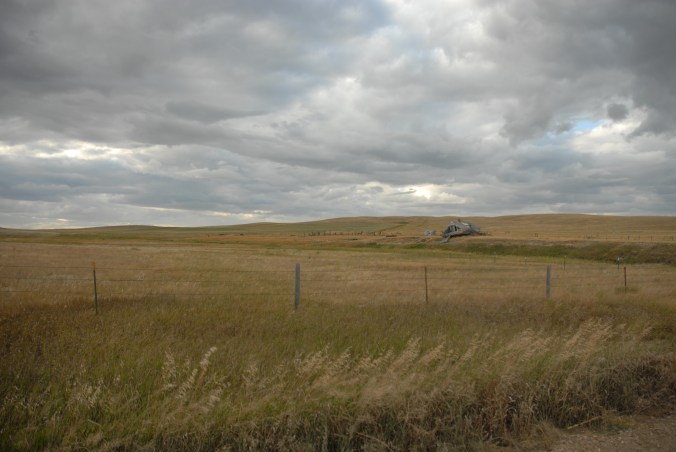
DSC_0201

Wandering on vacation. Doesn’t this terrain beg for a murder mystery?

There’s still no idea simmering up from the layers of pressure and panic. I need to see what others are writing about so I need to go read blog posts first. That results in the inner critic rearing up to say ‘you’ll never write a blog post as good!’. I go hide in shame for a few days.

DSC_0125

Searching for the elusive writer

Maybe if I skim Facebook real quick I might find some inspiration. Skimming Facebook! Like that ever happens. Facebook is a void that sucks you in until writing time disappears.

Maybe if I go read a new book first I might find inspiration. Or at least an excuse to write a review. But I’ve read all my books, many, many times. Okay, so I’ll add a trip to the library after the camera store. Then after taking pictures I’ll need to read the book. Or, what is more likely after a trip to the library, multiple books.

And so the days pass with the need to post something resting like a leech on my brain, sucking any creative juices dry.
DSC_0133

Doesn’t get much drier than this. Even the house is dehydrated.

Blogs, and social media in general, are wonderful tools for authors. But they are there to share, to visit, to chat – at least in my opinion – and when used simply as a medium to sell books, they fail. And when they become something that feels more like a chore, or something that takes time away from actual writing, they also fail.

Luckily this never feels like a chore, as much as I joke around about it. And now I’ve completed a blog post and get a reprieve for a few days. I could write, but I still have that stack of books waiting to be read. And that new camera.
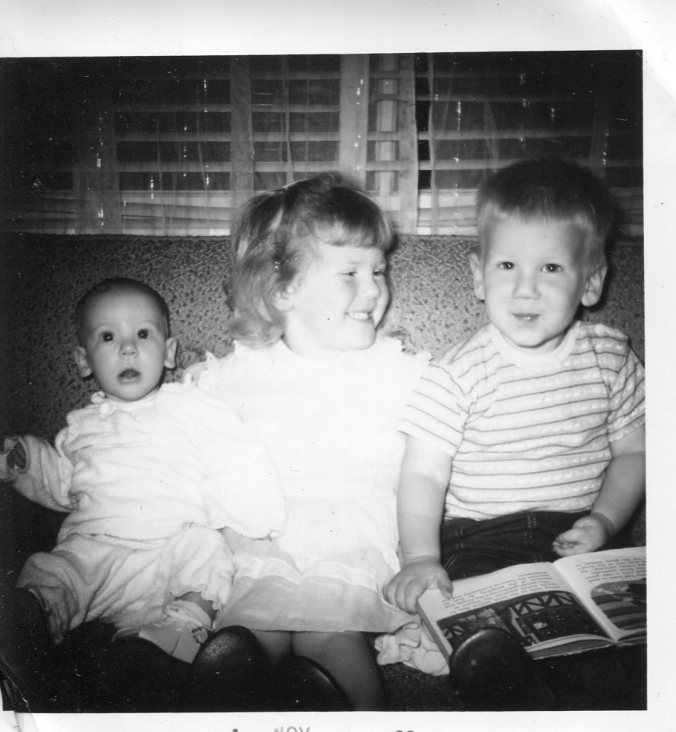
all three

Not taken with the new camera – that’s me in the middle

Vital Simplicity

This past week I met with author Susan Schreyer for a writing gab fest. She asked me a simple question and I’ve been pondering on it since because it’s so vital to writing. I also had her give me advice on roses. She’s invaluable on both topics.

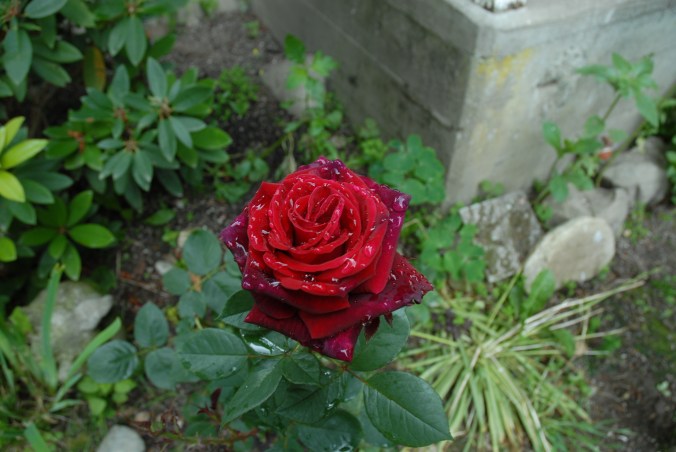
DSC_0024

That’s water on the petals

We all know the important ‘what if’ question. It’s how stories are born. What if this happened, and then that? What if she’d said this instead of that? And so on.

But there’s the more important question once that idea is formed. What does each character want, more than anything else?

I know it’s obvious. So obvious in fact, that it gets forgotten, almost like an ignored cliché.

I talked to Susan about a character that is in jail to figure out her role in the protagonist’s life. Susan asked me, ‘what does she want?’. Yes, I’d thought of that before, because this is the fourth book the character will be in. But I hadn’t given it much thought as far as how roles have changed with jail, how this character will fit into the new role, and more importantly, how she will act within confines.

To answer Susan, I started listing off things I thought the character wanted. The things I thought were important. And then, almost as an afterthought, I said, ‘well, and freedom I guess’. Susan honed right onto that word. Freedom. And followed up with, ‘what would the character do to be free?’.

So while I know the question is simple and basic, it’s too important to forget, or to assume that you already know the answer. It’s a question that should be asked of every single character and really, it works out to a dual question.

What do they really want…and how far will they go to get it?

It’s one of those basic questions writers learn early on. It then gets buried because, after all, you know it and you’re sure that you’re using it in writing. But it’s not such a bad thing to occasionally pull out a tool that might be buried at the bottom of your writer’s tool kit, dust it off, and use it again.

The Mystery Genre and Death

A writer’s group I’m in recently had a discussion around the need for a body when writing mysteries, and writing like this in a time of violence. The question came up right after the shootings in Orlando. Following is my response, which I decided to share here.

Mysteries, to me, used to always be about the puzzle and trying to figure it out before the end. But as I read more, and got older, I realized I wanted to see lasting impact. I wanted the death, or loss, to matter more than just being the opening gambit. I know as I write, I try to make each ‘body’ have a connection to the protagonist that doesn’t end when the story does. I think that’s one good thing about mysteries typically being a series. You can show the impact, the changes in the person’s life, how they continue on. And that connection to the ‘body’ is part of the mystery genre.

I was an EMT for years and the part that made the job incredibly difficult was never seeing the end of the story. Did they put their lives back together? Did they continue on? Did they find some happiness? You’re deeply, intimately, involved in a person’s life at their most vulnerable point, and then it’s over with no ending. Once in a while you get a thank you note. Or, in one case I can think of, you stumble across a memorial at a specific site and know the family is still there and still grieving.

So in writing, I wanted to find the ending. I wanted my characters to be able to continue on, and yet be changed by what happened. I want the loss to stay with them because we never truly end our grieving, and yet to be able to find happiness and to function. I want the loss to mean something.

Because of all that, I’ve never liked mysteries where the body is a complete stranger that the protagonist happens to stumble across. I want connection, grief, loss, and survival.

The problem, of course, is the loss in mysteries is usually the result of murder, which people typically rarely encounter, and which implies violence. The violence is the part I have trouble with. I dislike the criminal investigative type genre that show murder in violent detail and gore. I don’t want to see that, which is why I don’t write procedural style stories. I don’t want to let that level of violence, or evil if you will, into my brain. And most of the time the procedural, and some suspense genres, have the murder committed by a random stranger, a serial killer, etc. which I also personally don’t like. I want the loss to be more important than the detail and gore. I want the ending to be more than just catching the murderer.

Of course these are generalizations. There are authors in the suspense genre that do a remarkable job of writing within the constraints of their genre and  yet making the murder, death, or loss mean something to the protagonist. Those authors I read.

For you readers and writers out there, what are your thoughts on death and/or violence in fiction?