The Full Book

‘Every person is born into life as a blank page – and every person leaves life as a full book. Our lives are our story, and our story is our life. Story is the narrative thread of our experience – not what literally happens, but what we make out of what happens, what we tell each other and what we remember. This narrative determines much of what we do with the time given us between the opening of the blank page the day we are born and the closing of the book the day we die.’

This is the opening paragraph of Storycatcher, by Christina Baldwin. The subtitle is ‘Making Sense of Our Lives through the Power and Practice of Story’.

I bought this book a few years ago because of the title and the cover, which is of sand and sea. It’s a book I’ve never read cover to cover. Matter of fact I don’t think I’ve ever finished it. And today I believe I’m going to pass it on to my great-niece, a poet.

I’m not quite sure why the book, as a whole, has never pulled me fully inside its covers. The snippets I take from it, I like.

‘In the tens of thousands of years before writing, before popular literacy, before we recorded what we know in books and on computers, story was the way we transmitted everything. Story was the carrier, the link, the way we taught each other how to be human and how to see each other’s humanity as we crossed paths on the long walk out of Africa to populate the world.’

Even now, as I flip through the pages, I’m having second thoughts about giving it away. Maybe I should read the whole thing. Maybe I’ve missed some bits I need to know.

Plus, as any reader knows, it’s hard to let go of a book.

‘Whatever detritus we leave after ourselves, story is what makes it valuable. Without story, the artifacts of ordinary lives quickly lose significance and preciousness. An old chipped teacup is no treasure unless you know this is Aunt Grace’s artwork; unless you know she had polio as a young girl, that her siblings pulled her around in a small wagon until the family could afford a wheelchair.’

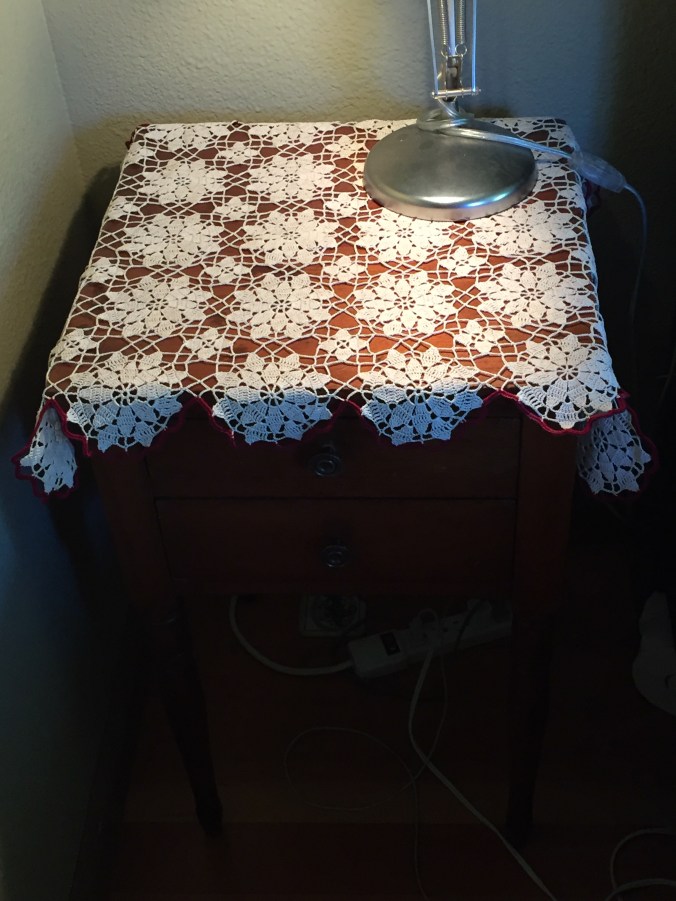
I have a teacup. Milky white, so frail the light shines blue through it. It was once part of a set, collected slowly, piece by piece, by my great-grandfather when he bought burlap bags of flour. Each bag had a single piece of china buried in the flour, as white as the china.

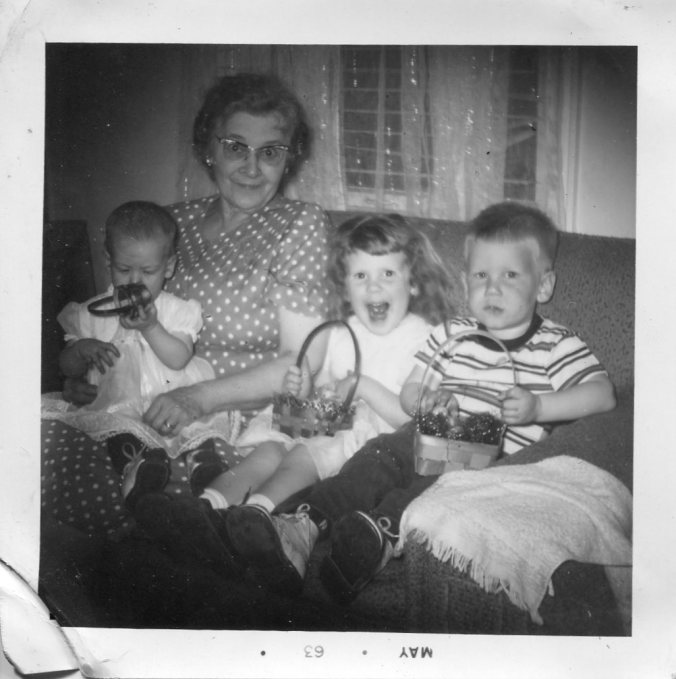
So I read parts of this book, and remember my stories, family who have passed on. Reading brings back melancholy, smiles, regrets, all the emotions that are attached to those stories, those memories.

And sometimes, I don’t want to be reminded. I don’t want to feel those emotions. And so this book can only be read in tiny moments when it’s safe to spend some time in missing loved ones. Otherwise I’d ended up buried and have to battle my way back up to today.

So yes, I’ll pass this book on to my poet-girl. It seems like someone who writes poetry must dip into those deeper emotions with every line they write. Maybe a poet is wiser about letting go.

lincoln city april 06 006

To Sleep…Perchance to Write

A fellow-writer told me recently about the fantastic writing she composes shortly before falling asleep.

Does that ever happen to me? Of course.

The bed is so comfortable, I’m in that halfway stage between wakefulness and oblivion, and there’s all this stream-of-consciousness writing going on. I see where the work in progress is going, I draft excellent dialog, I think of the best blog post…

And I know I should get up and write it down.

animals 063

Arwen 

Most of the time I simply roll over and dip into sleep, convinced I’ll remember all that fantastic writing because it’s so…fantastic. How could I forget?

I wake up in the morning completely clueless.

There was one time I forced myself out of bed to write a blog post. Oddly enough, that was the post that resulted in the Freshly Pressed award.

There is something powerful in the ‘crossing places’ to borrow a phrase from author Ellie Griffiths. In her book with that title, she’s referring to the salt marsh, the place between land and sea. This time between wakefulness and sleep is the same. A place of transition. So it’s not surprising that a brain is freer to create. The daily grind is over, the body is relaxed, the breathing is almost to a trance phase, and the environment is soft, dark, and quiet.

Well, except for the dog across my feet, snoring.

But you get what I mean.

So if I know that place is a creative space, and I know that if I get up and write the words down the writing will be good, why don’t I get out of bed?

Well, the obvious reason is sheer laziness. Who wants to crawl out of a comfortable bed into a chilly room? Who wants to disturb that poor old dog?

animals 015

Strider and Art (don’t tell Art I posted this)

A bigger reason is that there have been other times when I have jotted down notes on the paper every writer is supposed to keep by their bed for just these moments. And while that one time I got out of bed and the writing worked, there have been many, many times when, in the morning I looked at the jotted notes and was clueless.

Whatever the words from that crossing place meant at the time I was falling into sleep, by the light of day the meaning was gone. Poof. Gibberish. I’m left holding the scrap of paper thinking ‘what the h…?’.

But for my friend who started this thought process, I advised her to get out of bed and write it down. Because you never know. Gibberish for a thousand nights, stellar writing for one night. Isn’t it worth it for that one night?

Does that mean I’m getting out of bed tonight? Afraid not. After all, there’s that dog.

animals 094

Skywalker von Stowe (aka Luke)

To Rush Or To Plod

I just finished a book with plot twists, a protagonist that tricked me, lyrical writing…everything I wanted. It was so good I immediately bought the author’s second book (she has two out). I’m so bored. Half way through and I still don’t know the protagonist’s reason for being in the plot, which seems to be nothing but dull backstory. (Brunonia Barry)

Which makes me wonder if, because book #1 was such a hit and got such good reviews, the author felt the push to get book #2 out before people forgot her name. In this age of millions of writers it’s hard to be seen and harder still to remain seen. So the pressure is there to produce.

And that in turn makes me think about the speed of writing and the need to publish. Especially in the mystery genre where readers want to live in a series with regular installments.

My friend, author Susan Schreyer, is what I imagine as a balanced writer. One of those I fail at emulating, who outlines, plots, writes regularly, and puts out polished, well-written stories. She’s found the perfect speed. Her books are not rushed to publication, and yet come out in a timely manner.

Me on the other hand? I publish and write rather like I hike. Occasional sprints up hill that end in heavy breathing and collapse, followed by leisurely strolls where I pause to talk to trees, sit on boulders, watch bears, get distracted by the newly blooming minuscule twin flowers…you get the idea.

icicle creek 023

Icicle Creek Trail

I see Susan’s writing as the perfect balance between the author I first mentioned, who goes too fast, and me who, arguably, goes too slow.

Does that make me want to change? Well…no.

I used to stress over what I thought I should do when it came to writing. But then I realized that rambling walks through words is my writing process and I’m happy with that.

It may not be the way to success in this current publishing world of trying to rise to the top of the mountainous pile, but I do enjoy the stroll.

There are so many positives about publishing these days, the least of which is the ease of getting something out there. But sometimes that ease to publish ends up in a story being released to the world before its time.

Find that balance between the pressure to publish and the time the story needs to be born.